
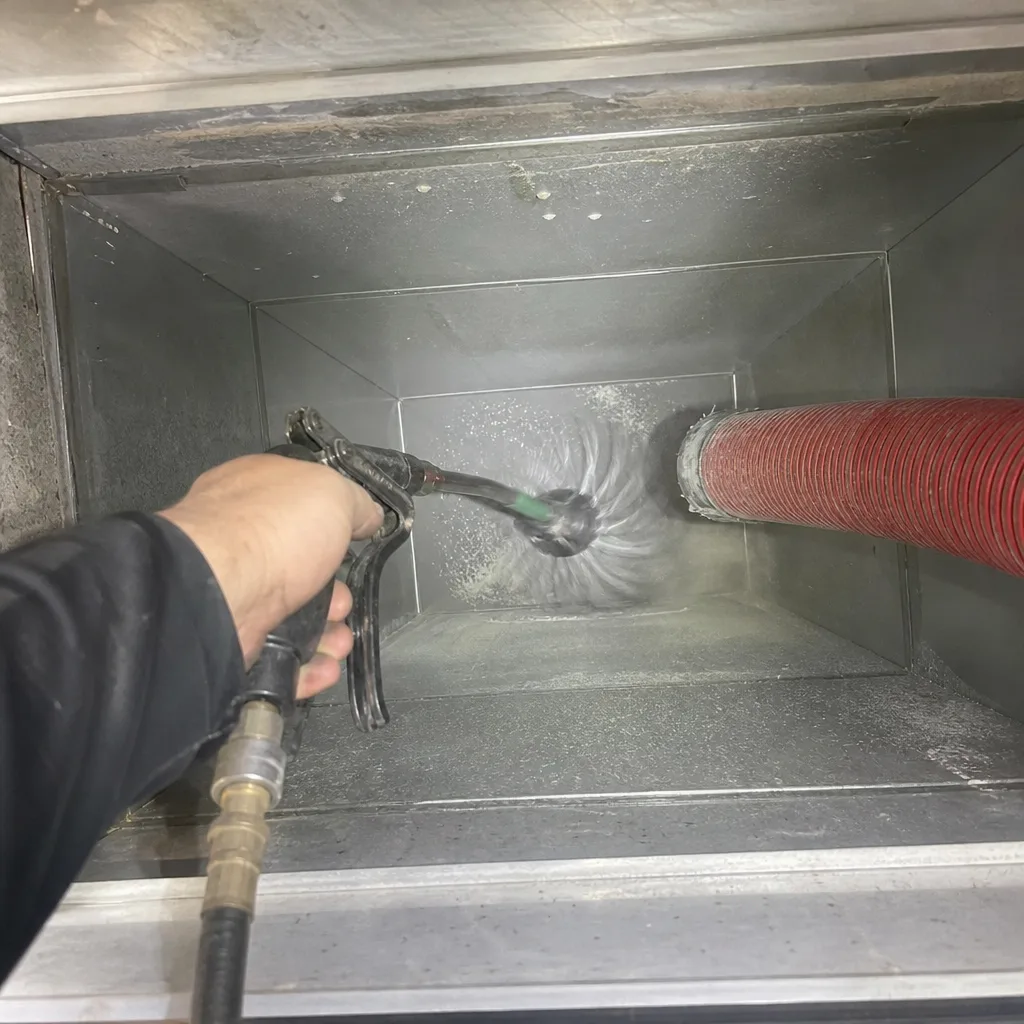
Last updated November 15, 2026
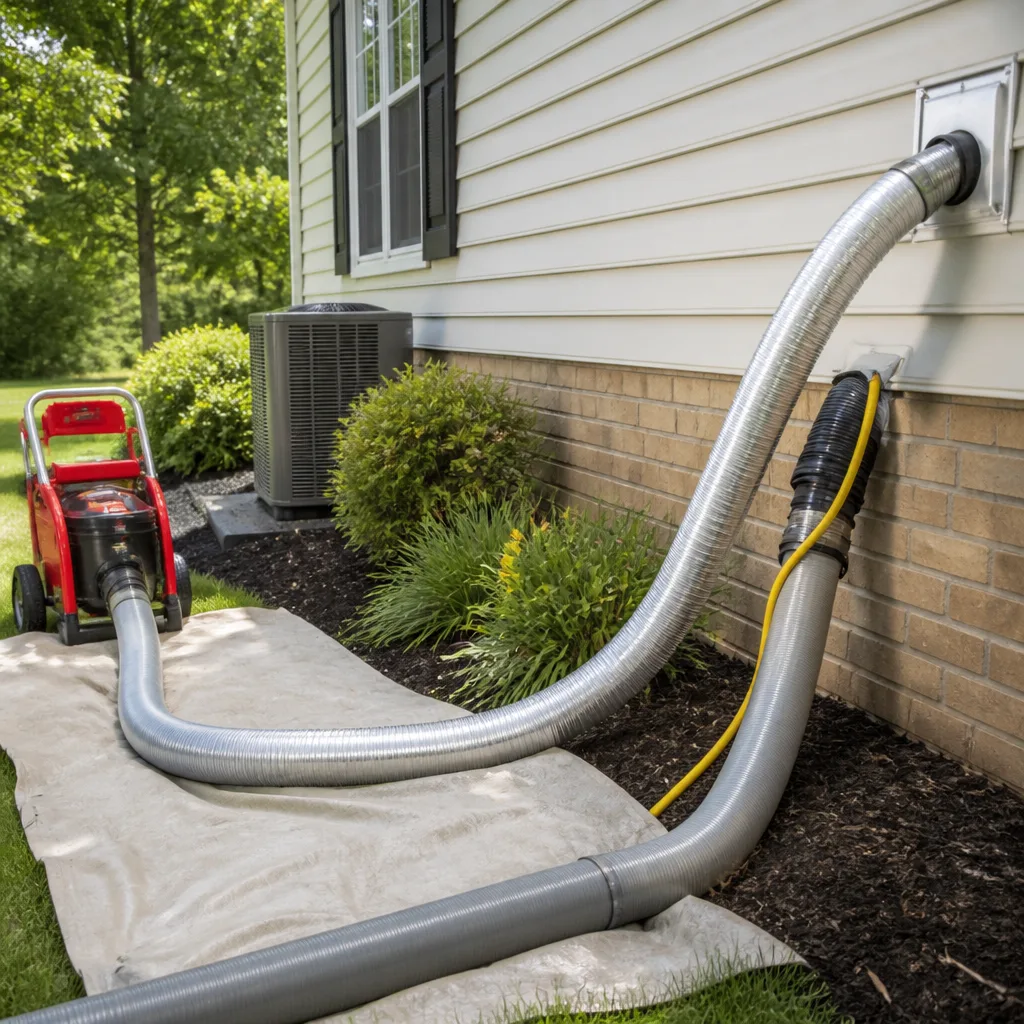 Whole-home duct cleaning
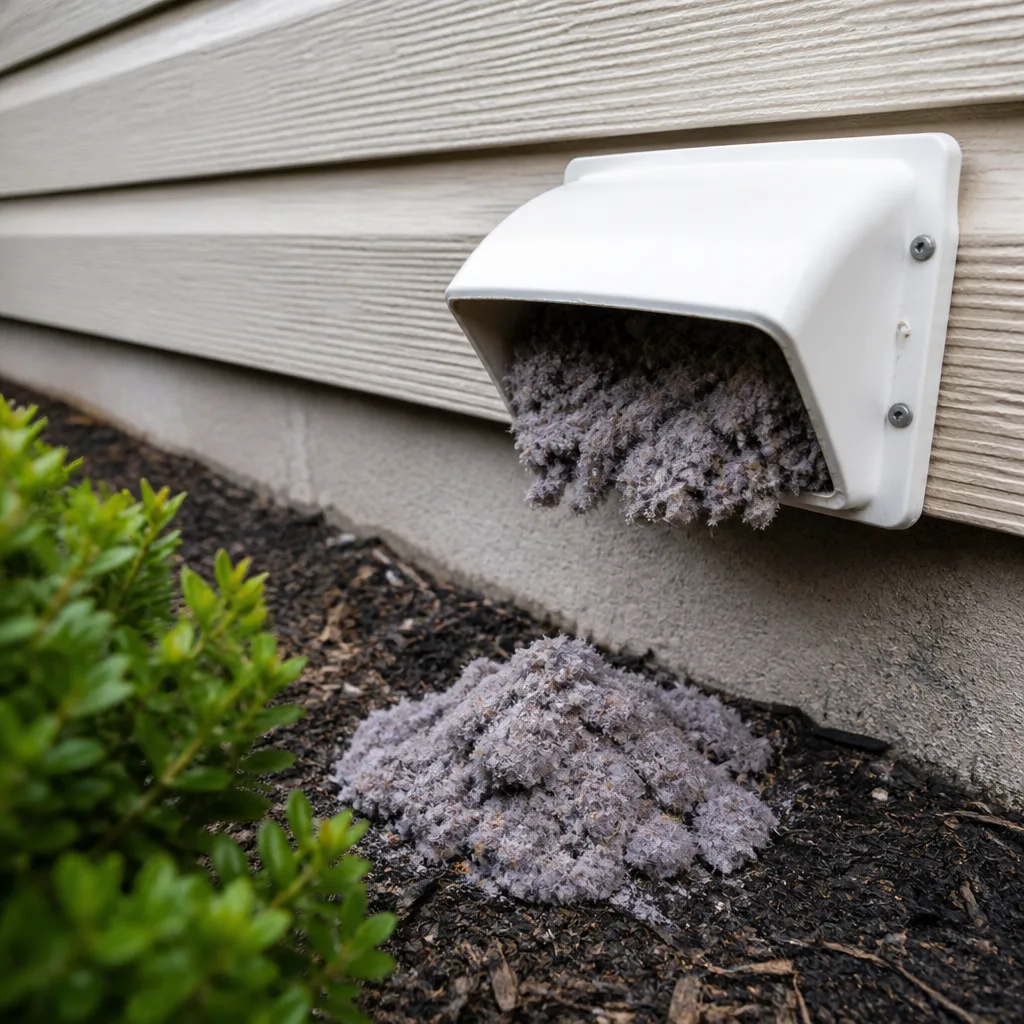 Dryer vent cleaning
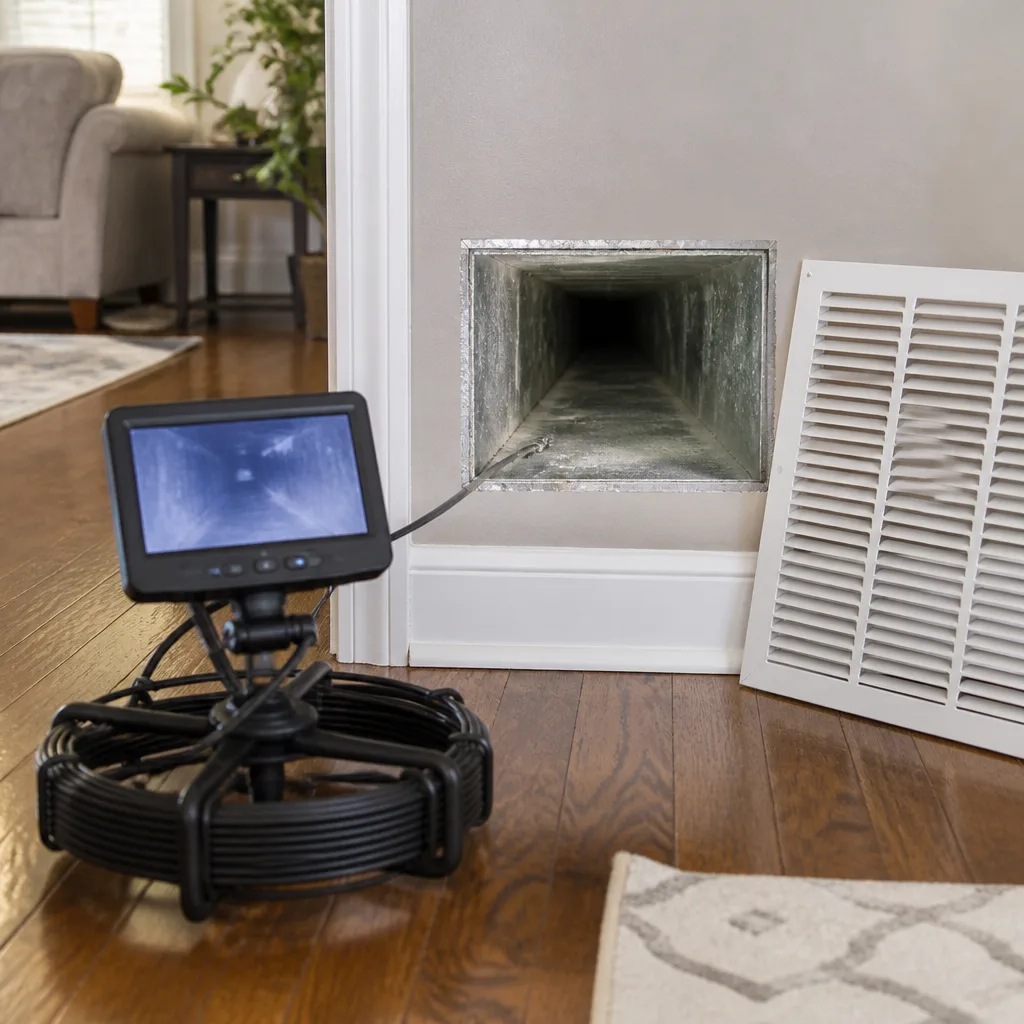 Camera inspection
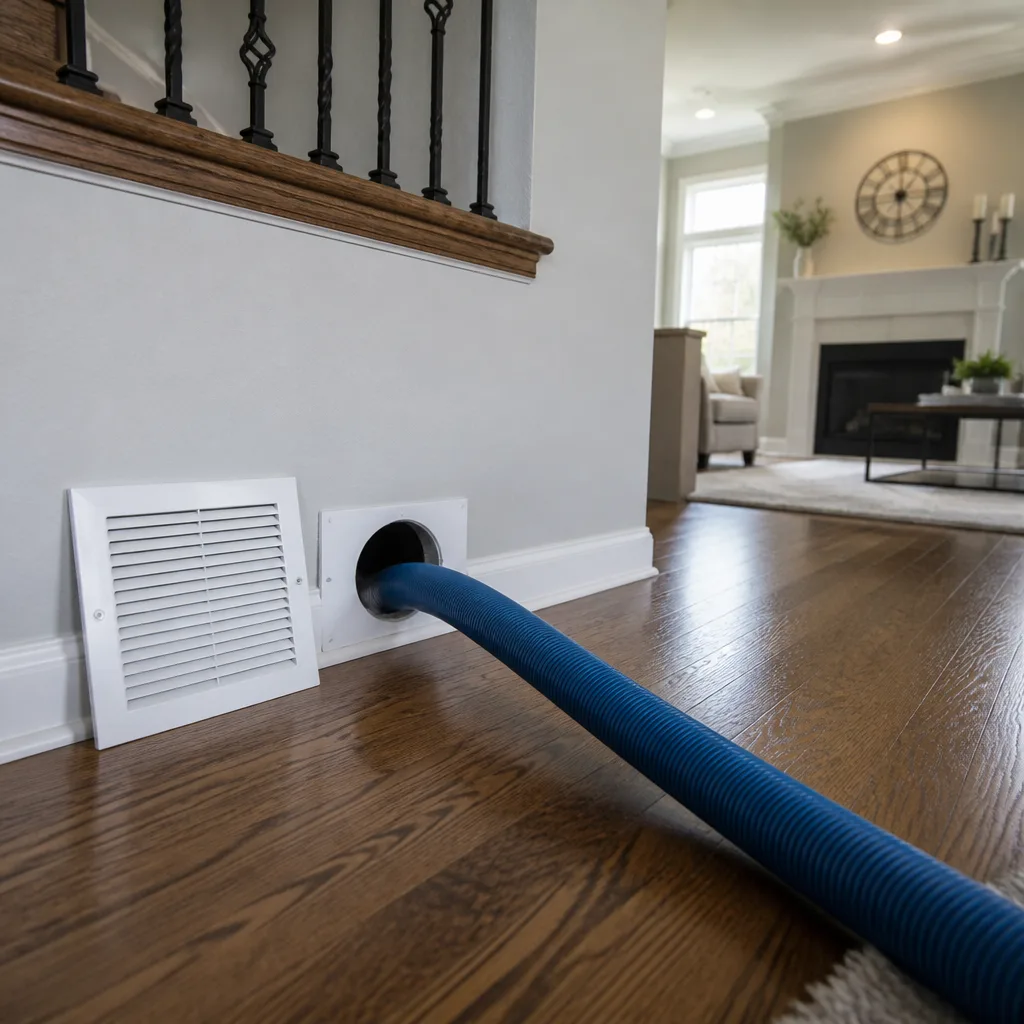 Sanitizing & deodorizing
Whole-system duct and dryer vent check with before-and-after photos - you see exactly what came out of your vents
That "$99 whole-house special" is a bait ad - the real number appears once they are in your hallway, or the "clean" is a shop-vac at the register. We photograph the inside of your ducts before and after instead.
Air Duct Cleaning Maintenance Checklist for Denton Homeowners
Most homeowners think about their ducts only when something goes wrong – a musty smell, a dust film that comes back two days after cleaning, or allergy symptoms that never quite settle. Here’s the part that surprises people: a duct system doesn’t get dirty once and stay that way. It recontaminates continuously, and the rate depends on variables you can actually track and control. A standard 1-inch filter and one large dog will reload duct surfaces with measurable particulate faster than a household with two cats and a MERV-11. In this guide we’ll walk through a month-by-month maintenance framework built around Denton’s real seasons, filter upgrade thresholds, return-vent inspection techniques, and a logging system that turns guesswork into a service history you can use.
Quick Answer
A duct cleaning maintenance checklist for Denton homeowners is a diagnostic routine, not just a reminder to book service. It combines monthly filter checks, seasonal duct-surface inspections, and logged baseline data (filter change dates, discoloration patterns, symptom tracking) so you can see how fast your system reaccumulates dust and schedule the next professional clean at the right interval instead of an arbitrary one. Homes with pets, allergies, or older duct systems typically need closer monitoring than a newer build with a MERV-11 filter and sealed returns.
Styles & brands we work with
- Whole-home duct cleaning
- Dryer vent cleaning
- Camera inspection
- Sanitizing & deodorizing
Table of Contents
- Why Duct Maintenance Works Differently in Denton
- The Month-by-Month Duct Maintenance Checklist for Denton
- Filter Upgrade Thresholds: When MERV-8 Is Enough and When It Isn’t
- How to Do a Return-Vent Visual Inspection With Your Phone
- Post-Service Checklist Items That Protect Duct Cleanliness
- How to Log Baseline Data and Build a Real Service History
- What a Professional Clean Actually Involves
- Common Mistakes to Avoid
Why Duct Maintenance Works Differently in Denton
Denton sits in a part of North Texas where the allergen calendar runs almost year-round. Cedar pollen leads the charge in January, often before homeowners have finished putting away holiday decorations. Then spring arrives with its own signature: wind-driven dust and storm debris that pushes particulate into return grilles faster than at any other point in the year. Summer follows with sustained heat that keeps HVAC systems cycling almost continuously, which means more air movement through the same duct surfaces and more opportunity for dust to deposit. Fall brings leaf debris near outdoor intake areas and gutters, and that debris can find its way into the return side of the system if screens or louvers are compromised.
What that means for maintenance is that Denton homes don’t experience a single “cleaning season.” They experience four different contamination events per year, each with its own source and its own remediation logic. A checklist built for a mild four-season climate won’t catch the cedar spike. A checklist built for a dry desert climate won’t account for spring storm humidity pushing dust into the return path. And a checklist that only says “change your filter every 90 days” ignores the fact that a 90-day interval in a Denton home with a long-haired dog is roughly a 30-day interval in a home with no pets.
We’ve seen this pattern repeatedly: two homes on the same street, similar square footage, similar HVAC age, and yet one needs professional service at half the interval of the other. The difference almost always comes down to trackable variables – pet load, filter rating, return-vent condition, and how well the envelope below and above the living space is sealed. That’s why this guide treats the checklist as a data-collection tool, not a fixed schedule. Once you know your rate of recontamination, you can stop guessing and start planning.
If you’re new to the area or have just moved into an older home, a baseline professional clean is the cleanest starting point. You can learn more about what that involves on our air duct cleaning page, and for context on the area itself, our Denton page covers the local housing stock and common duct configurations we encounter.
The Month-by-Month Duct Maintenance Checklist for Denton
This is the working checklist. It’s organized around Denton’s actual seasonal events rather than generic quarterly reminders, because the contamination sources shift month to month and the maintenance response should shift with them. Treat it as a scaffold to adapt, not a rigid calendar – your log (covered below) will tell you which months you need to weight more heavily.
January – Cedar Season
- Replace or inspect the air filter at the start of the month. Cedar season is when filter loading accelerates, and a clogged filter forces air to bypass and deposit particulate on duct surfaces.
- Check return-vent grilles for visible fuzz or film. Cedar pollen is fine enough to pass a low-MERV filter and settle on duct walls.
- Note any increase in allergy symptoms in the household. This is your symptom baseline for comparison later in the year.
February through March – Late Winter and Early Spring
- Confirm filter changes are on a consistent schedule. If you skipped January, catch up now.
- Do a phone-camera inspection of one or two return vents (technique covered later) and save the photos with a date.
- Check that outdoor unit clearance is maintained – nothing stacked against the condenser, no debris pile against the outdoor cabinet.
April through May – Spring Storm Dust
- After any major wind event, check return grilles and the filter for storm dust. North Texas spring storms push fine particulate into the envelope, and the HVAC system pulls it in.
- Inspect door sweeps, weatherstripping, and any gaps around the attic access. Air sealing gaps are the single biggest driver of duct contamination after a storm event.
- Clean outdoor intake screens and louvers. Leaf debris and dust accumulation here can restrict airflow and change pressure dynamics in the return path.
June through August – Summer Overcycling
- Check the filter monthly, not quarterly. Sustained heat means the system runs more, and more runtime means more air pulled through the filter and ducts.
- Look for a dust film on supply registers. If supply registers get dusty faster in summer, it points to either a loaded filter or a return-side leak pulling attic or crawlspace air into the system.
- Keep an eye on indoor humidity. Excess humidity in a Denton summer can encourage biological growth on duct surfaces, particularly in older systems with unsealed joints.
September through October – Fall Leaf Debris
- Clear leaves and debris from around outdoor equipment and any exterior vent terminations.
- Inspect the intake side of the system for debris pulled in during the first cool fronts, when wind patterns shift.
- Do a pre-winter filter change and a return-vent photo comparison against your spring baseline.
November through December – Pre-Holiday Reset
- Full filter change and a walkthrough of every visible register and return grille.
- Update your log with the year’s accumulation pattern. This is the data that will tell you whether your next professional clean is a spring or a fall job.
- Plan the next professional service based on your recorded rate of recontamination, not on a fixed calendar interval.
One more item belongs on the log for every month, not just the seasonal milestone months: dryer vent awareness. Dryer vents are a separate system from your HVAC ducts, but they’re the same category of maintenance risk, and lint accumulation in a dryer vent is a fire hazard that builds quietly. If you haven’t had the dryer vent inspected or cleaned in the last year, that belongs on your checklist as a fire-safety item. You can read more about the service on our dryer vent cleaning page.
Filter Upgrade Thresholds: When MERV-8 Is Enough and When It Isn’t
Filter rating is the single most controllable variable in duct recontamination, and yet most Denton homeowners are running whatever came with the system or whatever was on sale. Here’s the logic in plain terms, and it’s the same logic we apply when we assess a home before cleaning.
A MERV-8 filter is a reasonable baseline for a home with no pets, no allergy sufferers, and reasonably well-sealed returns. It catches the bulk of visible dust while keeping airflow restriction low enough that the system isn’t starved. If your duct surfaces stay relatively clean between inspections and no one in the house has respiratory complaints, MERV-8 is doing its job.
MERV-11 becomes the better choice when any of these conditions apply:
- Pets in the home. Pet dander and hair are fine and persistent. A MERV-8 catches some of it, but a MERV-11 captures far more before it reaches duct surfaces.
- Allergy or asthma sufferers in the household. If you’re tracking symptoms as part of your log, the filter is the first line of defense between outdoor allergen loads (cedar in January, storm dust in spring) and indoor air.
- New build or recent renovation. Construction dust is fine, tenacious, and highly mobile. Higher filtration during and after a renovation pays for itself in reduced duct cleaning frequency.
- Older duct systems with visible interior wear. Pitted or deteriorating duct interiors release particulate that a higher-MERV filter helps capture.
A MERV-13 or higher can be appropriate in some homes, but it’s not a free upgrade. Higher MERV means higher pressure drop, and if the system wasn’t designed for it, you’ll trade cleaner ducts for reduced airflow, longer runtimes, and potential equipment strain. This is why we don’t recommend jumping straight to the highest rating – the goal is the lowest rating that protects your duct surfaces, not the highest number on the package. We’ve worked with many Denton homes running whole-home filtration systems like Honeywell or Aprilaire, and those are designed to accommodate a specific filter class; if you have one of those systems, use the filter class it was specified for rather than swapping in a different rating.
Practical rule of thumb for Denton: start at MERV-8 if you have no pets and no allergy concerns, then move to MERV-11 if you have pets, allergies, or you’ve just renovated. Check the filter monthly during summer, replace when it’s loaded, and log every change date. That log will make the right filter choice obvious within a year.
How to Do a Return-Vent Visual Inspection With Your Phone
You don’t need any special equipment to learn a lot about what’s happening inside your ducts. A phone camera with a flashlight (or a small flashlight held next to the lens) provides enough visual information to tell the difference between particulate buildup and biological growth, and to spot early warning signs of leaks or deterioration. This is a monthly task that takes about two minutes per vent.
- Remove the return grille. Most are held by friction clips or two screws. Note the orientation before you remove it so you can put it back correctly.
- Turn the system off. You don’t want the fan pulling dust toward you while you’re inspecting.
- Shine light into the duct and photograph the interior surface. Use your phone’s rear camera, get the lens as close to the opening as is safe and comfortable, and take three or four shots at different angles.
- Photograph the grille itself, both sides. Grille discoloration patterns tell their own story.
- Date and save the photos in a dedicated folder. This becomes your visual baseline – the most useful diagnostic tool in the checklist.
What the discoloration patterns tell you
Particulate buildup looks like dry, uniform grey or brown dust coating a surface. It’s often heavier on the bottom surfaces of horizontal runs and lighter on the sides. A uniform film you can wipe off with a cloth is typical particulate – it means the filter is letting fine dust through, or the return is pulling in unfiltered air from a crawlspace or attic.
Biological buildup looks different. It tends to be patchy rather than uniform, often with a mottled appearance, and it concentrates where moisture collects: near joints, on the underside of runs, or immediately downstream of a leak. Dark blotching, a mottled greenish or blackish tint, or a fuzzy texture rather than a powdery one are the signs to watch for. If you see these, don’t just clean and move on – the underlying moisture source needs to be found, because the growth will return without it. This is one of the situations where a professional assessment is worth the cost of the inspection; we can tell you what we’re seeing and what it likely means during a free estimate.
Two patterns that usually point to a specific problem rather than general dust:
- Dust concentrated at duct joints or seams suggests air is being pulled in through those joints from an unconditioned space – an air-sealing issue, not a filtration issue.
- Dust that appears only on the first few feet from the return suggests the return itself is the source, often because the return plenum or drop is unsealed and drawing in attic or crawlspace air.
Post-Service Checklist Items That Protect Duct Cleanliness
The work doesn’t end when the cleaning does. What happens in the weeks after a professional clean has as much to do with your duct cleanliness as the clean itself, because you’ve just reset the baseline and the recontamination clock has started. These items protect that investment.
Crawlspace vapor barriers
If your home has a crawlspace, a proper vapor barrier matters more than most homeowners realize. An unsealed crawlspace allows moisture to migrate upward into the return duct system through unsealed penetrations, and moisture is the single biggest accelerant of biological growth on duct surfaces. Check that any existing vapor barrier is intact, that it’s not torn or pulled back from the foundation walls, and that it covers the ground surface fully. If you’re not sure what condition yours is in, that’s worth a look before your next cleaning rather than after it.
Attic air sealing
Attic air sealing is the other side of the same coin. Unsealed attic penetrations – around wiring, plumbing, and duct boots – allow hot, dusty attic air to be pulled into the return path. In a Denton summer, that’s both a contamination source and an efficiency problem. Check for obvious gaps around duct penetrations and around any recessed fixtures near return paths, and seal them with appropriate materials. If your duct boots aren’t sealed to the drywall, that’s a duct repair issue as much as an air-sealing issue, and worth addressing.
Outdoor unit clearance
Keep the outdoor condenser clear of debris, vegetation, and accumulated leaves. Restricted airflow at the outdoor unit changes the pressure dynamics throughout the system and can affect how efficiently the return path draws air. A simple seasonal clearance check is enough in most Denton homes – more often in fall when leaves accumulate.
Grille and register care
Remove, rinse, and dry supply and return grilles as part of your monthly checklist. Grille dust is a visible indicator of duct-side load and a contamination source itself if it goes uncleaned. It’s a five-minute job that saves meaningful cleaning effort over a year.
Post-service verification
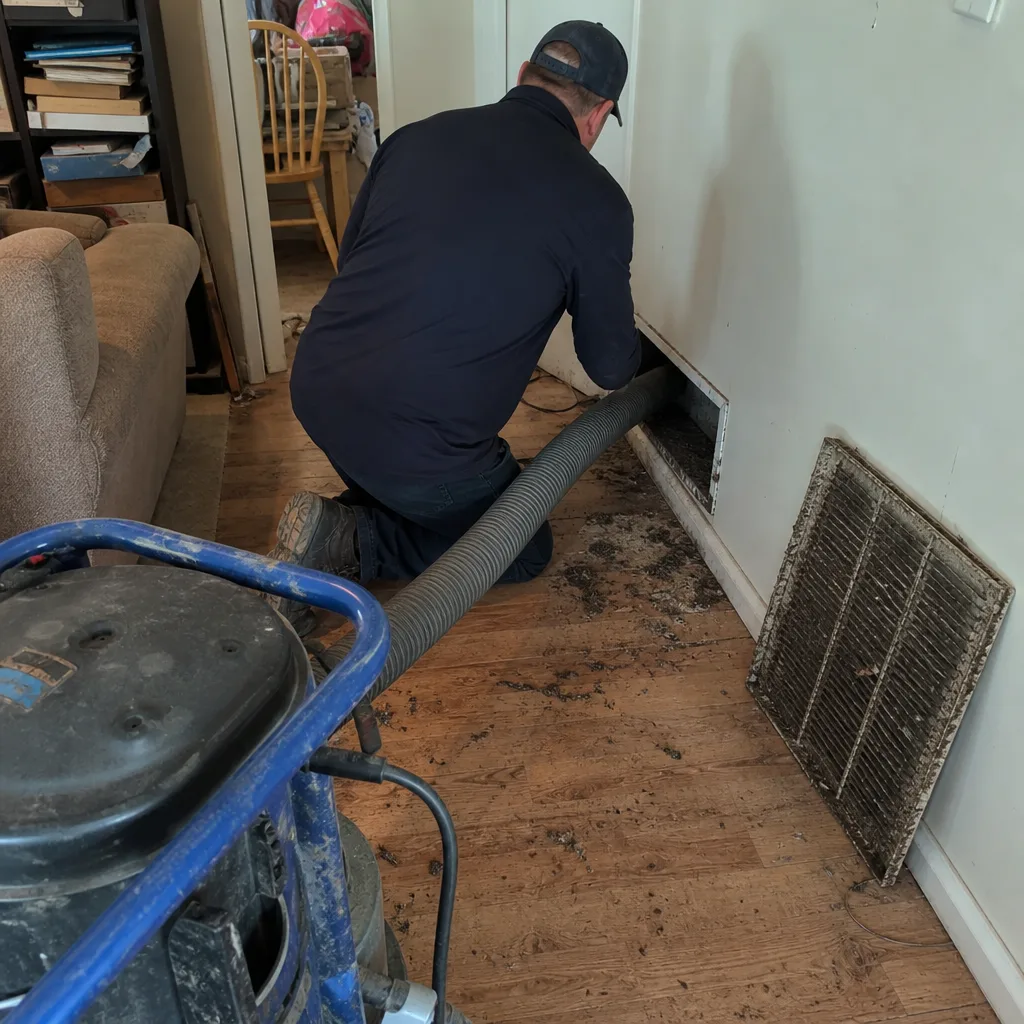
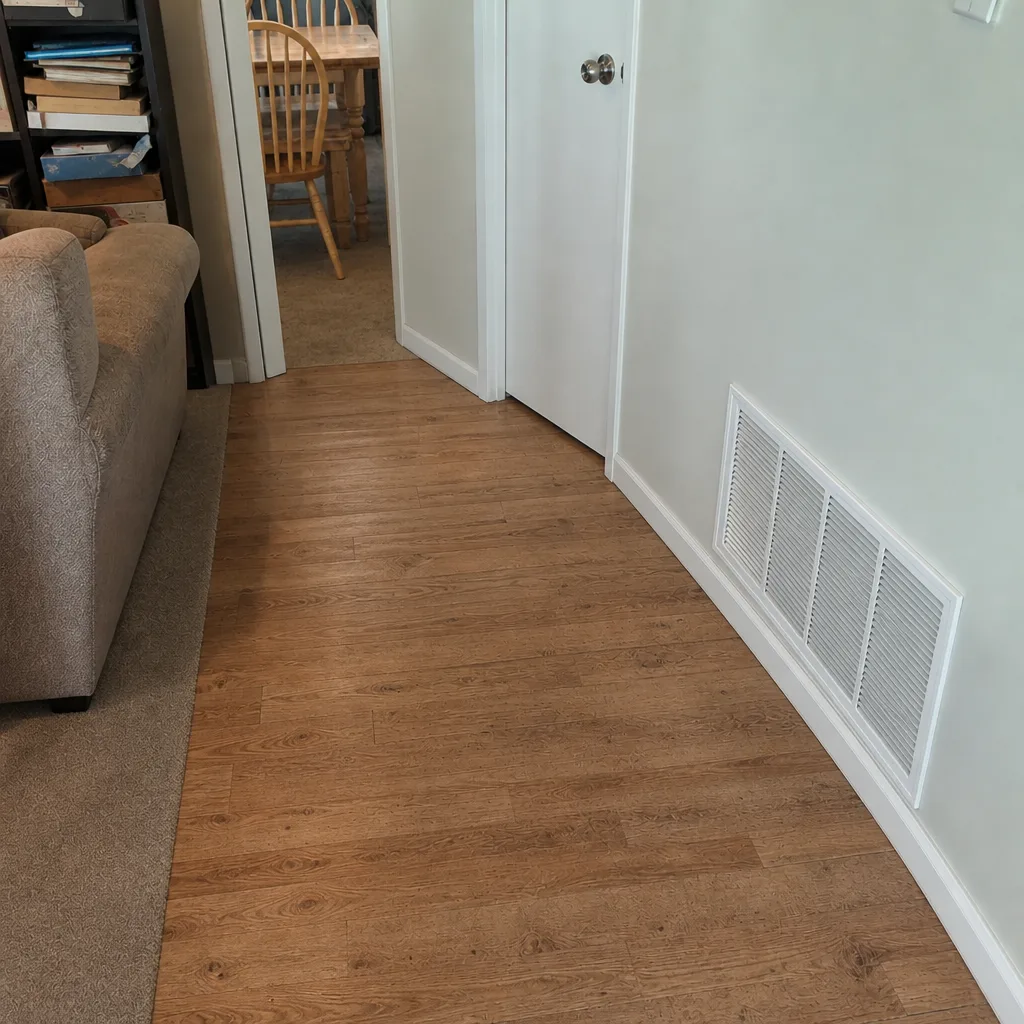
If you’ve just had a professional clean, look for verification of the work – before-and-after photos of your own ducts are the standard. We photograph before and after every system we clean, and the photos are yours to keep and compare against future inspections. That’s how you confirm the work was actually done to the depth it was supposed to be, rather than surface-cleaned. Ask for those photos from any provider.
How to Log Baseline Data and Build a Real Service History
This is the part of the checklist most homeowners skip, and it’s the part that turns the rest of it into something useful. A log converts your maintenance routine from a set of vague reminders into a data-driven schedule. It takes a couple of minutes a month and pays off in better decisions about when to schedule professional service.
You don’t need anything complicated. A notebook or a simple spreadsheet works. The fields to track:
- Filter change dates and the filter rating used. This is the anchor of the log. When you change from MERV-8 to MERV-11, mark it, so you can see whether the change alters your accumulation pattern.
- Return-vent photo dates. Keep the photos in a dated folder. Every three to six months, compare the latest against the baseline photo from right after the last professional clean. The difference in dust film thickness tells you your rate of recontamination.
- Visible dust film severity, rated on a simple scale. Light, moderate, heavy – three words are enough. Consistency matters more than precision.
- Occupant symptom notes. If anyone in the household has allergies or asthma, note how they’re doing each month. Symptom improvement or worsening alongside a filter change is a useful signal, particularly during cedar season.
- Outdoor and envelope observations. Storm events, leaf accumulation, gaps found and sealed, vapor barrier condition. These explain anomalies in the log.
- Professional service dates and what was done. Note the scope – whether it was cleaning, repair, or both – so the history is complete.
The payoff is that within about a year you’ll have a portrait of how your specific home behaves. A home that shows heavy film within 60 days of a clean needs a closer professional interval than a home that shows light film at 9 months. That’s not a generic answer, and no generic checklist can give it to you. It’s the difference between guessing and knowing, and it’s the whole point of tracking. If you’re starting from scratch and want a clean baseline to build on, a professional clean is the right first step, and that’s what we do. For a broader view of our work, see Duct Cleaning Denton.
What a Professional Clean Actually Involves
Understanding what professional cleaning involves helps you evaluate any provider, and it helps you know when your log is telling you it’s time to book. The gap between a real professional clean and a surface-level one is significant, and it’s visible in the equipment and the process.
Professional duct cleaning isn’t a vacuum-and-done job. It starts with mechanical agitation using equipment like the Rotobrush rotary brush system, which physically loosens the adhered dust from duct surfaces. Agitation without simultaneous extraction just moves the dust around; that’s why the extraction has to happen at the same time, through HEPA-filtration equipment like Nikro systems, which capture and contain the dislodged debris rather than letting it redistribute into the home.
Negative-pressure containment matters as much as the equipment. Abatement Technologies systems maintain negative pressure in the duct system throughout the cleaning, so dislodged particulate is pulled toward the collection equipment rather than escaping into the living space. This is standard practice for restoration and remediation work, and it’s a useful thing to ask about when you’re comparing providers. A cleaning operation that doesn’t use negative pressure is a cleaning operation that’s relying on you not seeing where the dust goes.
One more distinction worth knowing: cleaning and repair are separate. Duct systems that are dirty are often also leaky, disconnected, or deteriorating at the joints, and cleaning alone leaves those problems in place. We offer air duct repair alongside cleaning because the two problems are usually found together and fixing one without the other leaves the system recontaminating faster than it should. If your return-side inspection shows dust concentrated at seams or joints, that’s a repair conversation as much as a cleaning one.
Our technicians have up to 11 years of experience with this equipment and with Denton homes, and we’re familiar with Honeywell and Aprilaire whole-home air quality systems for homeowners who have invested in that kind of filtration. If you’re running one of those systems, we can work with it rather than around it.
Common Mistakes to Avoid
- Treating quarterly filter changes as a universal rule. In a Denton home with pets or during cedar season, 90 days is too long. Check monthly in summer and during cedar season, and let your log tell you when the filter is actually loaded.
- Buying the highest-MERV filter available. Higher MERV isn’t automatically better. If the system wasn’t designed for it, you’ll restrict airflow and cause more problems than you solve. Match the filter to the system specification and to your actual contamination profile.
- Cleaning ducts without addressing return-side leaks. A clean duct system with unsealed attic or crawlspace penetrations will pull dust back in immediately. Fix the envelope or the cleaning doesn’t last.
- Skipping the dryer vent because it’s a separate system. Dryer vent lint accumulation is a fire hazard, not a cosmetic issue. It belongs on your annual safety checklist independent of duct cleaning.
- Not asking for before-and-after photos. Photos of your own ducts are the proof that the work was done to depth. Any provider should be able to show them, and if they can’t, that’s information.
- Assuming a cheap quote is a good quote. Whole-system cleaning with professional equipment and negative-pressure containment is a real scope of work. Quotes that seem dramatically lower usually reflect a different scope, often surface vacuuming without agitation or containment. Ask what equipment and what containment the quote includes.
- Forgetting the exterior. Leaf debris, blocked outdoor units, and clogged intake screens change how the system operates. They’re part of maintenance, not an optional extra.
See the difference
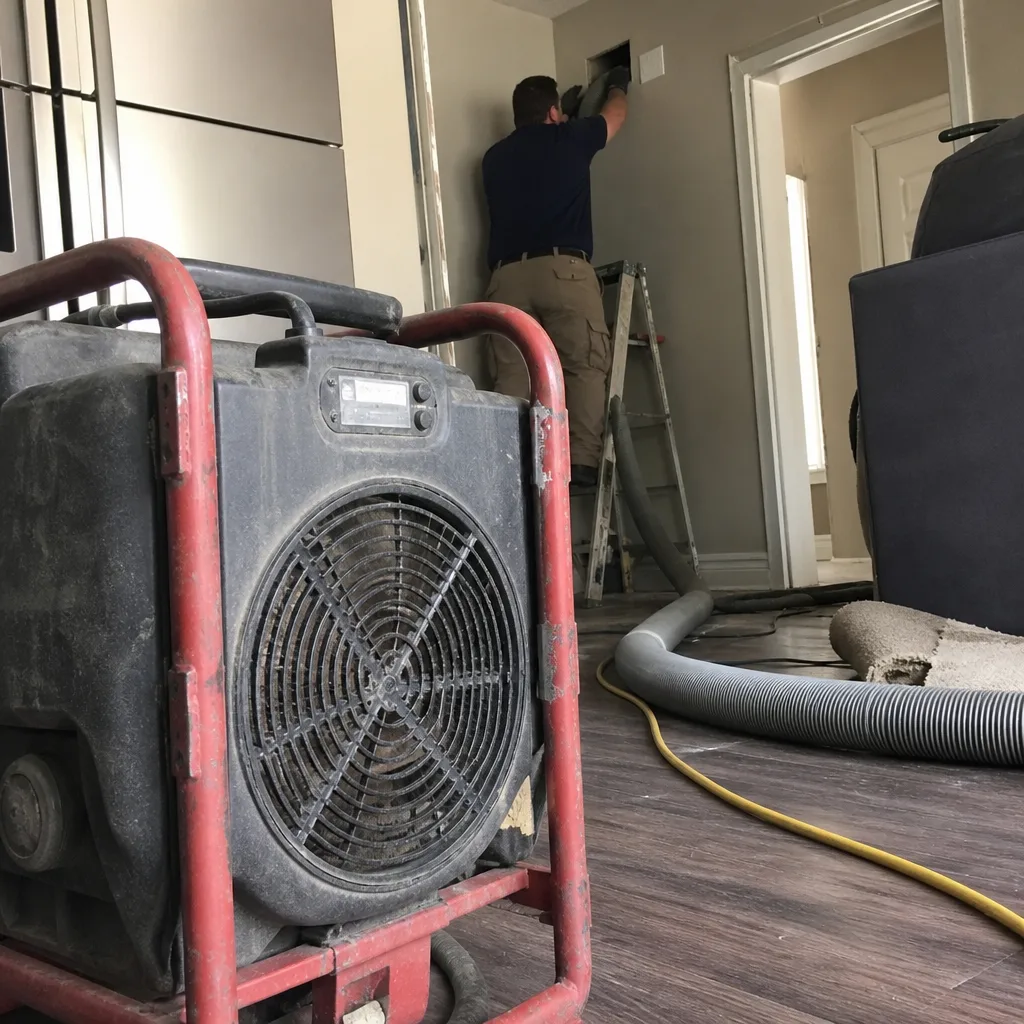 Before
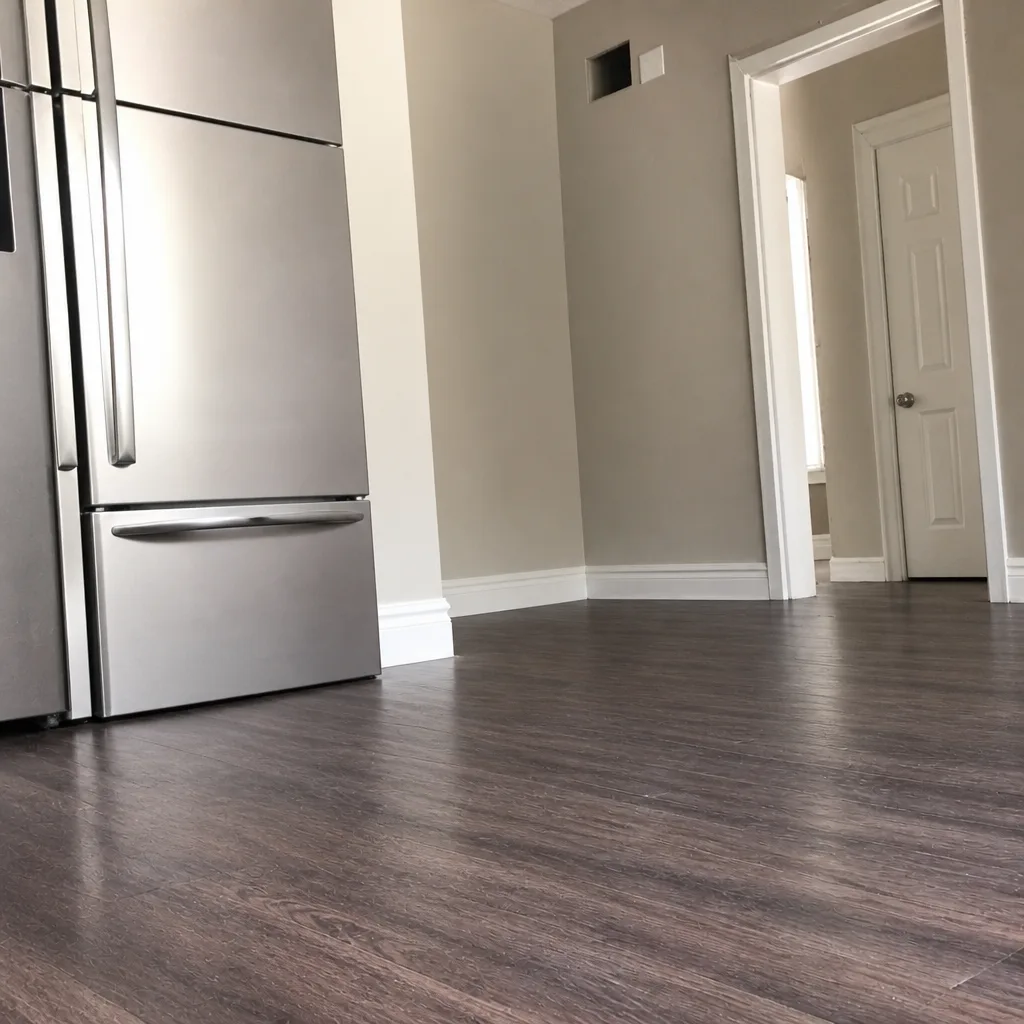 After
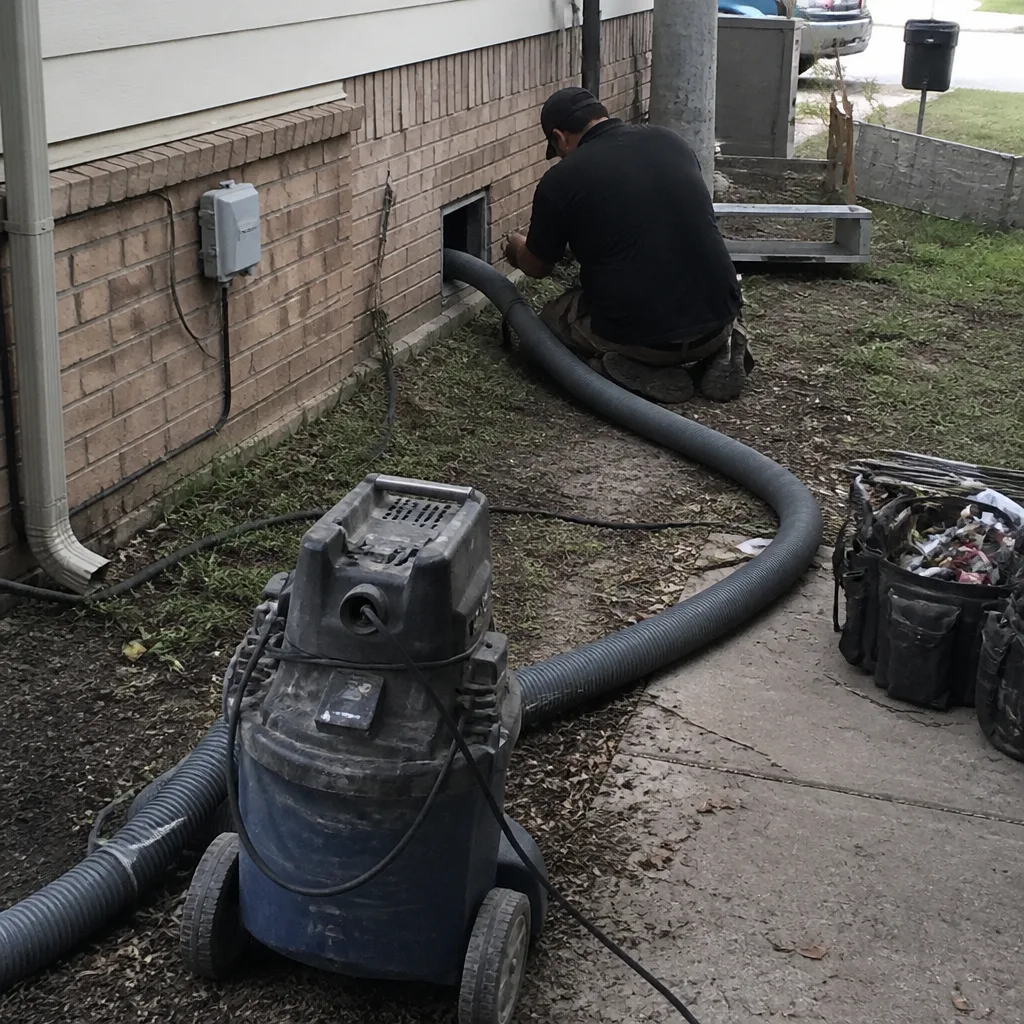 Before
 After
 Before
 After
When to Call a Professional
Your log and visual inspections will tell you when it’s time, but here are the specific triggers that warrant a professional assessment in Denton. Book a professional clean when your return-vent photos show heavy dust film less than 90 days after a previous clean, or when you’ve never had the system cleaned and you’ve just bought, inherited, or renovated a home. Call us if you find mottled or fuzzy discoloration that suggests biological growth, because the underlying moisture source needs to be identified. Book a professional clean if you’re seeing symptom patterns that track with HVAC operation. And book duct repair if your inspection shows dust concentrated at seams, joints, or disconnected sections – cleaning alone won’t fix a leaking system. Dryer vent cleaning belongs on your annual safety list regardless of duct condition.
Duct Cleaning Denton offers free estimates in Denton. Call (888) 890-4255. We answer 24/7. Fast dispatch, 7am-7pm, Sunday through Friday. The written estimate sets the price, and you’ll know the scope before any work begins.
Frequently Asked Questions
Most Denton homes benefit from professional cleaning every two to three years, but the right interval depends on your specific contamination pattern. A home with pets, allergies, or an older duct system that runs continuously through the summer may need it more frequently, while a newer home with a MERV-11 filter and sealed returns can often go longer. Track your return-vent photos and filter change intervals to find your actual rate of recontamination. Call (888) 890-4255 for an exact quote – estimates are free.
A MERV-11 filter is the better choice when you have pets, allergy or asthma sufferers in the household, or you’ve recently completed a renovation. MERV-8 is generally sufficient for a home with no pets, no allergy concerns, and sealed returns. The goal is the lowest rating that protects your duct surfaces without restricting airflow – don’t jump to MERV-13 unless the system was designed for it.
Dust is typically dry, uniform, and grey or brown, and it wipes off easily. Biological growth tends to be patchy, mottled, or fuzzy rather than powdery, and it concentrates near joints or where moisture collects. If you see mottled or fuzzy discoloration, don’t just clean it – identify the moisture source, because it will return without that fix. A professional assessment can tell you what you’re looking at. Call (888) 890-4255 for a free estimate.
A consumer shop vacuum isn’t the right tool for duct cleaning. It lacks the mechanical agitation to loosen adhered dust from duct surfaces and the HEPA containment to keep dislodged particulate out of your living space, and it can’t maintain negative pressure in the system. Surface vacuuming through a shop vac often redistributes more dust than it removes. Professional equipment like the Rotobrush rotary brush and Nikro HEPA-filtration vacuum work together to agitate and capture simultaneously – that’s what makes a real clean effective. Call (888) 890-4255 for a quote on whole-system cleaning.
Clean after the air-sealing work, not before. Sealing the envelope removes the contamination source, and cleaning after means your duct surfaces stay cleaner longer rather than getting reloaded with attic or crawlspace dust immediately. If you’re planning both, sequence the sealing first, then the professional clean. That order gives you the best baseline to start tracking from.
Yes. Dryer vent cleaning is a separate service addressing a separate system, and lint accumulation in a dryer vent is a fire hazard rather than a comfort or air quality issue. Most Denton homes should have the dryer vent checked annually, and more often for households running many loads a week. It’s a safety item, not a step bundled into duct cleaning.
The Bottom Line
A duct maintenance checklist is only as useful as the data behind it. Change the filter, photograph the returns, log what you see, and let that log tell you when the next professional clean is due. The Denton seasons – cedar in January, storm dust in spring, summer overcycling, fall leaf debris – give you a natural rhythm to check against, and your house’s recontamination rate is the number that matters. Fix envelope issues before they undo the cleaning. Keep the dryer vent on the safety list. And when your log says it’s time, call a professional with the right equipment for the job.
Written by the team at Duct Cleaning Denton.