
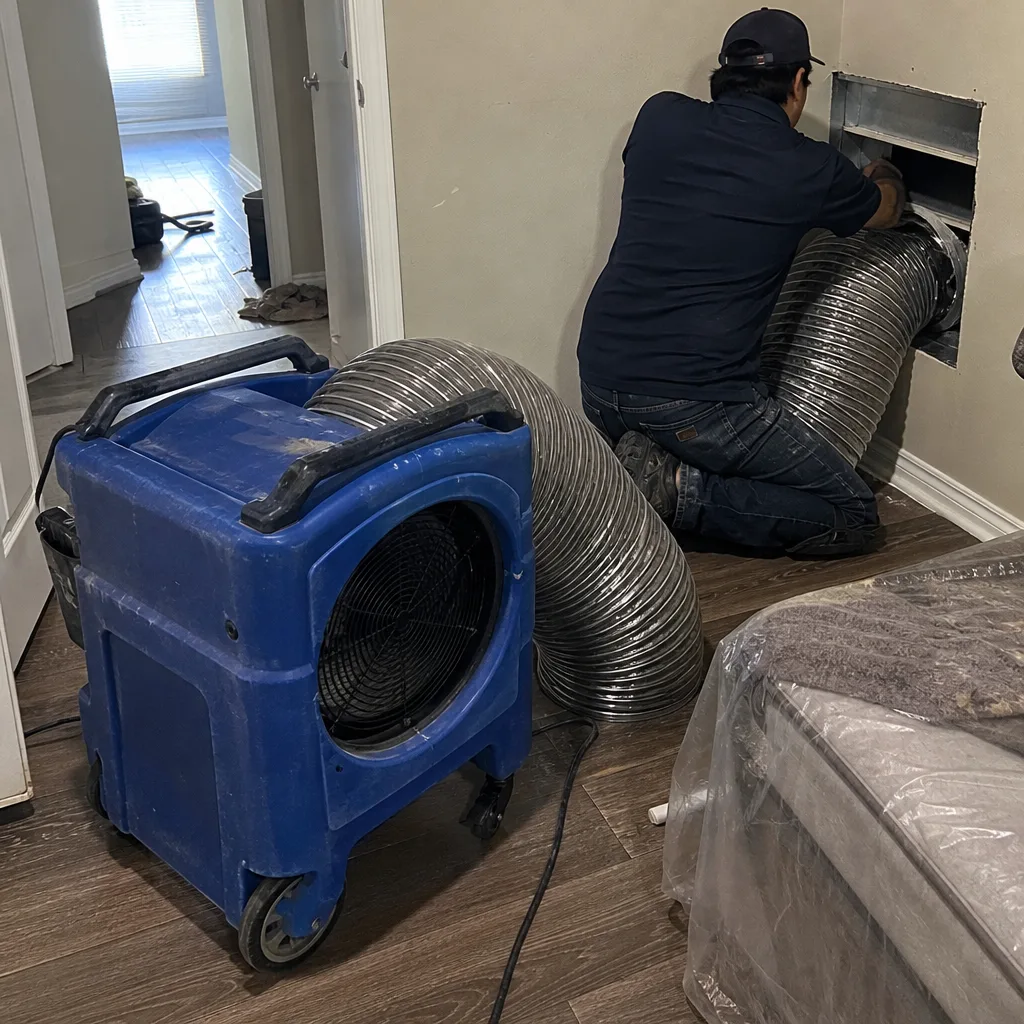
Last updated November 15, 2026
 Whole-home duct cleaning
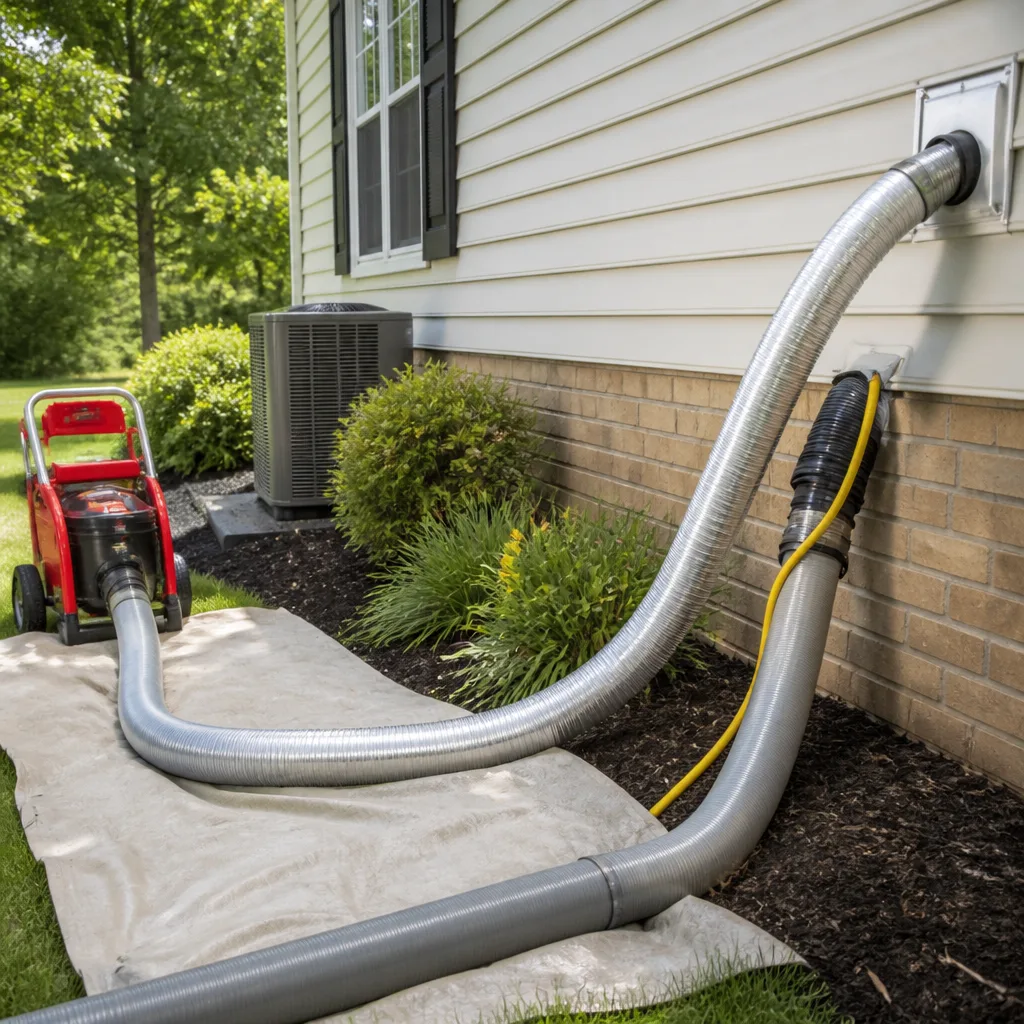
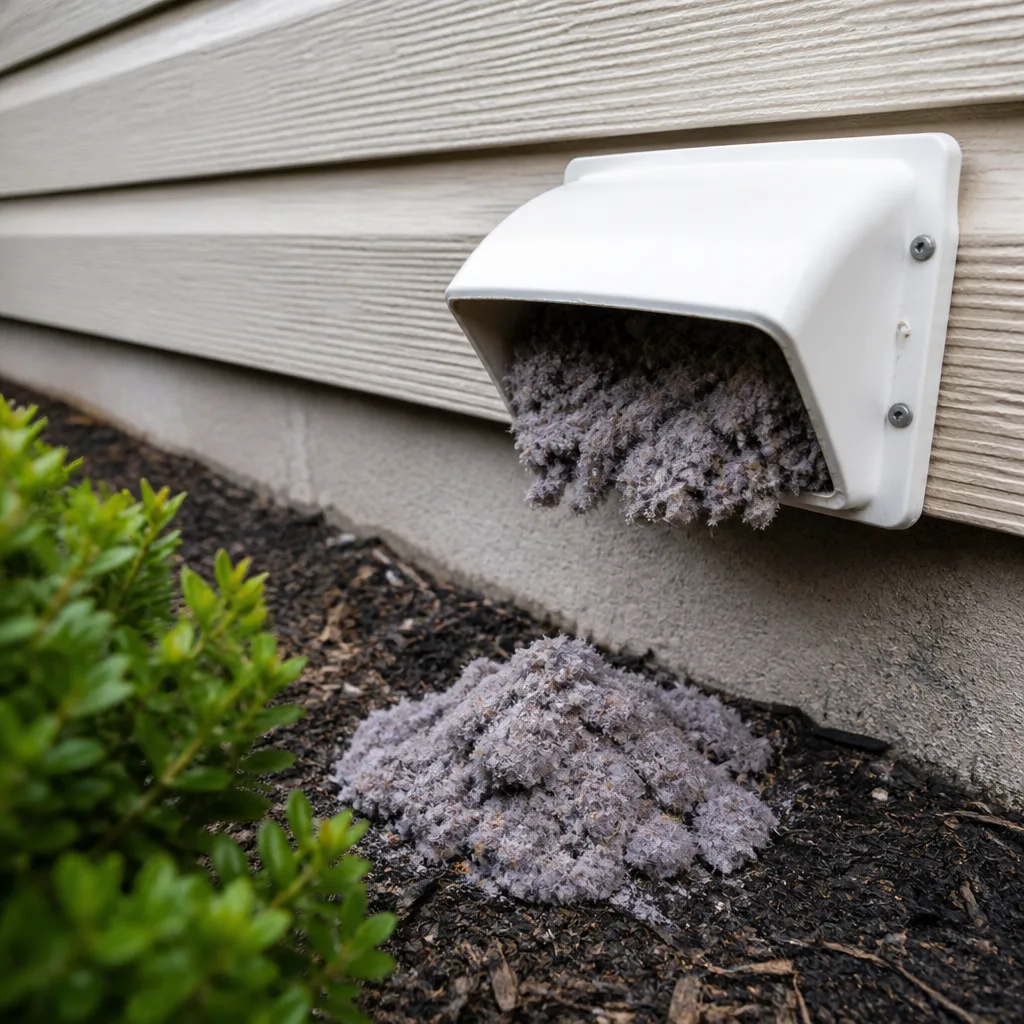 Dryer vent cleaning
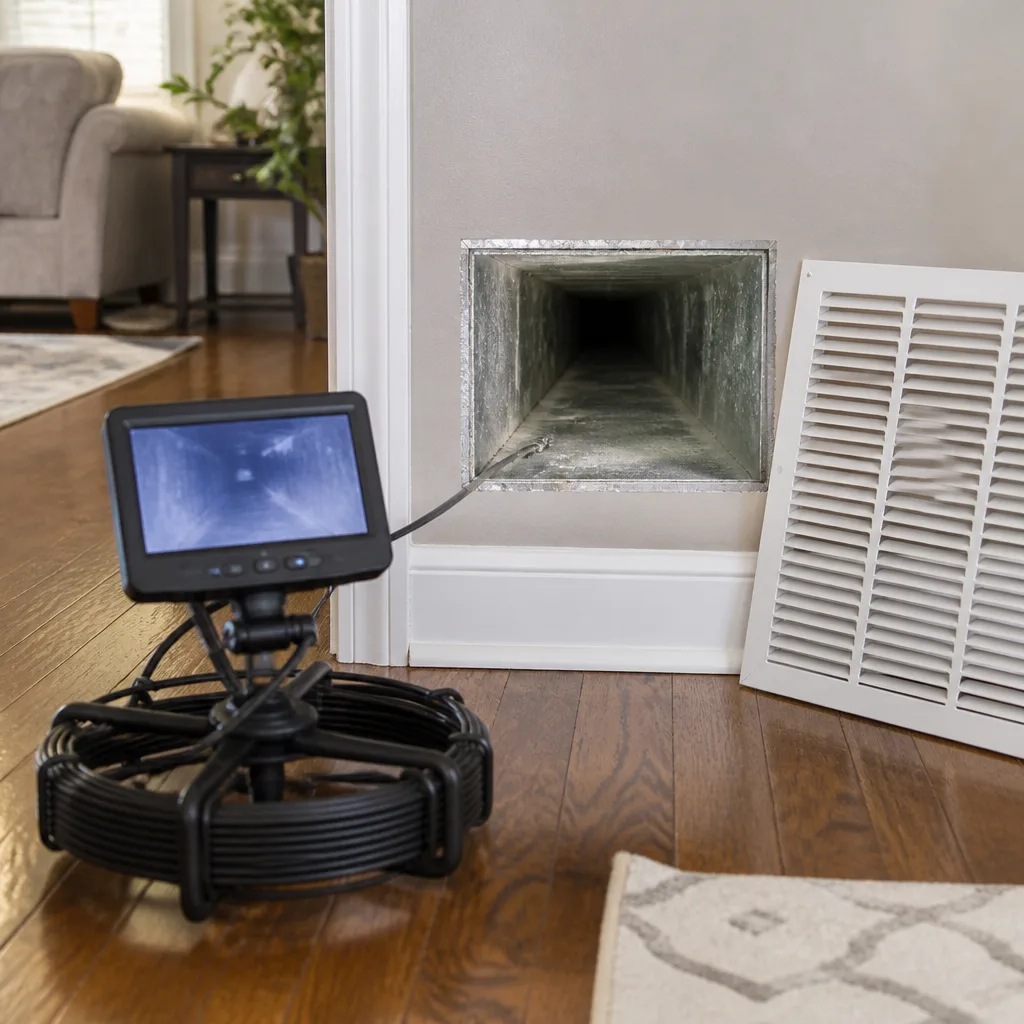 Camera inspection
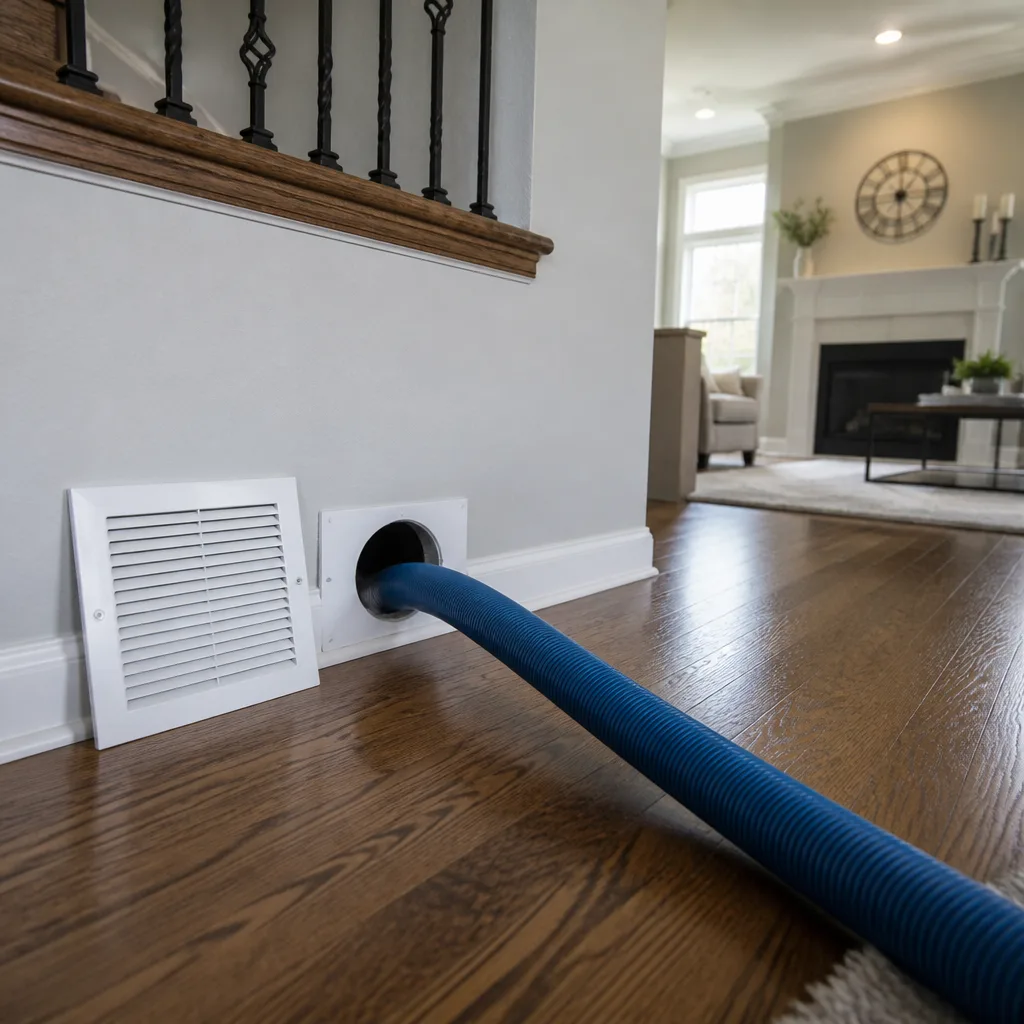 Sanitizing & deodorizing
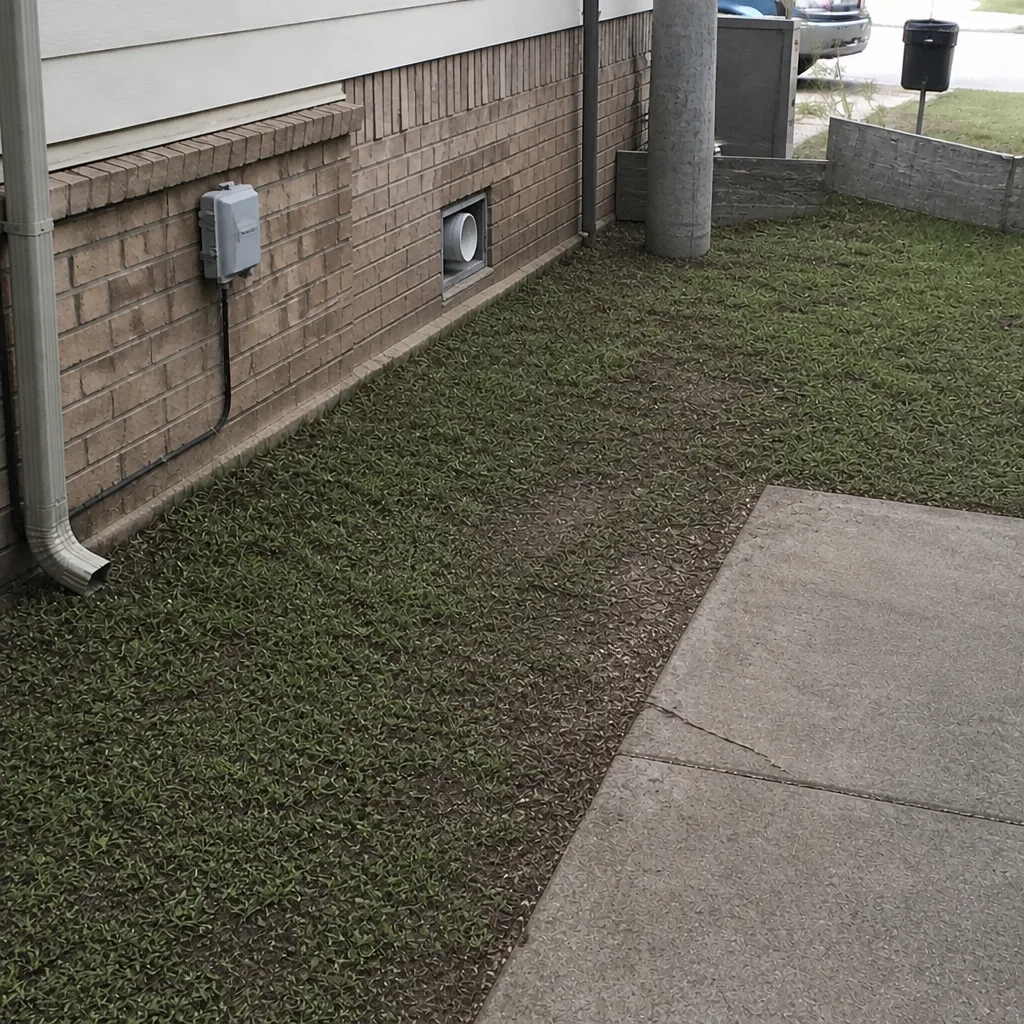
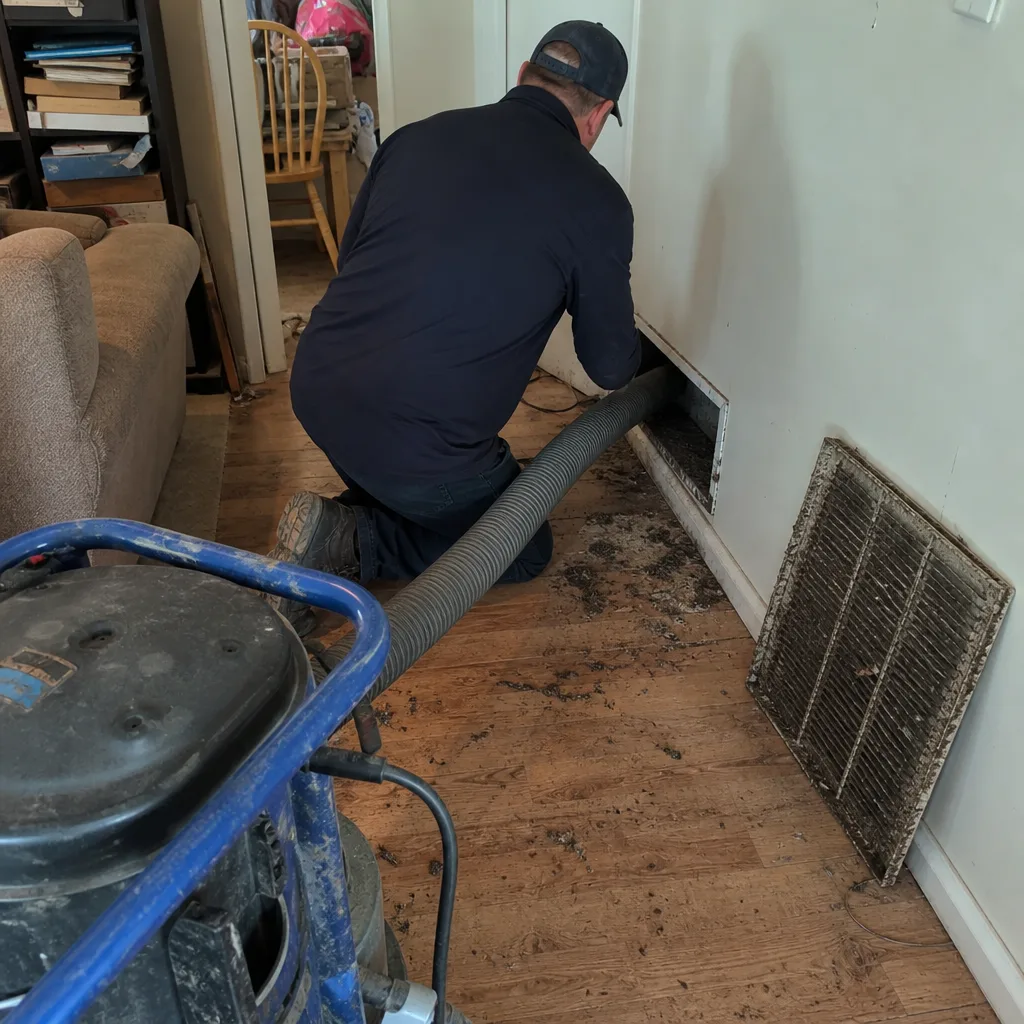
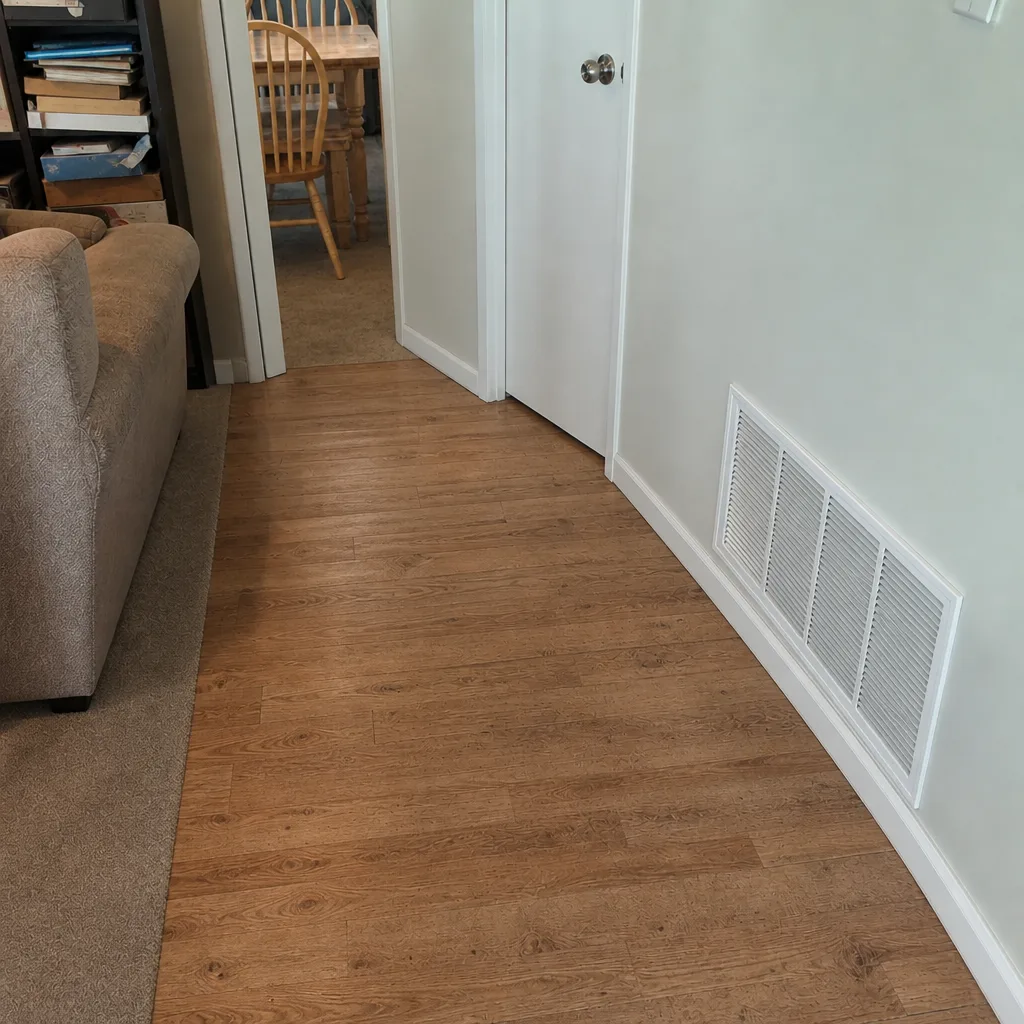
Whole-system duct and dryer vent check with before-and-after photos - you see exactly what came out of your vents
That "$99 whole-house special" is a bait ad - the real number appears once they are in your hallway, or the "clean" is a shop-vac at the register. We photograph the inside of your ducts before and after instead.
Air Duct Cleaning Permits, Codes & Inspections in Denton, TX: What You Need to Know
Here’s the part that surprises most homeowners: the duct cleaning itself almost never needs a permit. But the moment a technician cuts into a plenum, replaces a run of flex duct, or reconnects an air handler during what you booked as a cleaning, that work can cross into permitted mechanical territory under Texas code. Even when it’s labeled “cleaning prep.” This guide walks through where the line sits, how to verify a permit in Denton, what post-remediation duct work actually requires, and how insurance claims and HOA documentation fit in. Read it before you sign anything for duct work in Denton.
Quick Answer
In Denton, TX, routine air duct cleaning does not require a permit: mechanical cleaning, vacuuming, and sealing of accessible ductwork fall outside permitted work under Texas mechanical code. A permit is typically required when duct work involves new duct installation, replacement of duct sections, relocation of supply or return runs, or modification of an air handler connection – and that work generally must be performed or supervised by a licensed HVAC contractor. For duct work after a mold or fire event, remediation scope and clearance verification fall under separate rules that a cleaning contractor may not be authorized to sign off on.
Styles & brands we work with
- Whole-home duct cleaning
- Dryer vent cleaning
- Camera inspection
- Sanitizing & deodorizing
Table of Contents
- What duct work is permit-exempt in Denton?
- When does duct work cross into permitted territory?
- How do I verify whether a contractor pulled a permit in Denton?
- What does Texas require for duct work after mold or smoke events?
- How do insurance claims for duct damage interact with code in Denton?
- Why some Denton HOAs and rental managers want documentation beyond a receipt
- What to check before, during, and after a duct cleaning
- Common mistakes to avoid
What duct work is permit-exempt in Denton?
Mechanical cleaning of an existing duct system is permit-exempt in Denton. That covers the work most homeowners actually book: agitating dust and debris off the interior of ducts with a rotary brush, extracting it under negative pressure, and cleaning the supply and return registers, plenum accessible surfaces, and the air handler cabinet’s exterior panels. None of that touches the structure of the duct system itself. No new seams, no new runs, no reconnection work that changes the mechanical configuration.
What routinely gets classed as exempt under Texas mechanical code, when the scope stays inside the boundaries above:
- Rotary brush cleaning of interior duct surfaces (the Rotobrush approach we use – mechanical agitation plus simultaneous extraction).
- HEPA-filtered vacuum extraction with contained debris removal (the Nikro equipment setup).
- Negative-air containment during cleaning so dust doesn’t recirculate into living space (the Abatement Technologies practice).
- Cleaning and re-seating of existing registers, grilles, and access panels without modification.
- Dryer vent cleaning as a standalone service – lint removal from an existing vent run.
- Non-structural air sealing of small existing joints with mastic or approved tape, where no duct section is replaced.
That last bullet is where the line gets fuzzy in practice. Air sealing an accessible joint is generally treated as maintenance. Cutting out a section of crushed flex duct and replacing it with new duct is not. If the technician’s report says “replacement” or “reroute,” ask who’s pulling the permit and whether that person is a licensed HVAC contractor. We bring this up in our own air duct cleaning walkthroughs before work begins, because we’ve seen enough jobs change scope mid-visit that it’s better to name the line up front. If the scope of your job creeps past cleaning into cutting and joining new duct, the answer to “does this need a permit?” flips fast.
When does duct work cross into permitted territory?
Duct work crosses into permitted territory the moment the mechanical system’s configuration changes. Under Texas’s mechanical code framework – adopted locally and administered by the city’s building department – a permit and licensed contractor are typically required for the categories below. Note that these are the general categories; the exact trigger points are set by the City of Denton’s current adopted code and the building department has the final word.
- New duct installation. Adding a supply or return duct to a room that didn’t have one, or extending a system to a new addition.
- Replacement of duct sections. Cutting out damaged, crushed, or contaminated duct and installing new duct in its place – not just cleaning the old one.
- Relocation of duct runs. Moving a supply or return boot to accommodate a remodel, wall change, or new floor plan.
- Air handler modifications. Changing the plenum connection, altering the supply or return transition at the air handler, or changing the size of the plenum opening.
- Duct system redesign. Rebalancing that requires resizing duct runs or installing new dampers at the trunk level.
- Convertible or replacement equipment scope. Any duct work tied to a new HVAC unit installation, where the code treats the full mechanical system as one permitted scope.
Here’s the trap: some of these happen inside what the homeowner thinks is cleaning. A blower door test during the walkthrough reveals duct leakage. The technician recommends “re-sealing” the plenum. That recommendation, done properly, often involves replacing flex duct and reconnecting at the plenum – permitted work in Denton. If it’s done without a permit by someone who isn’t a licensed HVAC contractor, the homeowner inherits the code problem, not the contractor. In our experience, the honest move is to hand that portion of the job to a licensed mechanical contractor rather than blur the line. Cleaning is our scope. Structural duct replacement is not. Our Duct Cleaning Denton team will tell you plainly when a job needs to be split.
How do I verify whether a contractor pulled a permit in Denton?
You verify a permit in Denton by contacting the City of Denton’s building department (also called Development Services) and asking whether a mechanical permit has been issued for your address. The permit record is public. You’ll need the property address and a rough date range. This is the single most reliable check a homeowner has, and almost nobody does it.
Here’s the sequence we recommend to anyone booking duct work in Denton that involves replacement or modification:
- Before work starts, ask the contractor directly: “Will this job require a permit, and are you pulling it?” Get the answer in writing on the estimate.
- Ask for the licensed contractor’s name and license number if replacement or modification is on the estimate. Texas requires HVAC contractors to be licensed by the state. If they can’t produce it, pause.
- Check with the City of Denton building department that the permit was issued for your address. You can ask them what inspections will be required and when.
- Confirm who will perform the work. Cleaning crews and licensed HVAC contractors are not the same. If the estimate lists “duct replacement” and the contractor isn’t licensed for it, the permit may not have been pulled correctly.
- At closeout, ask for the inspection card or final inspection notice. A permitted job in Denton gets inspected. A job that didn’t get inspected usually means the permit wasn’t pulled.
- Photograph the work in place – new duct runs, plenum connections, air handler joints – before drywall or insulation goes back.
One more thing about Denton specifically: permit requirements are set by the city’s adopted code, and adopted codes get updated. What’s exempt today could shift. The building department’s current guidance is the authority – not a contractor’s memory, not a web forum, not what “worked last time.” We say this to every homeowner we quote in Denton, because it’s not our call to make. For homeowners across Denton, the building department is a phone call away and they’re used to the question.
What does Texas require for duct work after mold or smoke events?
After a mold or smoke event, the duct system pivots from “dirty” to “contaminated,” and cleaning-only scope frequently isn’t enough. Post-remediation duct work falls under distinct rules. In general terms, mold remediation in Texas is regulated separately from HVAC work, and documentation of the remediation scope – including clearance verification by a qualified party independent of the remediator – is standard practice. Cleaning contractors and remediation contractors are not the same, and neither is the same as a licensed HVAC contractor doing replacement.
Here’s how the scope typically breaks down after a mold or smoke event:
- Cleaning-only scope (rotary brush, HEPA extraction, negative-air containment) is appropriate when the contamination is surface-level inside otherwise intact duct.
- Remediation scope applies when porous duct material (fiberglass duct board, internally insulated flex) has absorbed mold or smoke residue. Porous duct that has absorbed contamination generally cannot be cleaned back to a safe state; it’s removed and replaced.
- Licensed HVAC work applies when removable duct (rigid metal, new flex) is being installed to replace contaminated or damaged sections. That’s mechanical work and permitted.
- Post-remediation verification applies when a third party – independent of both the remediator and the duct cleaner – confirms the work cleared the contamination criteria. In many insurance and property-management contexts this is expected before a system is put back into service.
Where cleaning stops and replacement begins depends on the duct material and the depth of contamination – that call usually belongs to the remediation scope and the licensed mechanical contractor, not the cleaning crew. We’re clear about that boundary. Our equipment (Rotobrush, Nikro, Abatement Technologies) cleans well, but it doesn’t remediate absorbed contamination or replace duct. When a smoke or mold call comes to us, we tell the homeowner up front what we can do and what needs someone licensed to do it. Then we do the cleaning portion when the remediation scope calls for it. If you’re also booking dryer vent cleaning at the same time, note that dryer vents are basically never in scope for HVAC permitting – they’re an appliance exhaust, not part of the conditioned air system – so that piece stays simple.
How do insurance claims for duct damage interact with code compliance in Denton?
Insurance claims for duct damage and code compliance in Denton both matter, and they don’t always agree. An insurer pays for the damage. The City of Denton enforces the code. The adjuster’s scope of work is not a building permit, and paying a claim doesn’t make permitted work legal if it wasn’t done under permit. This trips up homeowners after storm, fire, and water-intrusion events more than any other single issue.
Here’s what tends to come up in a duct-related insurance claim:
- Scope alignment. The adjuster’s estimate will list what insurance pays for. It may list duct replacement without specifying that it needs a permit. The permit is the contractor’s responsibility, not the adjuster’s.
- Code upgrade coverage. Many policies include limited coverage for code-required upgrades discovered during the repair. Whether yours does depends on your policy language – read it before you sign a contractor’s authorization.
- Documentation before work begins. Photograph the damage, get the contractor’s written scope, and confirm with the City of Denton whether the scope triggers a permit. Insurers accept documentation; they don’t retroactively accept invented scopes.
- Post-remediation verification. For water intrusion that produced mold, the insurer and the property manager will both want third-party clearance documentation before closeout. A cleaning receipt is not that.
- Contractor licensing for the claim-payment portion. Replacement work still needs a licensed HVAC contractor for the mechanical permit, regardless of what the adjuster’s estimate says.
We can work with your insurer on the cleaning portion of a claim – providing the documentation of what was cleaned, what we found, and photographs – but the mechanical replacement and permit side needs to run through a licensed mechanical contractor. Texas’s mild winters mean duct damage in Denton is rarely freeze-driven; it’s usually water intrusion from above, storm-driven attic damage, or an appliance failure. That changes the insurance category more than it changes the code question. For anyone working through a claim or just trying to sort out the scope, our phone at (888) 890-4255 is answered 24/7 and we’re glad to walk through what we can and can’t do.
Why some Denton HOAs and rental managers want documentation beyond a receipt
A service receipt from any duct cleaning company looks about the same: date, address, dollar amount, “cleaned ducts.” The documentation a Denton HOA or rental property manager actually wants is different. It has to demonstrate what was cleaned, what state it was in before, and what state it was in after – the verifiable evidence a service receipt skips.
Here’s what comes up when property managers or HOAs in Denton ask for documentation:
- Before-and-after photographs of the same internal duct surfaces, plenum, and registers. Phone-camera photos with timestamps are fine; they just have to be of the unit they claim to be of.
- Written scope of the work performed – which duct runs were cleaned, which returns, whether the air handler cabinet exterior was cleaned, and whether any area was inaccessible.
- Pre-existing condition notes – damage, disconnected duct, pest intrusion, moisture staining – because a property manager inherits liability for what they know about. A contractor who doesn’t document condition leaves the property manager exposed.
- Equipment identification – the equipment class (for example, rotary brush with HEPA containment) as opposed to a generic vacuuming claim. Some HOAs and property managers specifically want to see that the work wasn’t done with a consumer-grade shop vac.
- Whether any replacement work is recommended – and if it is, the licensed contractor referral that goes with it. Property managers often need to project future spend, and recommending replacement in writing is part of that.
- Dryer vent documentation – many rental managers now ask for a separate dryer vent line item, both as a fire-prevention record and as a compliance note in the tenant file.
Why the extra rigor? For rentals, because a tenant can raise a habitability question later and the manager needs to show diligence. For HOAs, because internal duct work in a stack can involve shared chases and the board wants a record that the work was done by someone who understood that. In our experience writing up jobs for Denton property managers, the documentation set that satisfies the HOA is usually the one the individual homeowner would also want for their own records. We provide before-and-after photos of the ducts we cleaned as part of every job – if that’s what your manager needs, ask for it up front. If your air handler or filter cabinet uses Honeywell or Aprilaire components, mention that at booking too; the documentation can note those so the manager sees the whole picture.
What to check before, during, and after a duct cleaning
The right inspection sequence saves you from discovering, months later, that the job that got done wasn’t the job you booked. Here’s what to look for at each stage, from the homeowner’s side of the process.
Before the job:
- Ask whether any scope in the estimate involves duct replacement or modification. If yes, ask for the licensed contractor’s name and whether a permit will be pulled through the City of Denton.
- Ask what equipment will be used. A professional-grade rotary brush with HEPA extraction and negative-air containment is a different class of work than a shop-vac truck mount. If the answer is vague, ask again.
- Ask whether you’ll receive before-and-after photos of your own ducts as part of the closeout documentation.
- If there’s an ongoing insurance claim or property management file, ask what documentation the contractor can provide beyond the receipt.
During the job:
- Watch for negative-air containment at the return openings and work area – mild negative pressure in the house means dust isn’t recirculating.
- Confirm the crew is cleaning the return plenum and the accessible air handler cabinet exterior, not just the supply registers.
- If the crew discovers a damaged or disconnected duct, ask for it to be documented in writing with photographs – that’s the item that often flips the scope into permitted territory.
After the job:
- Review the before-and-after photographs against the areas that were cleaned in your own home.
- Ask for the written closeout note that flags any recommended follow-up work, including whether replacement or modification is recommended and whether that would need a permit.
- If replacement was done as part of the job, ask for the permit number and the inspection card. If they can’t be produced, contact the City of Denton building department to confirm the permit status.
- If it was a rental or HOA property, file the documentation alongside the invoice – it may be requested later.
If you want the full process written out for the cleaning itself, our main Duct Cleaning Denton page covers it step by step.
Common Mistakes to Avoid
- Assuming the receipt proves the permit was pulled. A service receipt shows money changed hands; it does not show a permit. If any duct was cut or replaced, ask for the permit number and confirm it with the City of Denton yourself. Receipts are silent on code.
- Letting “cleaning prep” expand into modification. Some contractors use the label to cover replacement work. Before work begins, ask for the scope in writing and check whether it includes replacement, rerouting, or plenum changes. That answer is the line that decides whether a permit is needed.
- Confusing cleaning with remediation. Duct cleaning and mold remediation are separate scopes with separate rules. If your duct was contaminated by a mold or smoke event, the cleaning crew may not be authorized to sign off on remediation clearance – and it shouldn’t be asked to.
- Trusting a home inspector’s “ducts look fine” for a purchase in Denton. A general home inspection typically doesn’t open duct runs or check for disconnected duct behind walls. On an older home, ask for a duct-specific inspection and confirm documentation before closing.
- Skipping documentation for rental or HOA properties. A receipt is generally not what a Denton HOA or rental manager needs. Ask for before-and-after photographs, written scope, condition notes, and equipment identification at booking, and make sure they land in the file.
- Not reading the insurance scope before signing a contractor authorization. Insurance pays for damage, not for code compliance. Signing an authorization without confirming the permit side of the scope can leave you with paid-for work that doesn’t pass inspection.
- Letting a dryer vent go uncleaned because the receipt said “ducts cleaned.” Dryer vents are a separate safety scope, and they’re not typically covered by a “duct cleaning” line item. If your dryer vent hasn’t been cleaned, ask for it to be documented separately.
See the difference
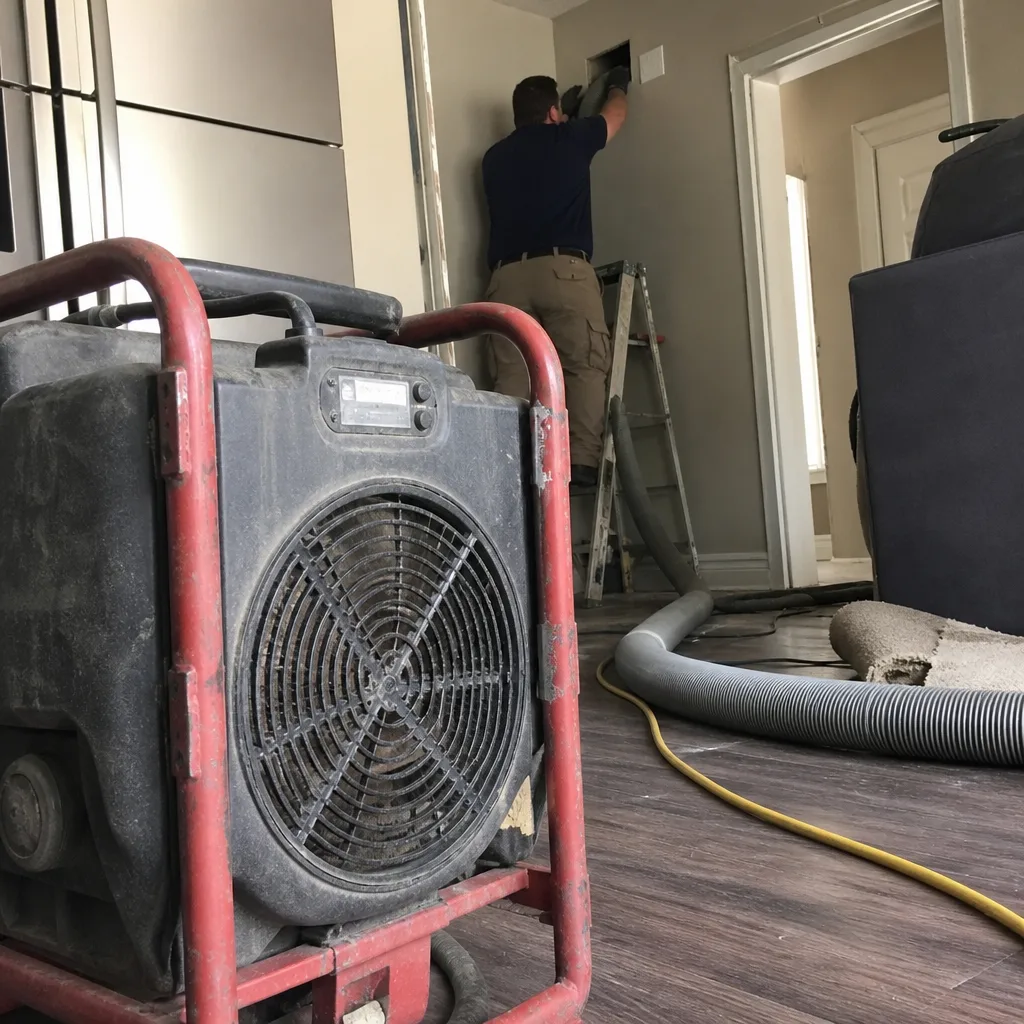 Before
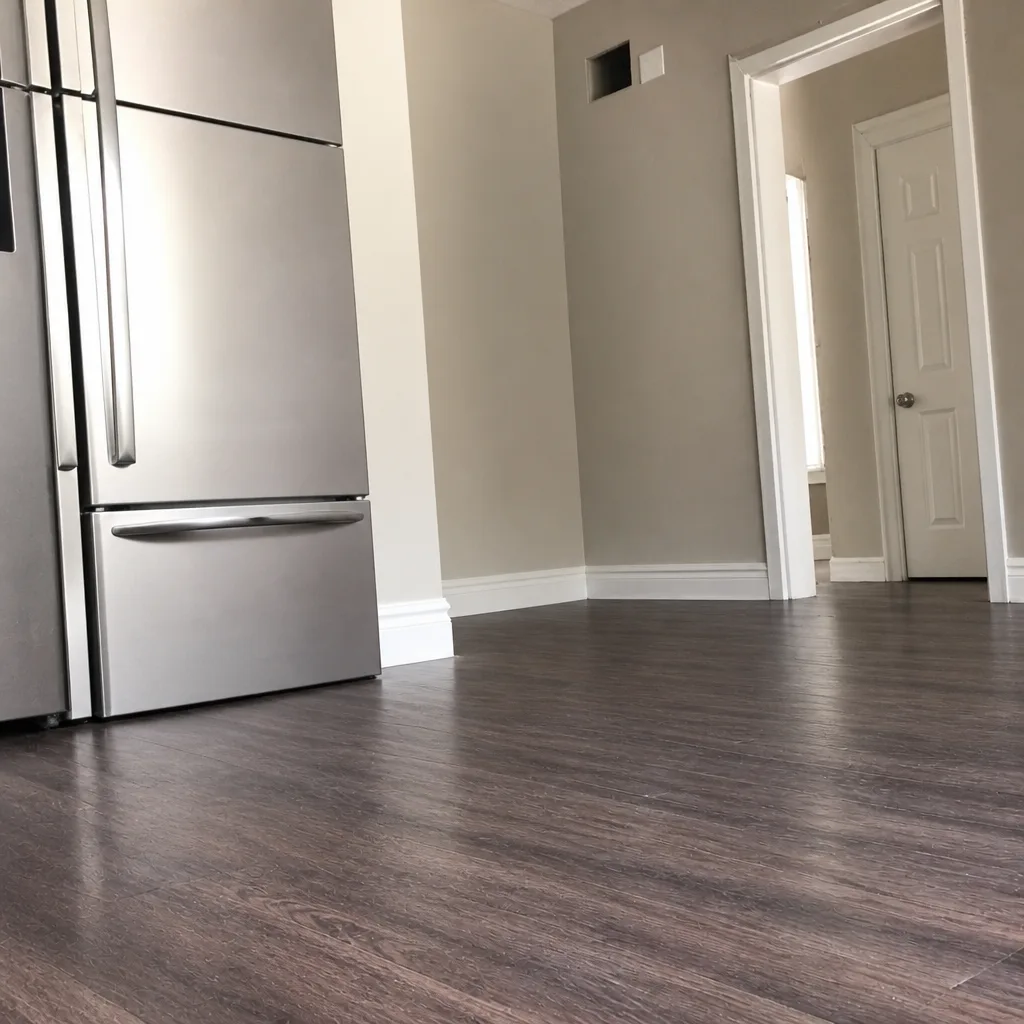 After
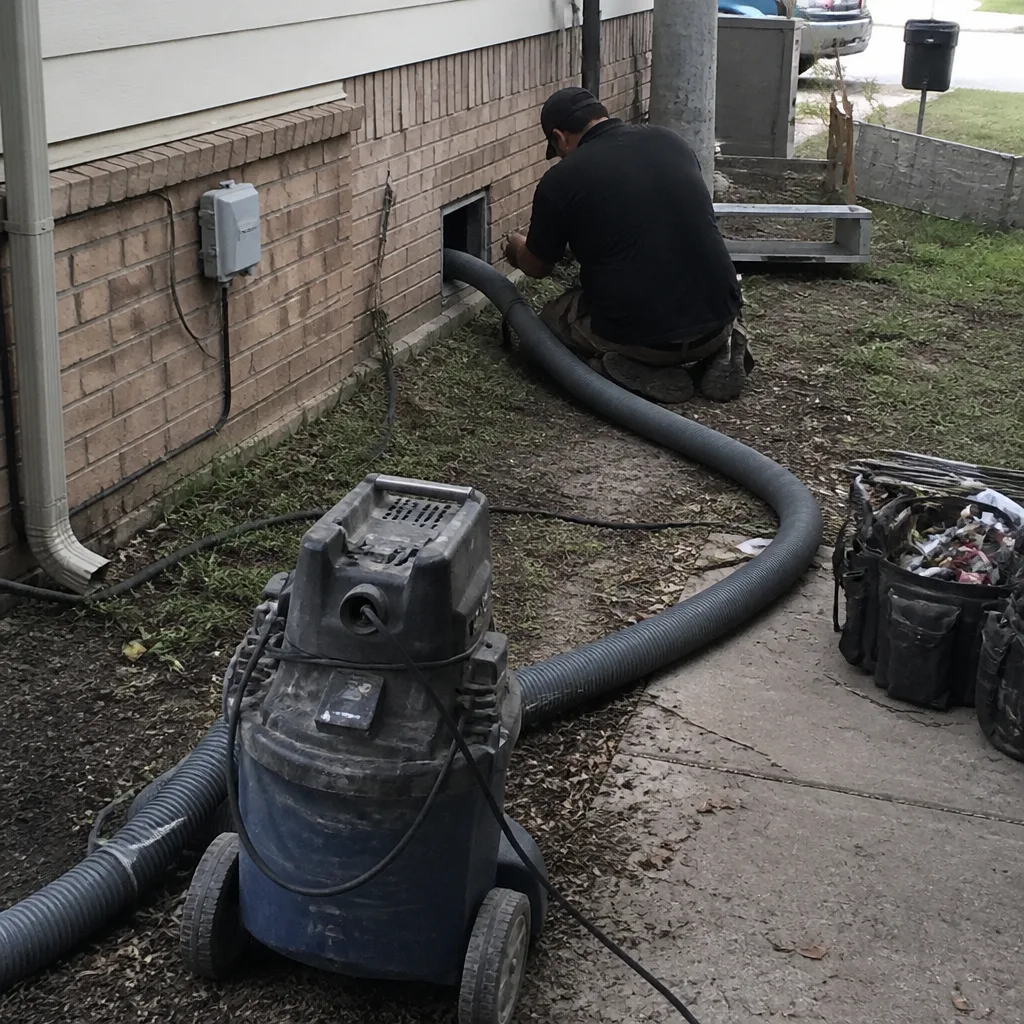 Before
 After
 Before
 After
When to Call a Professional
Book a professional when your ducts are dirty enough that a consumer kit won’t reach – visible debris on the register grilles, dust plumes from supply vents when the system starts, or a musty smell that follows airflow. Book a professional when anyone in the home has new or worsening allergy symptoms, or when a child, elderly family member, or immune-compromised adult lives there. Book a professional after buying a home where you don’t know the duct history, after a renovation that put drywall dust into the system, after a pest intrusion, or when your dryer vent hasn’t been inspected in a long while. Book a professional before signing any estimate that includes duct replacement, so you’re clear on who’s pulling the permit and who’s licensed to do it. Duct Cleaning Denton offers free estimates in Denton – call (888) 890-4255. We answer 24/7. Fast dispatch from 7am to 7pm, Sunday through Friday. Our technicians have up to 11 years of experience, we quote one flat price per system agreed before work starts, and we provide before-and-after photos of your own ducts.
Frequently Asked Questions
No. Routine air duct cleaning in Denton does not require a permit – mechanical cleaning, extraction, and non-structural sealing of accessible duct are permit-exempt under Texas mechanical code. A permit is required once the scope involves new duct installation, duct section replacement, relocation of runs, or modification of an air handler connection. Call (888) 890-4255 if you want help sorting out whether your scope crosses that line – estimates are free.
Call the City of Denton building department (Development Services) with your property address and ask whether a mechanical permit has been issued. The permit record is public, the department can tell you what inspections apply, and you’ll get a yes-or-no answer without a contractor in the middle. If the contractor can’t produce a permit number at closeout, that’s the confirmation the permit wasn’t pulled.
A licensed HVAC contractor in Texas is required for duct installation, replacement, and modification. Cleaning crews are not the same license class. If your scope includes replacement or rerouting, ask the contractor for their license number before work begins, and confirm the permit was pulled with the city. Call (888) 890-4255 if you want us to walk you through which pieces of the job fall on which side of that line.
Post-remediation duct work falls under separate rules from routine cleaning. Typically, porous duct that has absorbed mold or smoke residue has to be removed and replaced rather than cleaned, which is licensed mechanical work, and the remediation scope generally includes clearance verification by a party independent of the remediator. Cleaning-only is appropriate when the contamination is surface-level on otherwise intact duct. Call (888) 890-4255 to talk through your scope – estimates are free.
Not automatically. Insurance pays for the damage, while the City of Denton enforces the code, and the adjuster’s scope of work is not a building permit. Whether your policy includes limited code-upgrade coverage depends on the specific policy language. Read the authorization before signing, confirm the permit side with the contractor, and keep documentation of the damage before work begins. Call (888) 890-4255 if you need help organizing that documentation – estimates are free.
Usually more than a service receipt: before-and-after photographs of the duct runs, a written scope of what was cleaned, condition notes on any pre-existing damage, equipment identification (professional rotary brush and HEPA containment rather than a consumer vacuum), and a written note on any recommended replacement work. We provide before-and-after photos with every job. Call (888) 890-4255 to book a documented cleaning – estimates are free.
The Bottom Line
Routine air duct cleaning in Denton doesn’t need a permit. Duct replacement, rerouting, plenum modification, and any scope involving cutting and joining new duct almost always does – and that work needs a licensed HVAC contractor, not just a cleaning crew. The line between the two is exactly where homeowners get caught: a contractor labels the scope “cleaning prep,” the work crosses into mechanical territory, and the permit never gets pulled. Post-remediation duct work runs on separate rules again, and insurance claims don’t substitute for code compliance. Verify permits through the City of Denton, ask for documentation beyond a receipt, and know which contractor is doing which piece of the job. That’s the difference between clean duct and legal duct.
Duct Cleaning Denton handles the cleaning and dryer vent side of the scope with professional-grade equipment, and we’re clear on the line where replacement and remediation belong. Call (888) 890-4255 for a free estimate. We answer 24/7. Fast dispatch from 7am to 7pm, Sunday through Friday.
Written by the team at Duct Cleaning Denton.