
Last updated November 15, 2026
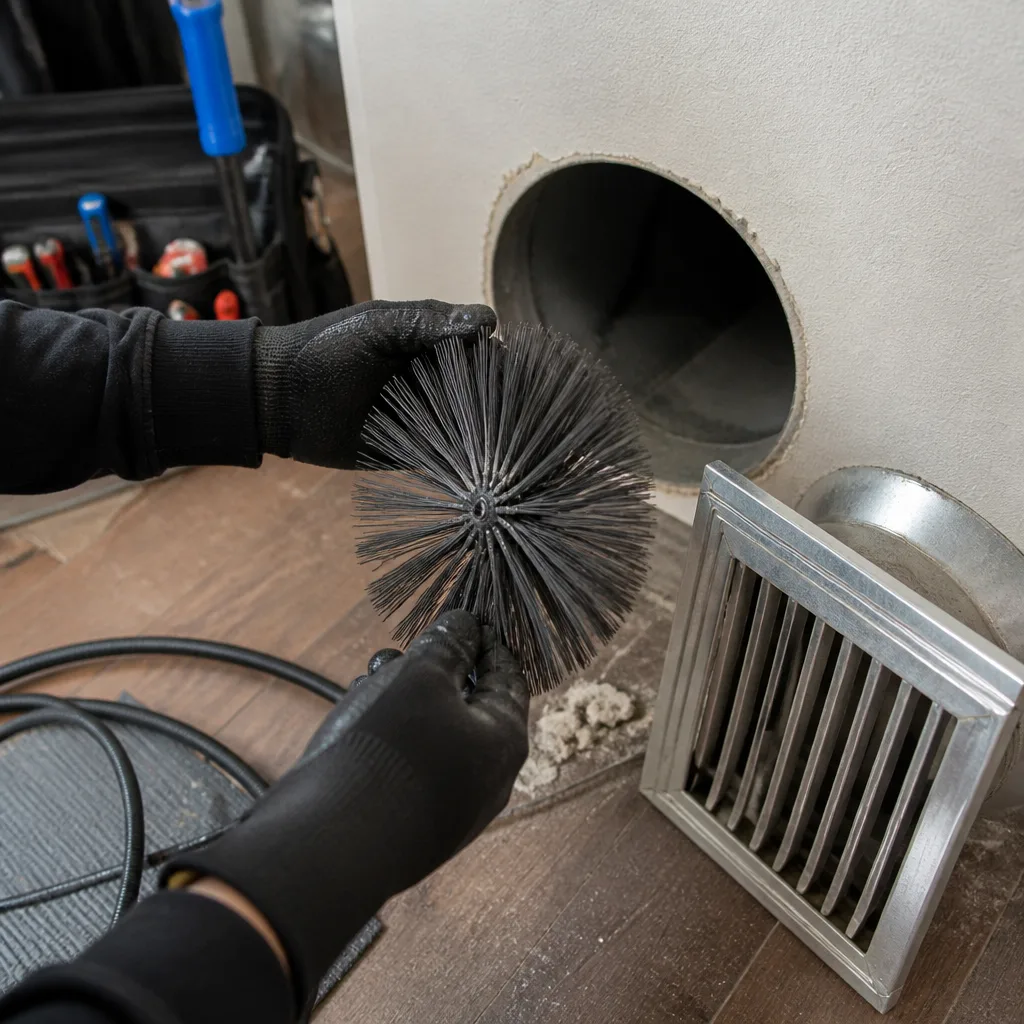
 Whole-home duct cleaning
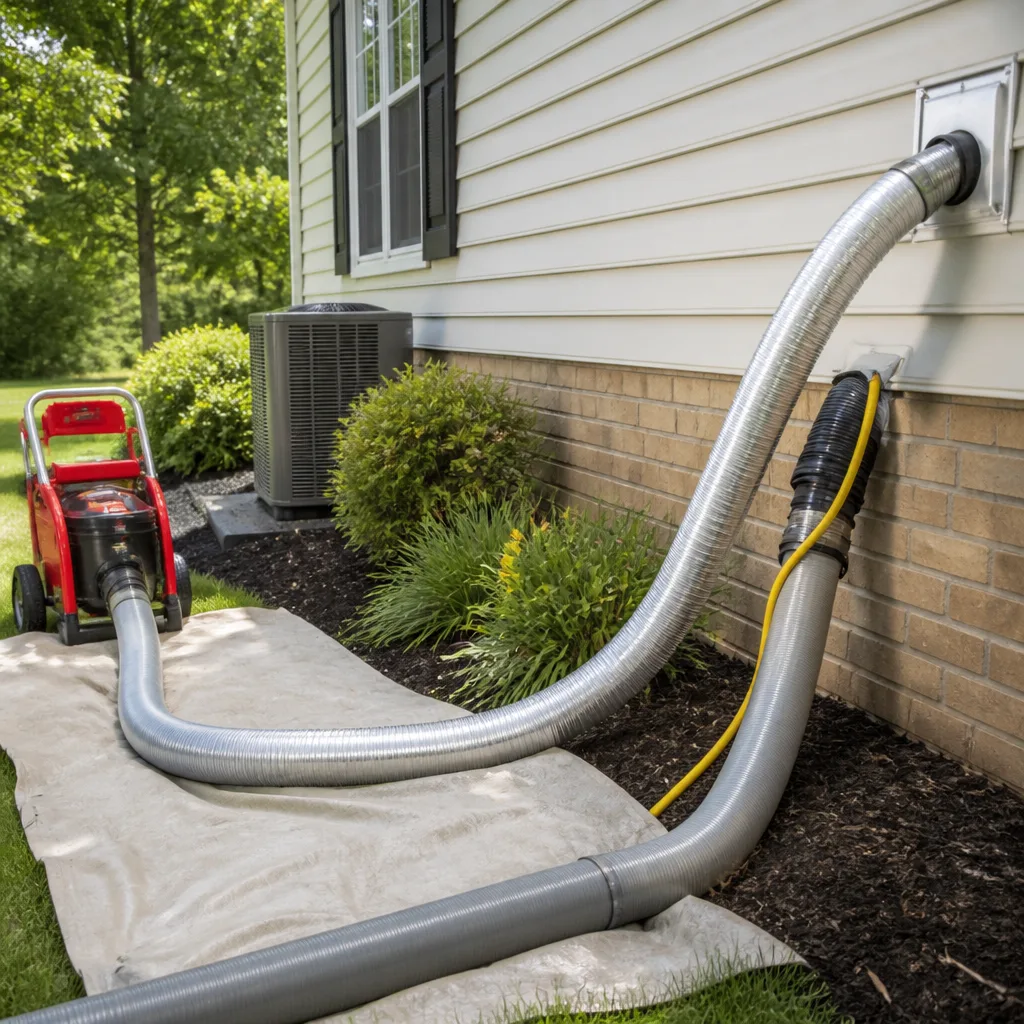
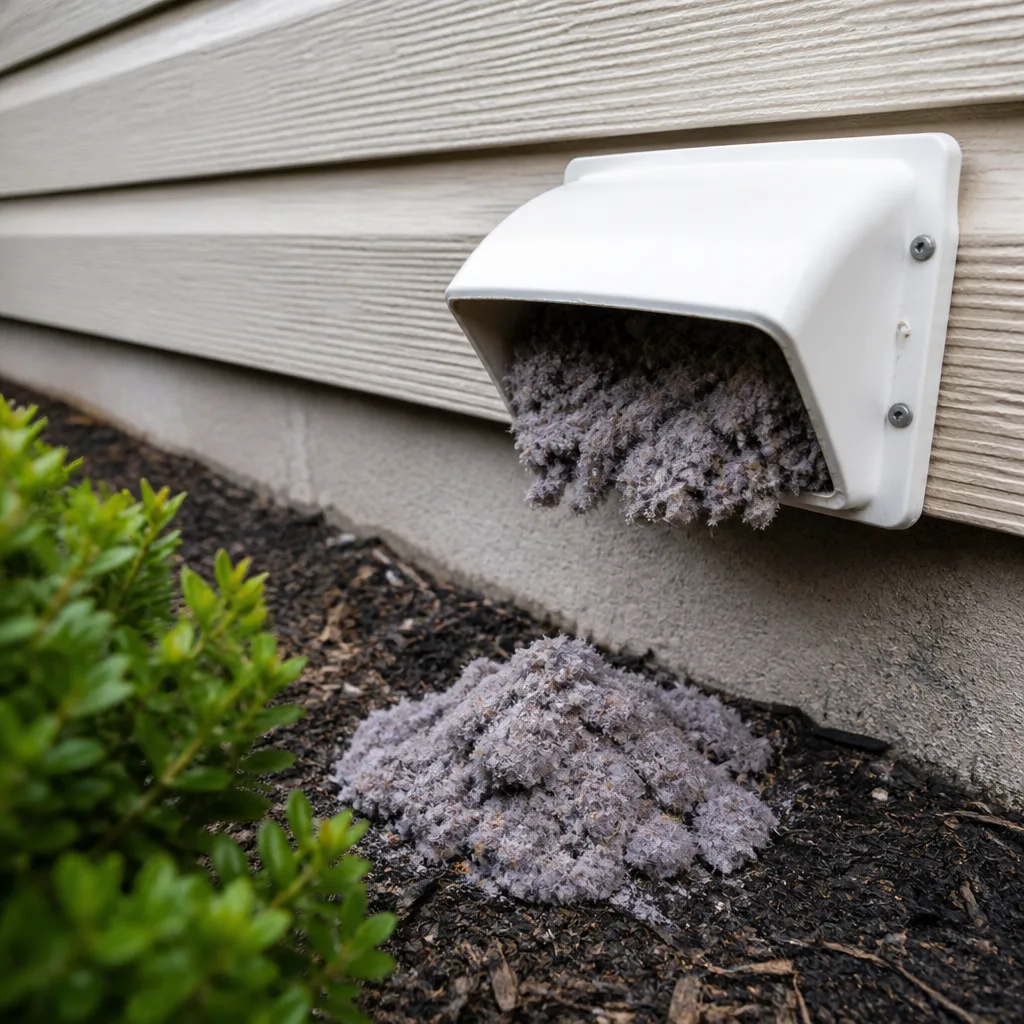 Dryer vent cleaning
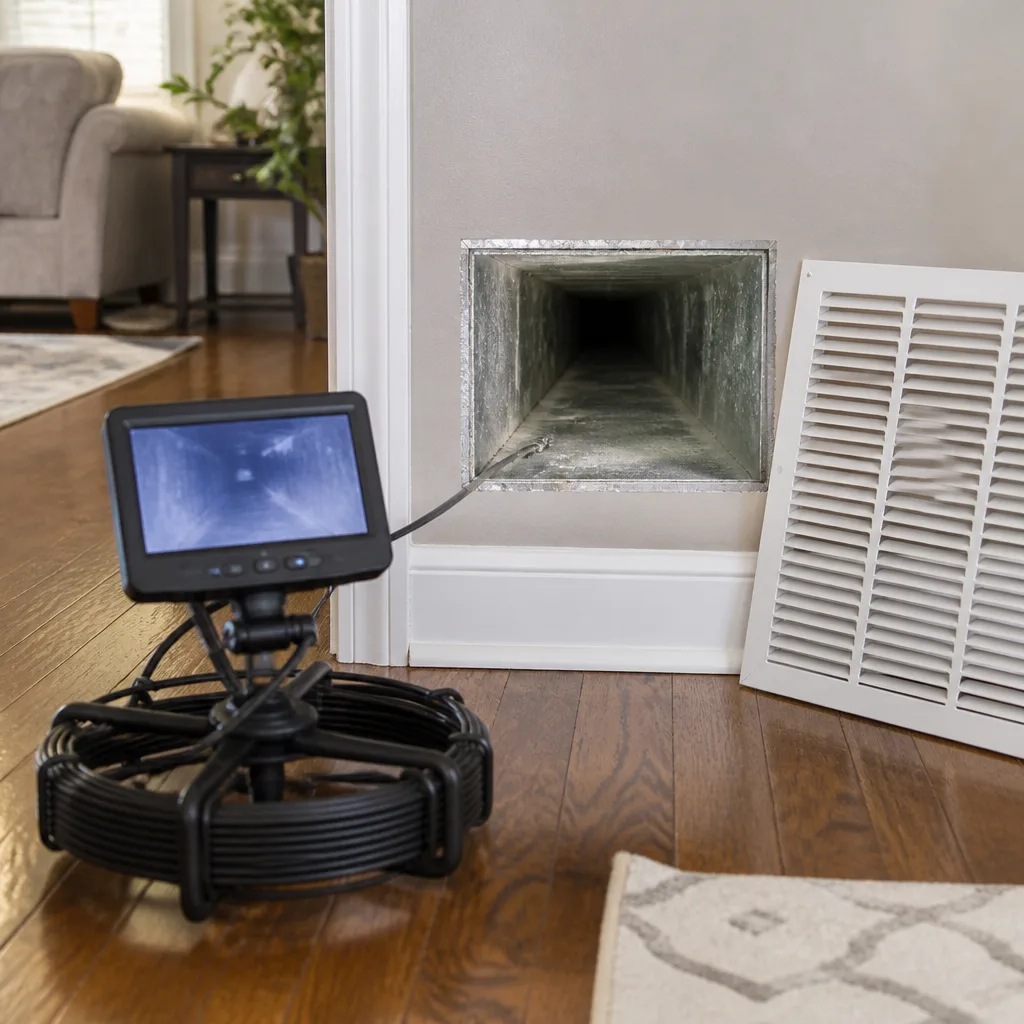 Camera inspection
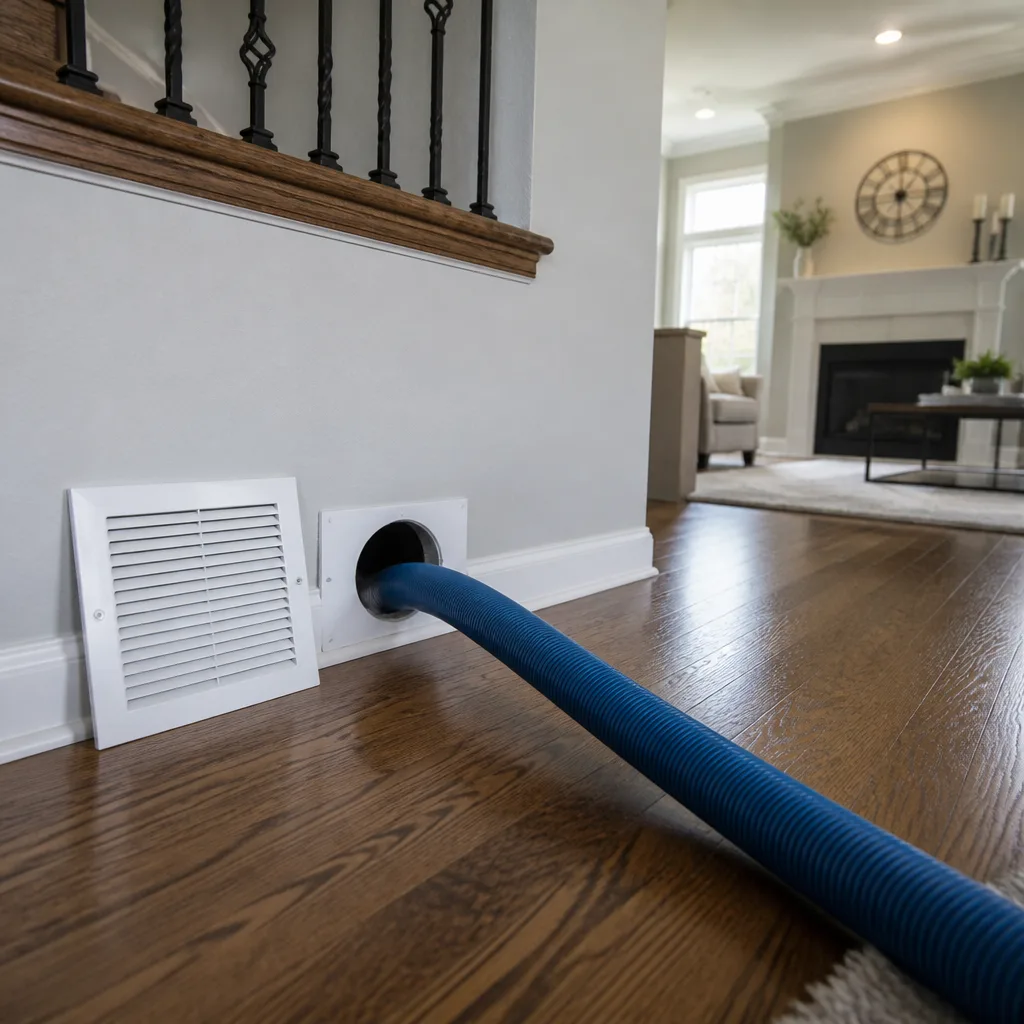 Sanitizing & deodorizing
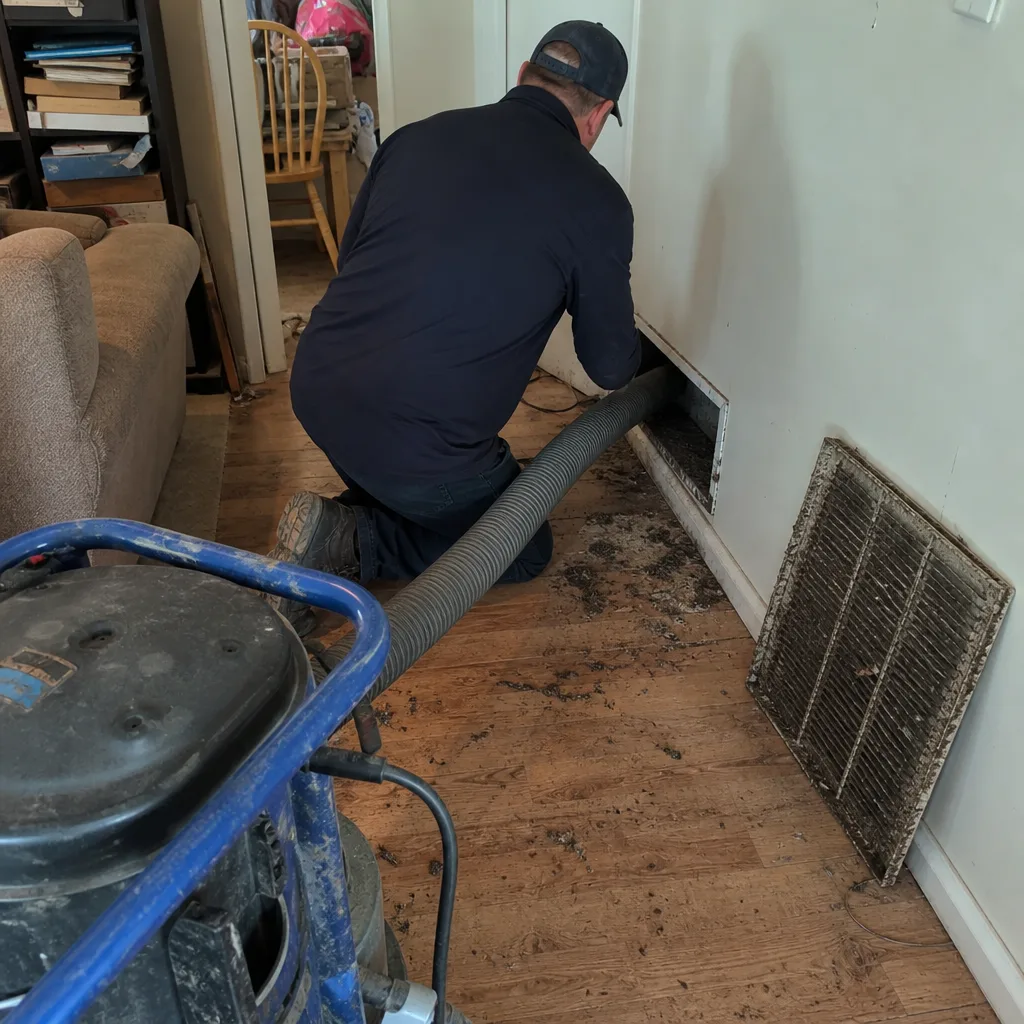
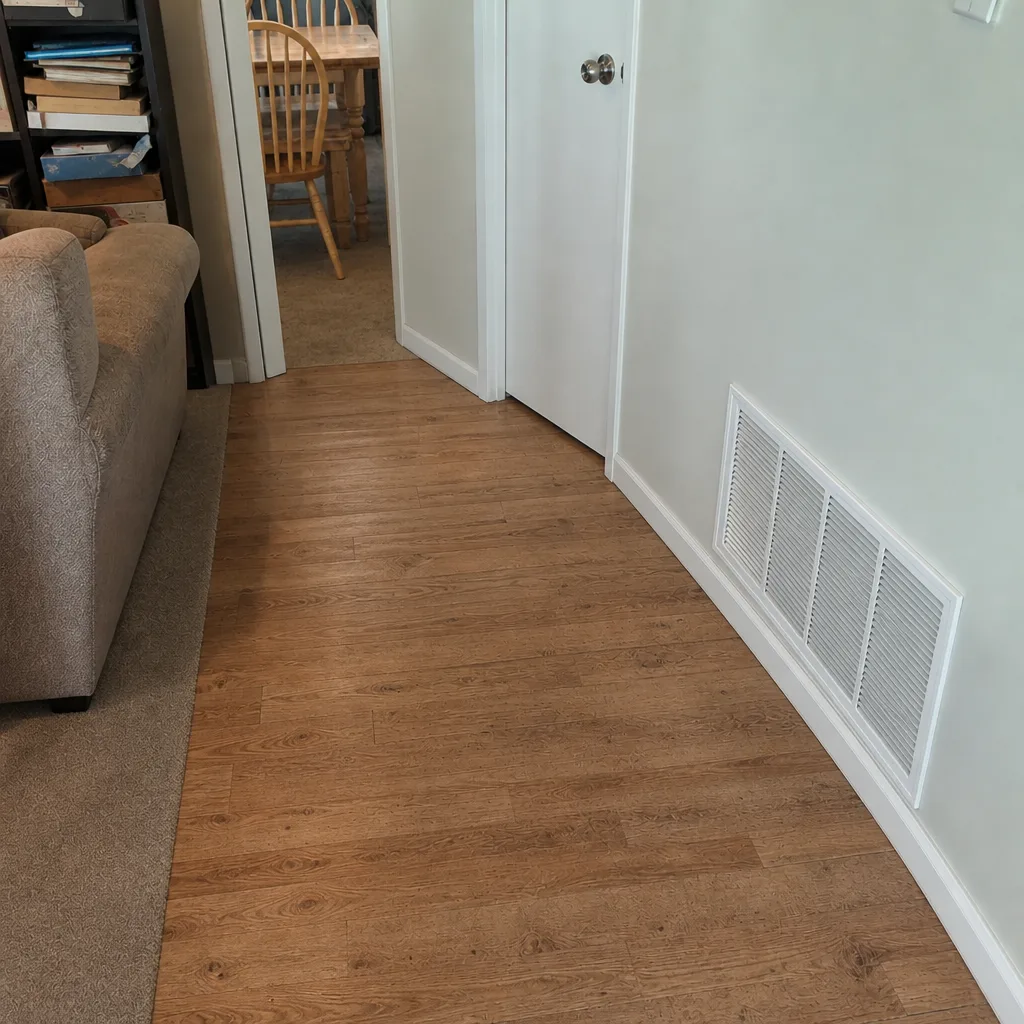
Whole-system duct and dryer vent check with before-and-after photos - you see exactly what came out of your vents
That "$99 whole-house special" is a bait ad - the real number appears once they are in your hallway, or the "clean" is a shop-vac at the register. We photograph the inside of your ducts before and after instead.
Air Duct Cleaning Emergency Preparedness Guide for Denton Homes
Most homeowners assume the ductwork is the last thing to worry about after a storm. In practice, it’s often the first part of the house to collect what the weather leaves behind. Air handlers pull constantly, so a single day of open windows, a pressure change at the roofline, or a flooded crawlspace can move debris, smoke, and moisture straight into the same channels you breathe from every night. This guide walks through the post-storm decisions that matter most for a Denton home, what to check before you restart the system, how smoke and water behave differently inside ducts than dust, what your insurer will want to see, and the quiet preparatory work that limits the damage before the next event.
Quick Answer
After a major storm, wildfire smoke event, or water intrusion in Denton, shut the HVAC system down before walking the house, photograph the outdoor unit and every intake vent, and don’t restart until you’ve confirmed no debris or moisture is sitting inside the return path. Smoke particulate and water in ductwork need professional extraction with negative-pressure containment, not the blow-and-go methods sold at hardware stores. Any duct system exposed to flooding needs to be assessed within the first 24 to 48 hours, because duct liner and insulation start to degrade fast once moisture is trapped.
Styles & brands we work with
- Whole-home duct cleaning
- Dryer vent cleaning
- Camera inspection
- Sanitizing & deodorizing
Table of Contents
- The Post-Storm Protocol for Denton Homeowners
- When to Shut the HVAC Down: A Decision Checklist
- Wildfire Smoke, Regional Burn Events, and Duct Systems
- Flood and Water Intrusion: The 24-to-48-Hour Window
- Insurance Documentation for Duct-Related Claims
- Pre-Emergency Preparedness Steps for Denton Homes
- What Proper Emergency Duct Cleaning Equipment Looks Like
- Repair Versus Clean: Where the Line Sits
The Post-Storm Protocol for Denton Homeowners
After a tornado-adjacent storm passes through Denton, the question isn’t whether debris entered your duct system. It’s how much, through which pathways, and whether your HVAC has already circulated it through the house before you thought to check. That’s the sequence most people get backwards. They walk outside, check the fence, and never think about the return air path until someone in the household starts sneezing two days later.
Here’s the order we recommend, and it holds whether the event was a straight-line wind from the south, a hail core that punched through attic venting, or the dust plume that follows a regional burn. The steps below are general observations, not a rulebook that fits every house. A home on the eastern edge of Denton with a slab foundation and attic flex duct behaves differently from an older pier-and-beam house near the downtown square.
- Stop the air handler first. Before you open doors, before you walk the yard, set the thermostat to off. If you can, cut the breaker to the air handler. This prevents the system from pulling outdoor debris and smoke further into the return path while you’re assessing.
- Photograph the outdoor condenser and the intake vents. Note the time and date on the photos. Your insurer will want them, and so will we if we’re called out.
- Inspect the return grilles inside the house. Look for dust film, grit around the edges, leaves, or visible moisture. Check every return, not just the big one in the hallway.
- Look at the filter. A filter that’s grey-black instead of white in the first day after a storm tells you significant particulate moved through. A filter that’s damp means moisture got in, which is a different problem entirely.
- Walk the exterior for openings. Torn vent covers, cracked return boots under the eaves, and gaps where the soffit pulled off are the usual suspects in Denton after a strong wind event.
- Decide on restart. If the filters are dry, the returns look normal, and there’s no visible water, you can typically restart after changing the filter. If any of those reads wrong, keep the system off and call.
The reason we lead with shutdown is simple. A running air handler multiplies whatever got in. Every minute it pushes air, it also pushes that same air back out through every supply register in the house. Emergency preparedness for a duct system really means controlling that circulation in the first few hours.
When to Shut the HVAC Down: A Decision Checklist
Not every storm warrants a shutdown, and we’d rather you didn’t live without air conditioning through a Denton September when it isn’t necessary. Use this checklist. If you can answer yes to any of the items, the system should stay off until someone has looked at it.
- Visible water anywhere near a return. Even a stain that wicks back up by evening counts. Moisture that touched duct liner leaves a residue even after it dries.
- Debris inside the return grille. Leaves, shingle grit, insulation fiberglass, or attic dust that’s clearly fallen through a gap in the ceiling.
- A strong smell the house didn’t have before. Burning, wet drywall, or the metallic smell that follows a nearby structure fire.
- Heavy visible smoke outside. If the horizon is hazy and the AQI reading is climbing, running the air handler pulls that air inside, not out.
- A filter that is black, wet, or crumpled. All three say the same thing: the system just pulled something it wasn’t designed for.
- Any known damage to attic venting, soffit covers, or roof jack penetrations. Those are pathways straight into the duct envelope.
Outside of a storm, one of the most useful habits is to know where your breaker panel is and which breaker serves the air handler. In an emergency, the thermostat alone isn’t enough; a programmed thermostat can re-initiate a cooling cycle five minutes after you turn it off. We’ve learned to ask homeowners on the phone in Denton whether they cut the breaker, because half the time they haven’t.
If the decision comes down to a delay, keep this in mind. Leaving the system off for a day is almost always cheaper than running it and circulating contamination through the entire house. You can call us at (888) 890-4255 and we answer 24/7. A call outside dispatch hours is booked into the next opening, Sunday through Friday, 7am to 7pm.
Wildfire Smoke, Regional Burn Events, and Duct Systems
Smoke is not a dust problem. It moves through ductwork like a gas. The particles that matter are small enough to stay suspended for hours, and they carry the chemistry of whatever burned, not just the ash. In a Denton home that experienced a heavy smoke event from a regional burn or a prescribed fire to the west, the fine film that settles inside the duct system is usually the last thing to go.
Here’s what makes smoke different from ordinary dust:
- Particle size. The fraction that matters most is small enough that a standard furnace filter passes it. That means the system itself doesn’t trap it, the house does.
- Adhesion. Smoke particles stick to surfaces with a film that general brushing won’t fully remove. Mechanical agitation with a rotary brush system and contained high-volume extraction is what breaks the film loose.
- Odor persistence. Odor is a useful indicator. If the house still smells like smoke three days after the outdoor air has cleared, some of that odor source is inside the system.
- Re-release. Smoke residue sits. Every time the system cycles on, it lifts a little more and re-circulates it. That cycle can continue for months.
For the shutdown threshold, use the air quality index the way you would for a walk outdoors. If AQI is in the range where public health guidance says sensitive groups should stay inside, it’s already past the point where you’d want the air handler pulling from outside. In our experience across Denton, the homes that fare worst after a smoke event are the ones with leaking return ductwork in the attic; every joint that isn’t sealed is a straw into the duct system.
A typical smoke-event response, in order:
- Set the thermostat to circulate off, or fan to auto with the system off. Change the filter before you do anything else.
- Keep windows shut until outdoor AQI improves visibly and the smell outdoors is gone.
- Once the outdoor air clears, schedule a professional evaluation of the return and supply path. Smoke film is often invisible until a technician opens a grille.
- If the home has a whole-home filtration system like a Honeywell or Aprilaire unit, confirm the media is fresh before any re-start. Those systems handle ongoing particulate well when they’re not saturated.
The one method that doesn’t work well on smoke is a consumer-grade shop vac. It agitates more than it captures. Our air duct cleaning service uses negative-pressure containment specifically because smoke is the case where containment matters most.
Flood and Water Intrusion: The 24-to-48-Hour Window
Water and ductwork don’t mix, and the timeline is shorter than most homeowners realize. The material that matters inside the ducts is the liner and the insulation around the flex run. Once moisture is trapped in either one, the clock starts. Within 24 to 48 hours, liner starts to delaminate, foam insulation starts to hold water like a sponge, and flex duct that has gone soft or blistered will not recover. This is a decision point, not a cleaning opportunity.
What happens over time:
- Hour zero to twenty-four: visible water and damp spots. Water in the duct at its lowest point, usually the return boot or a low run in the crawlspace.
- Hour twenty-four to forty-eight: flex liner begins to separate from the coil. Sheet metal duct begins to show rust bloom at seams. Insulation inside the jacket is saturated and no longer worth saving.
- Beyond forty-eight hours: material degradation compounds. In a humid Denton summer, a wet duct run can also become a growth environment. Cleaning will not fix material that has already absorbed water.
The decision between repair and replacement is usually straightforward once a technician is inside.
- If water only reached the sheet metal and the metal is not deformed, the run can typically be cleaned, dried, and put back in service.
- If water saturated the internal liner or the flex jacket’s insulation, that section is replaced. No amount of cleaning brings back a saturated flex duct.
- If the ductwork itself is externally damaged (collapsed, disconnected, torn) from the same event, that’s a repair scope alongside the cleaning.
This is where our Duct Cleaning Denton approach differs from a cleaning-only provider. We repair what others just clean around. If a segment of the system needs to come out, we scope that at the same visit rather than sending you back out to find a different contractor. Our technicians have up to 11 years of experience, and the majority of that work is on systems that have been through a moisture event.
Insurance Documentation for Duct-Related Claims
Most Texas homeowner policies will consider a duct-related claim when the damage traces back to a covered peril: wind-driven rain, a sudden roof breach, a plumbing failure. The claims process is where homeowners lose money, not because the loss isn’t real but because the evidence is thin. Set up the documentation before the adjuster asks. Here’s what most insurers will want to see:
- Photographs of the outdoor unit, every return vent, and the thermostat. Wide shots for context, close shots for detail. Photograph the filter next to a coin or a ruler so scale is visible.
- Timestamped photos. Enable timestamps on your phone camera before the storm season begins. Many claim denials hinge on whether a photo can be linked to a specific date.
- Video of the room, wall, and floor around any water intrusion. A two-minute walk-through is often more useful to an adjuster than fifty photos.
- Service records from a professional evaluation. This is the one piece homeowners skip. A written report from a licensed duct professional documenting the condition, the moisture readings, and the recommendation is often the difference between an approved claim and a denied one.
- Filter evidence. The used filter, sealed in a zip-top bag, is surprisingly strong evidence of what entered the system.
- Receipts for any temporary remediation (extraction, drying, temporary sealing).
We’ve seen this play out more than once in Denton. The homeowner with photographs from the morning after a storm and a service report gets a decision in weeks. The homeowner with a verbal description and a photo taken a month later often doesn’t. Keep the documentation habit even when you’re not sure you’ll file a claim. The cost of the photos is zero.
One useful piece of pre-work: photograph every duct and vent as part of your pre-season walkthrough. That way, when a storm hits, you have a before-and-after set that clearly shows the change.
Pre-Emergency Preparedness Steps for Denton Homes
The best emergency response for a duct system happens in the quiet weeks before the event. These steps lower what gets in when something does happen, and none of them require a contractor visit.
- Seal the return air path from the attic. A return duct that leaks is an open window to everything in the attic. Check every joint, every connection at the air handler, and every penetration through the ceiling. The inexpensive foil tape you can buy at the hardware store handles most of this; deeper repairs belong to a pro.
- Upgrade to a properly seated filter with a snug fit. MERV-11 to MERV-13 media filters are the practical sweet spot for most Denton homes. Make sure the filter frame is sealed with a gasket strip so air can’t bypass around the edges. A filter that doesn’t seat is a filter that isn’t filtering.
- Cover exterior intake vents with rated louvered covers. Not screens, not mesh. Rated louvered covers resist wind-driven debris and let air through. Impact-rated covers are worth the extra cost in Denton’s hail corridor.
- Seal the crawlspace. If your home sits on a crawlspace, seal the vents against the yard. Most of the damage we see in crawlspace ductwork after a storm was preventable with a few dollars of vapor barrier and a proper crawlspace door.
- Photograph your system while it’s clean. Filters, grilles, thermostat, outdoor unit, and a wide shot of each room. Date the photos. That set is your baseline if you ever need to prove what a storm did.
- Know the breaker for the air handler. Label it. Tape a note on the inside of the panel door. In an emergency, you want that identification to be instant, not a five-minute hunt.
- Keep two spare filters on the shelf. A storm isn’t the moment to go shopping. Two filters on hand means you can change out the one the storm loaded and still have one for the next change interval.
These aren’t dramatic steps, and that’s the point. Preparedness is unexciting by design. If you want a second set of eyes on the duct envelope for a Denton home, our Denton service page explains what we look at.
What Proper Emergency Duct Cleaning Equipment Looks Like
Emergency cleaning after a smoke or water event is not the same as routine cleaning. The reason is containment. Dislodging contamination from a duct system without capturing it just moves the problem into the living room. Two equipment families matter here, and both are professional-grade, not consumer.
Mechanical agitation plus extraction. A Rotobrush-style rotary brush system drives a brush through the duct run while a HEPA extraction unit pulls loosened material out simultaneously. The brush is doing the work; the vacuum is doing the capture. On smoke film, that combination is what breaks the residue loose. On dust, it’s what gets it out instead of just stirring it up.
Negative-pressure containment. An Abatement Technologies-style negative-air setup pulls the home itself into a slight negative pressure during the job so that whatever dislodges is sucked out of the house, not pushed into it. Nikro HEPA filtration units handle the fine-material capture. For a home that’s just been through a smoke event or a flood, containment is not optional detail. It’s the difference between the cleaning and recontamination.
What you don’t want to see arriving at your door: a shop vac, a portable blower, or a “duct cleaning” setup that only touches the grilles. Those are the tools of the method that gives the industry its bad name. Our dryer vent cleaning uses the same containment discipline for a different reason; that vent is a fire risk waiting to be cleared.
If you’ve invested in whole-home filtration through a Honeywell or Aprilaire system, ask anyone you hire whether they’ve worked with those units before. The service should integrate with your existing air quality investment, not run around it. We also work cleanly around a Guardsman-type filter housing when one’s installed.
Repair Versus Clean: Where the Line Sits
Most post-emergency jobs in Denton end up being a mix of cleaning and repair. The line between the two falls in a few predictable places.
- Clean only. The system is intact, sealed, and dry, with surface contamination from smoke or debris. This is a straightforward professional cleaning with agitation and containment.
- Clean plus reseal. The system is intact, but the storm opened joints, connector gaps, or return boot penetrations. Cleaning first, then resealing the envelope so the next event doesn’t just repeat this one.
- Repair plus clean. Sections of duct are collapsed, disconnected, torn, or water-saturated beyond a recovery point. The damaged sections are removed and replaced, and cleaning follows on the remaining system.
- Replace plus clean. In a whole-zone flood or smoke event too severe for cleaning to be meaningful, a section of duct system is replaced, then the remaining system is cleaned to match.
This is where a dedicated air duct cleaning specialist beats a generalist. A company that only cleans will clean a duct that needs repair. A company that only repairs will leave the contamination. Emergency conditions usually require both in one visit.
Common Mistakes to Avoid
- Running the HVAC to “clear the air” after a smoke event. It does the opposite. A running air handler pulls more of the outdoor smoke in, then distributes it. Keep the system off until the outdoor air clears and the filter is changed.
- Letting a wet filter sit in the unit overnight. In a humid Denton summer, a damp filter in a dark air handler is a bad combination. Pull it the same day, even if you don’t have a replacement on hand yet.
- Using a consumer shop vac on ductwork. It agitates more than it captures, and it pushes contamination into the room rather than containing it. Containment is not optional on a smoke or flood event.
- Skipping the photographs. Homeowners who photograph before calling their insurer have a fundamentally easier claims process. Those who don’t often find themselves trying to prove what the storm did weeks later.
- Assuming a duct that “looks fine” is fine. Smoke film and moisture are both often invisible until a grille comes off. Visual inspection from the room side catches about half of what a professional inspection finds.
- Waiting past the 48-hour window on water intrusion. A saturated flex duct that’s been wet for a week is a replacement, not a cleaning. Getting eyes on it in the first day or two is the cheapest possible outcome.
- Restarting the system without checking the outdoor unit first. Debris packed against the condenser coils or leaves forced into the return path by wind can cause damage that’s completely separate from the duct contamination.
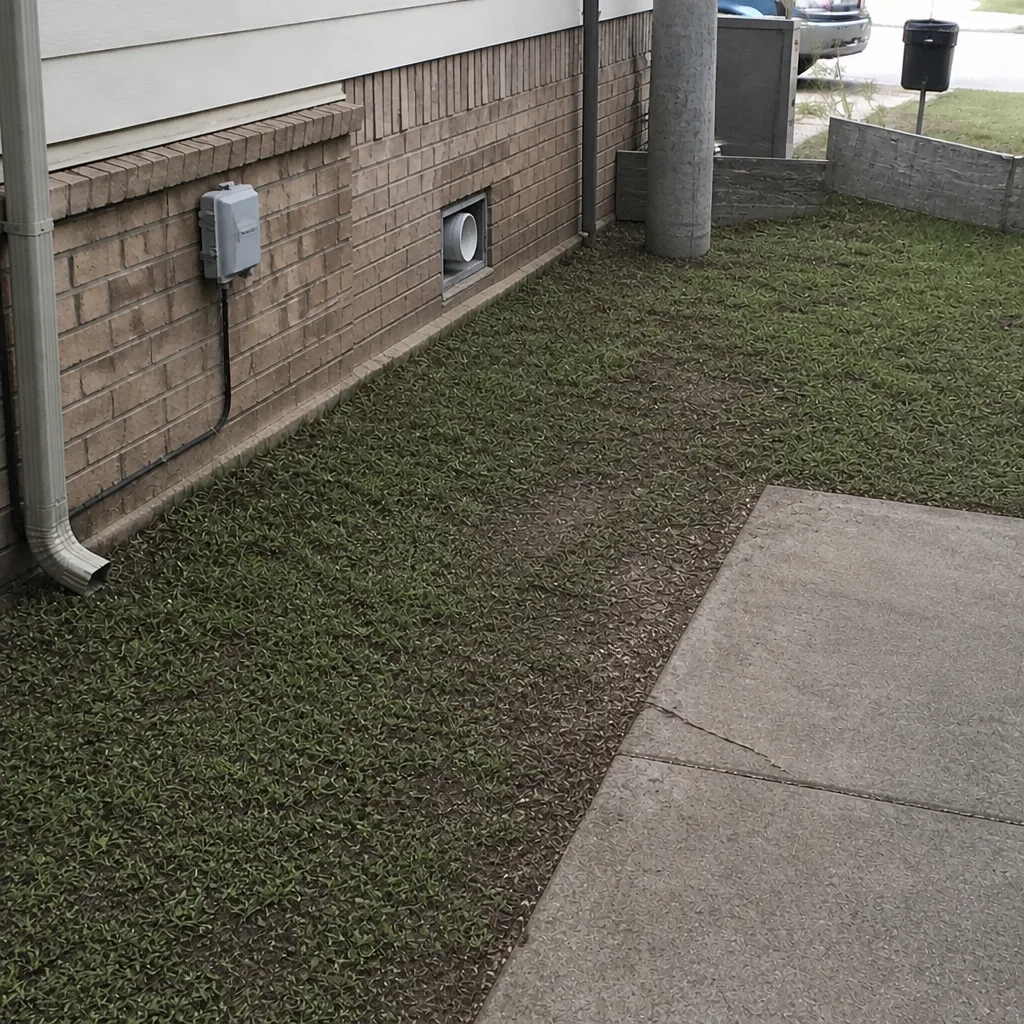
See the difference
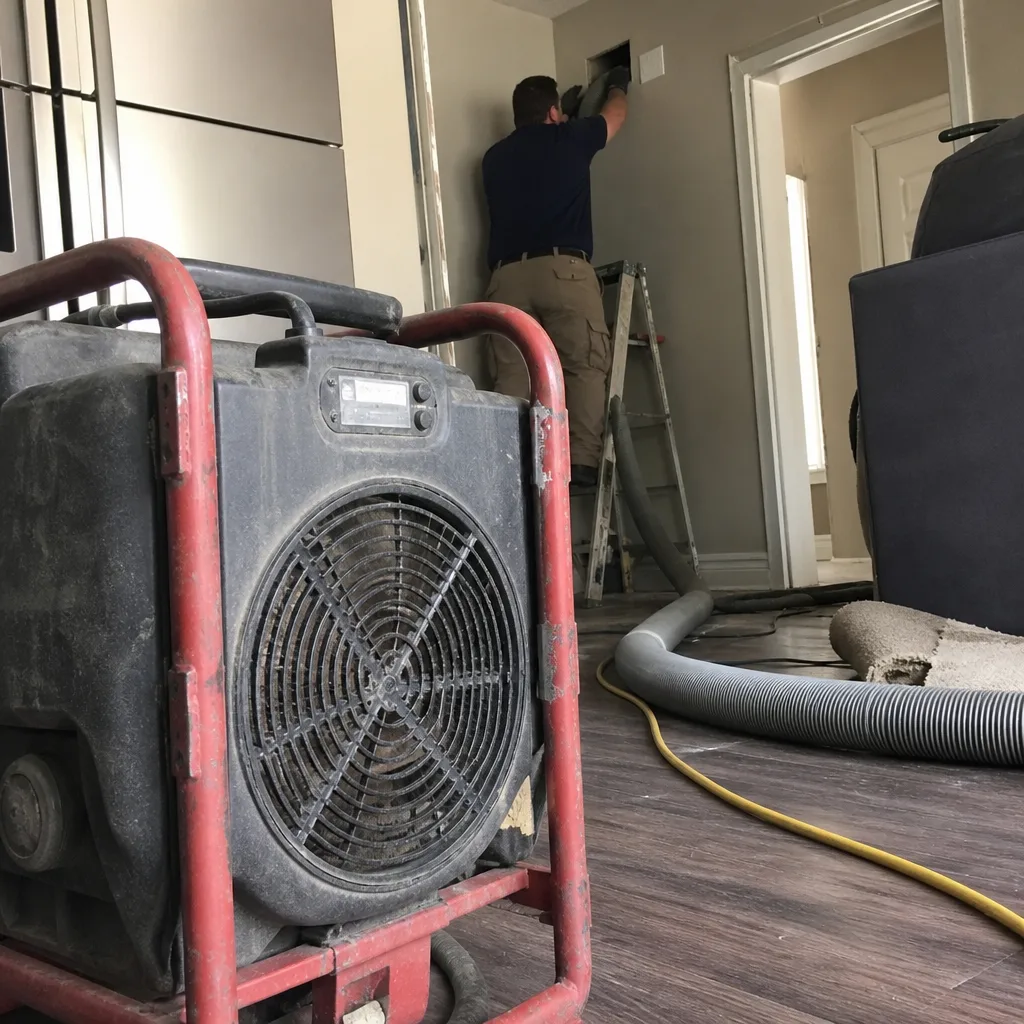 Before
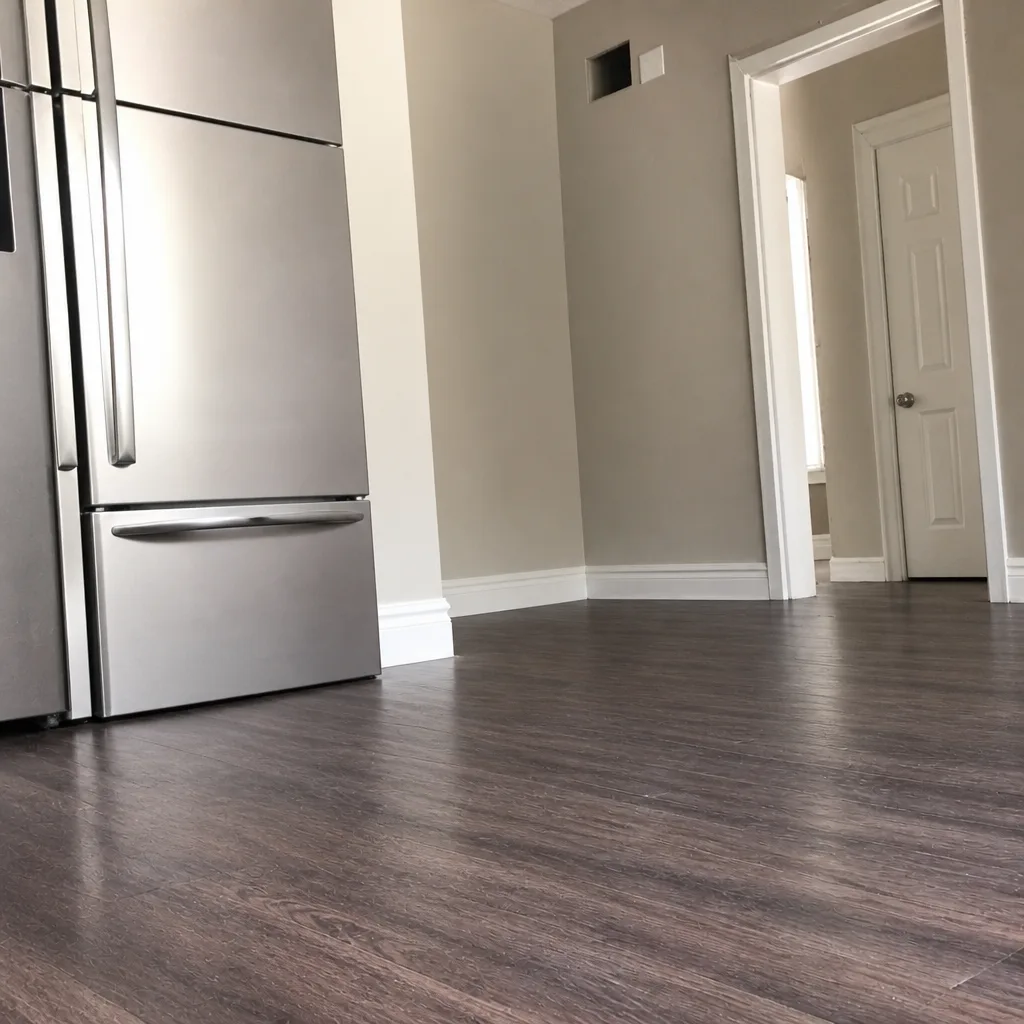 After
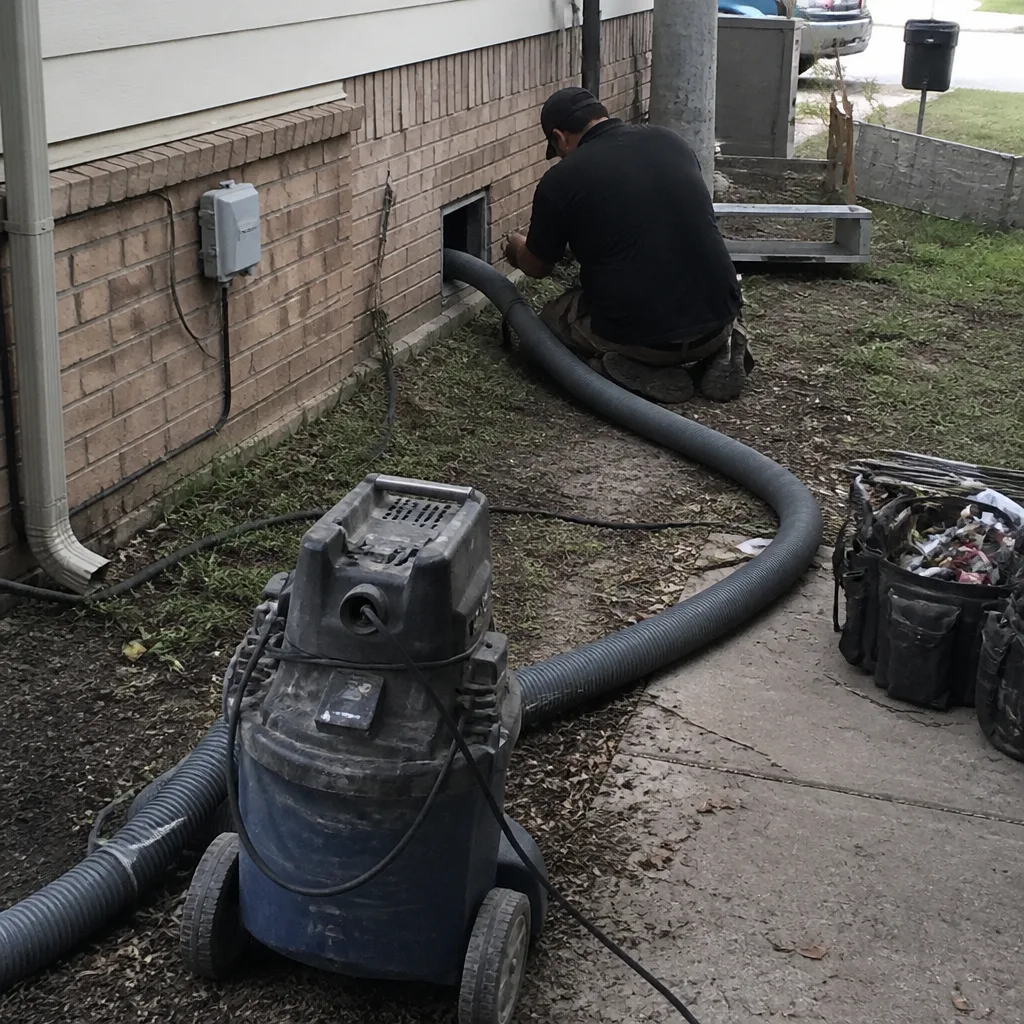 Before
 After
 Before
 After
When to Call a Professional
Call a professional after any event that involved visible water in the duct path, a heavy smoke plume that lingered over the house for hours, or wind damage to soffit covers and attic venting. Also call if the house smells differently than it did before the storm, if a filter has turned dark within a day, or if anyone in the home is showing respiratory symptoms that started after the event. If your homeowner’s insurance has opened a claim, a professional service report is worth having in hand. Our technicians have up to 11 years of experience on Denton duct systems and the equipment to contain what they dislodge. Duct Cleaning Denton offers free estimates in Denton. Call (888) 890-4255. We answer 24/7, with fast dispatch from 7am to 7pm, Sunday through Friday.
Frequently Asked Questions
As soon as the outdoor air has cleared and you’ve done the initial inspection, ideally within the first week. Smoke residue continues to re-release into the home every time the system cycles, so earlier is better. If there was water intrusion, that window shortens to 24 to 48 hours because saturated duct liner cannot recover. Call (888) 890-4255 for an exact quote; estimates are free.
Three indicators: a filter that turns grey-black within a day of the event, an odor that lingers in the house three days after the outdoor air cleared, and visible film on the return grilles. If two of these are true, smoke moved through the system. A professional inspection with a scope inside the return run confirms it either way.
Many policies will cover the cleanup when the duct damage traces back to a covered peril such as wind-driven rain or a plumbing failure, but coverage depends on your specific policy and deductible. The claims process moves far faster with timestamped photos, a filter bagged as evidence, and a written report from a licensed professional. Review your policy language and talk to your adjuster before assuming either way.
No. Standard furnace filters are not designed to capture the fine particulate that makes up smoke. Most of it passes right through and settles in the ductwork, then re-circulates. Running the system only moves more of it into the house. Keep the air handler off until the outdoor air clears and the filter has been replaced.
Sometimes. Sheet metal duct that got splashed can usually be cleaned, dried, and returned to service. Flex duct or duct with an internal liner that saturated is a replacement situation. The liner delaminates within 24 to 48 hours of moisture exposure and does not come back. A professional inspection in that window tells you which case you’re in.
Emergency cleaning after smoke or water is entirely about containment. Every dislodged particle has to be captured, not redistributed. That’s why professional equipment (rotary brush agitation with high-volume extraction, plus negative-air containment) matters more after an emergency than during a routine maintenance cleaning. The scope of work also often includes repair, not just cleaning, because the event itself may have damaged the system.
Yes, whenever the outdoor AQI is in the range where public health guidance recommends sensitive groups stay indoors. At that point, running the air handler pulls smoke in through every unsealed joint in the return path. Set the system to off at the thermostat and at the breaker, then change the filter before re-starting once the outdoor air clears.
The Bottom Line
Emergency preparedness for a Denton duct system comes down to a few decisions that happen fast. Shut the system down before you walk the house. Photograph everything, with timestamps. Change the filter the same day and keep the used one. If water reached the duct liner, treat the 24-to-48-hour window as real, not as a suggestion. Get a professional evaluation on the record for your insurer. And do the small prep work in the quiet weeks, because covering the return air path and sealing the crawlspace costs almost nothing compared to what a smoke or flood event costs when it moves through the system. If you’re not sure where your home stands, we’re a phone call away.
Contact
If a storm, smoke event, or water intrusion has left you wondering what’s in your ductwork, call Duct Cleaning Denton at (888) 890-4255 for a free estimate. We answer 24/7, with fast dispatch from 7am to 7pm, Sunday through Friday. We use Rotobrush, Nikro, and Abatement Technologies equipment to contain what we dislodge, and we repair what others just clean around. Our technicians have up to 11 years of experience across Denton homes, and we can work with your insurer on the documentation side of any claim.
Written by the team at Duct Cleaning Denton.