
Last updated November 15, 2026
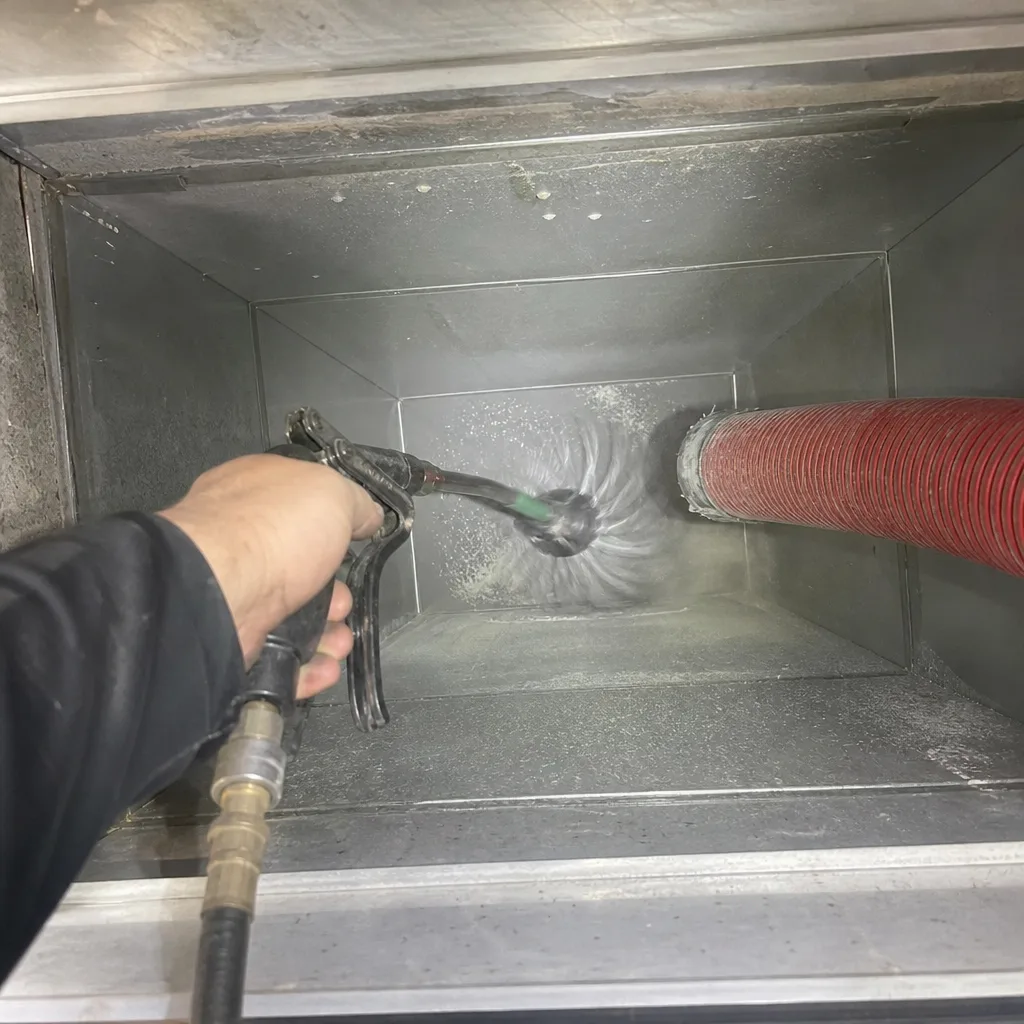
 Whole-home duct cleaning
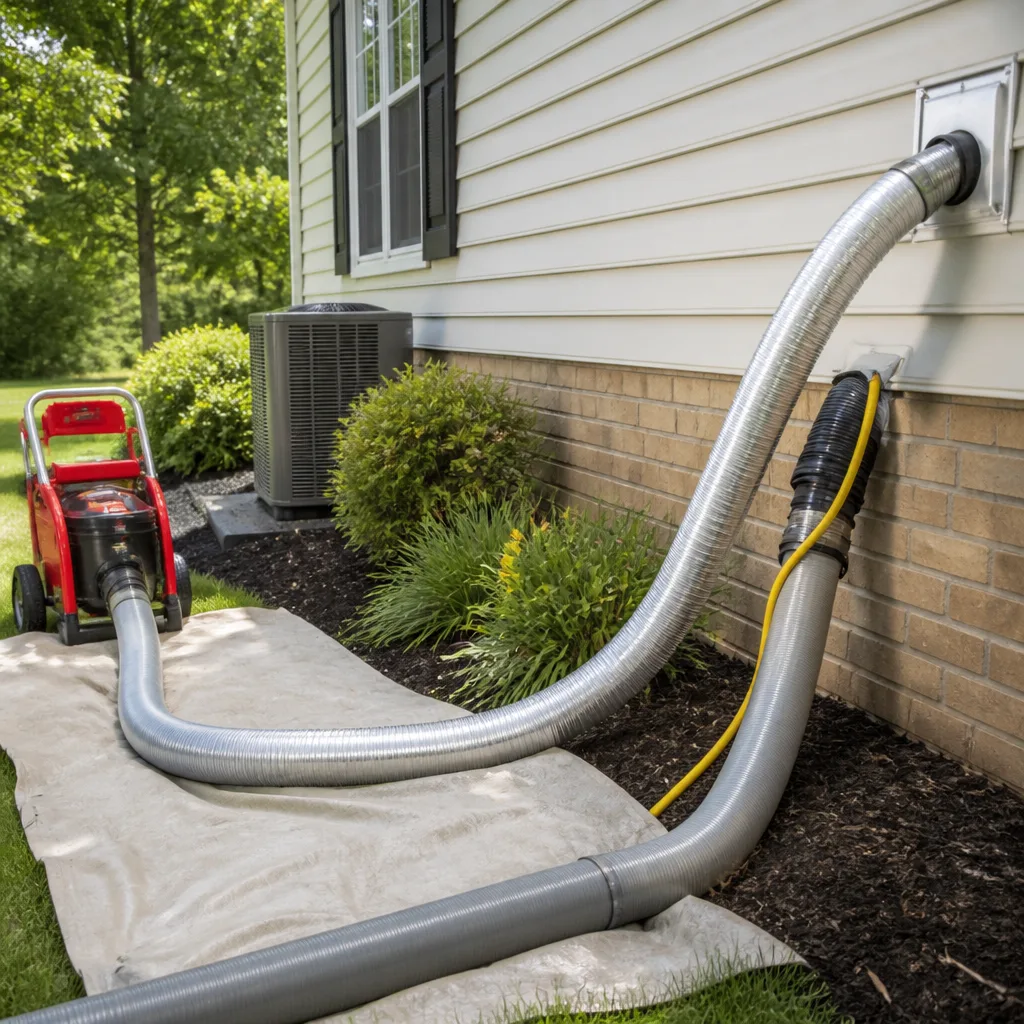
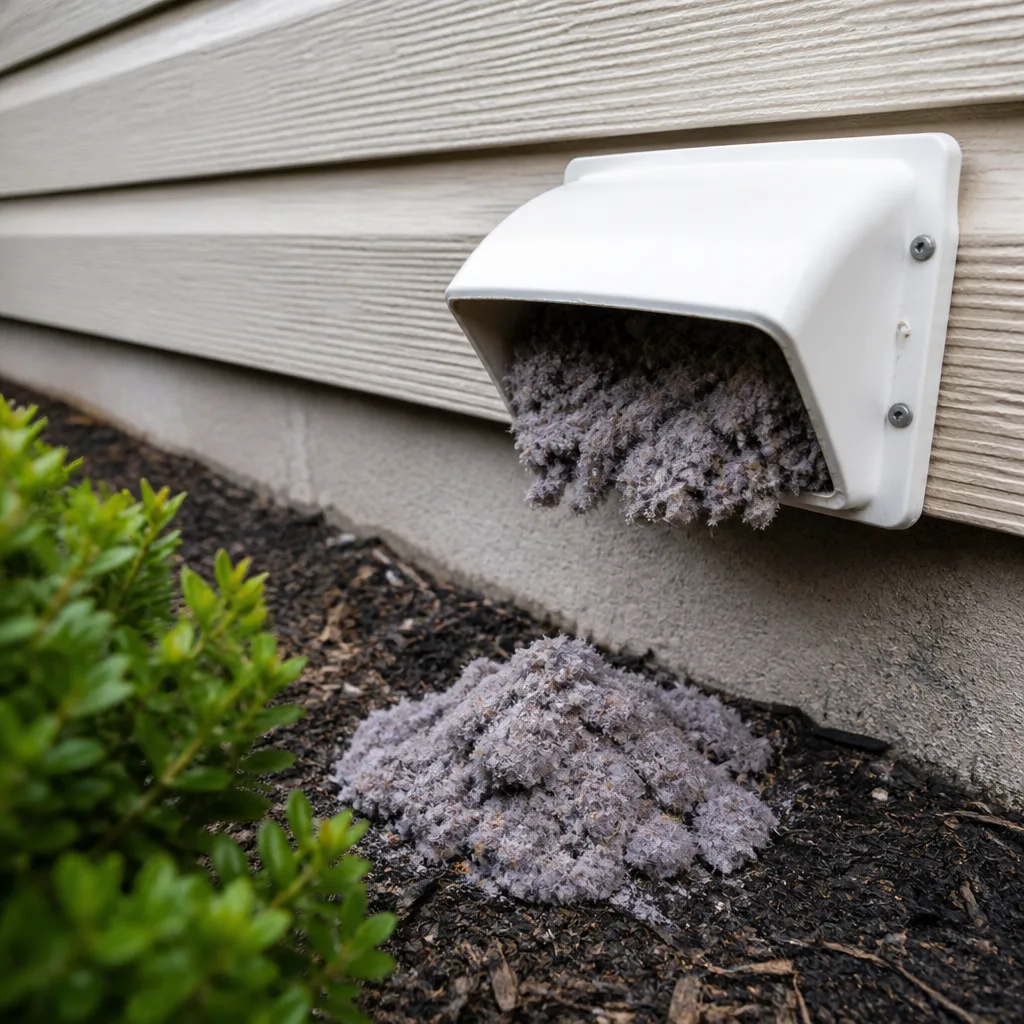 Dryer vent cleaning
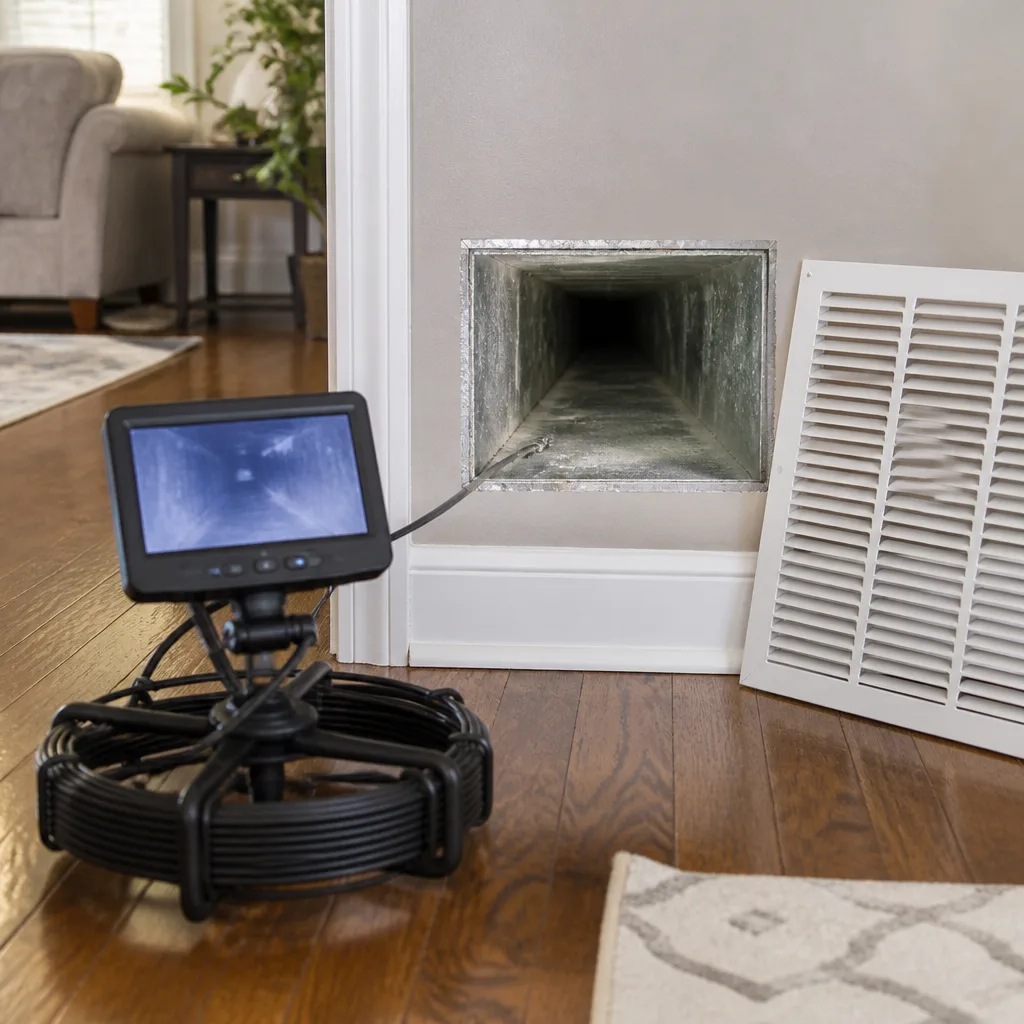 Camera inspection
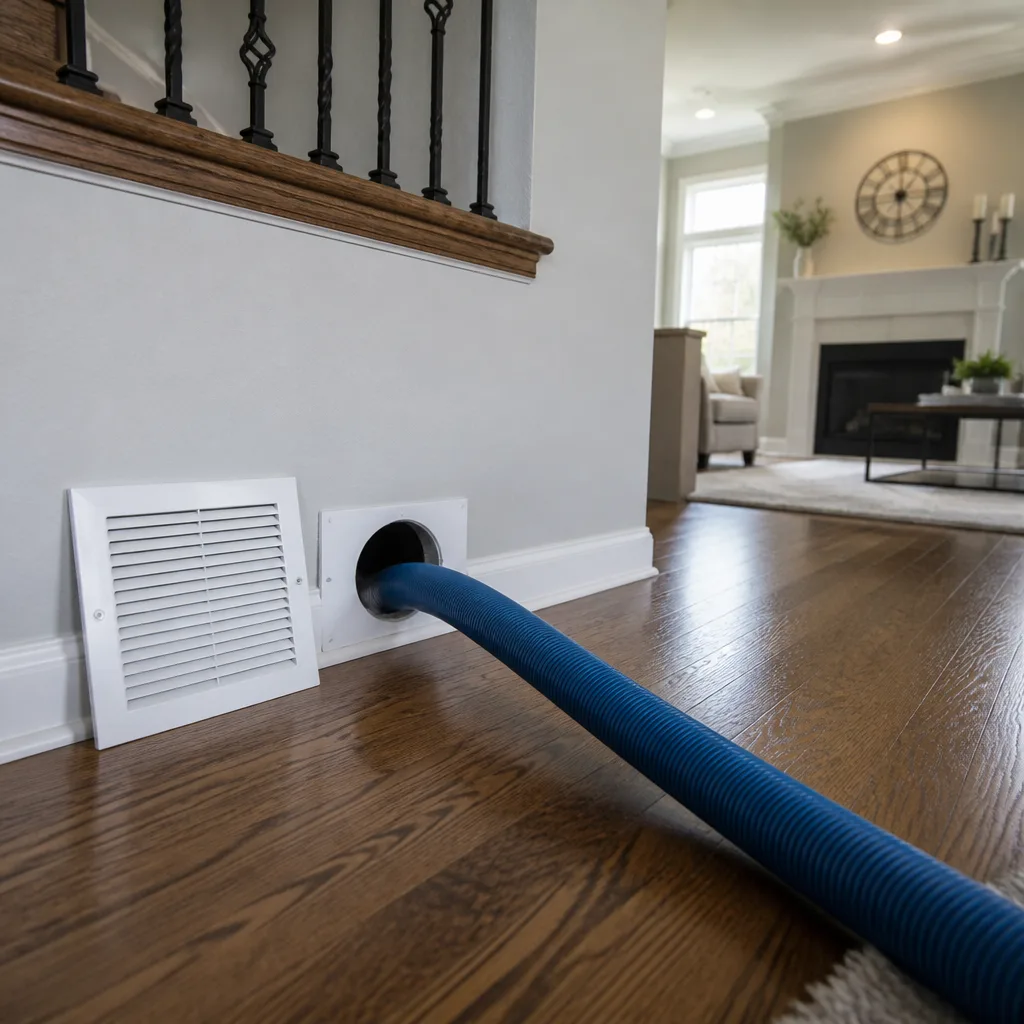 Sanitizing & deodorizing
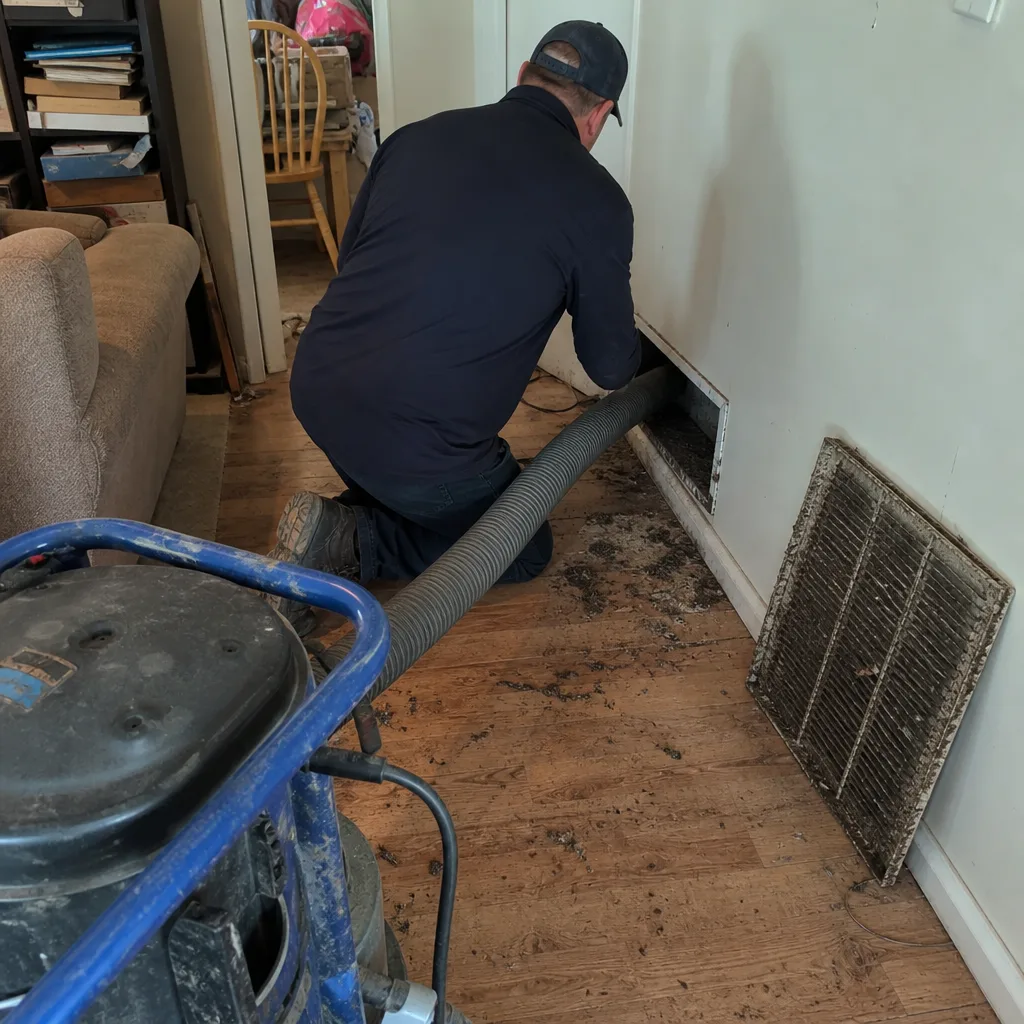
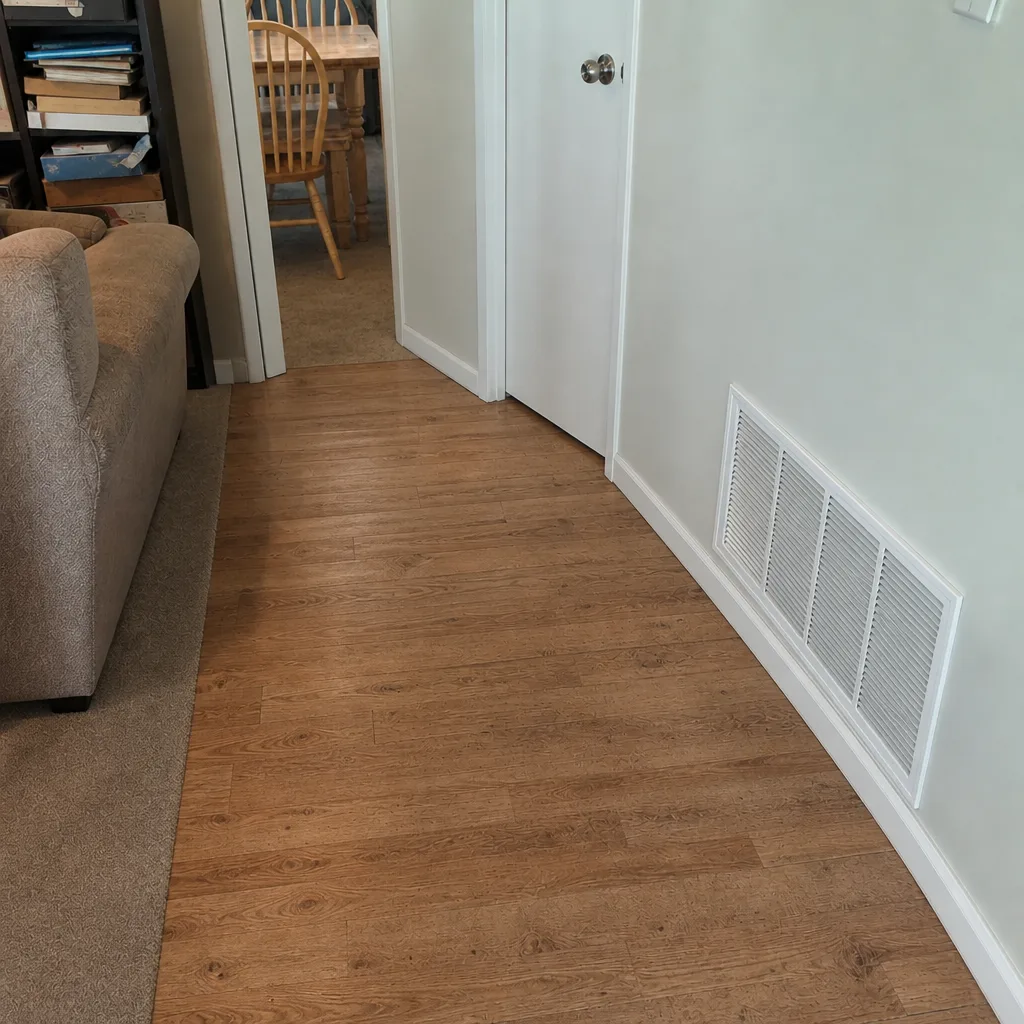
Whole-system duct and dryer vent check with before-and-after photos - you see exactly what came out of your vents
That "$99 whole-house special" is a bait ad - the real number appears once they are in your hallway, or the "clean" is a shop-vac at the register. We photograph the inside of your ducts before and after instead.
DIY vs Professional Air Duct Cleaning: The Denton Homeowner’s Decision Guide
Most homeowners assume a shop-vac is a small version of what a duct cleaning company uses. It isn’t. A consumer shop-vac pulls roughly 50 to 80 cubic feet per minute (CFM) of airflow. Professional negative-pressure equipment moves 10,000 to 16,000 CFM. That’s not a bigger version of the same tool. It’s a categorically different machine performing a different physical function, and that difference explains almost everything you’ll read below. This guide covers what DIY duct work can actually accomplish in a Denton home, where it fails, and how to decide which path makes sense for your situation.
Styles & brands we work with
- Whole-home duct cleaning
- Dryer vent cleaning
- Camera inspection
- Sanitizing & deodorizing
Quick Answer
For most Denton homes, professional air duct cleaning is the right call whenever the system has visible dust buildup, pest activity, post-renovation debris, or a homeowner with allergies or respiratory concerns. DIY is reasonable only for light surface work like vacuuming registers, wiping the filter housing, and checking a dryer vent for lint. Shop-vacs and consumer kits cannot create the negative pressure required to suspend and extract debris from duct liner surfaces, so a DIY attempt on a genuinely dirty system usually moves contaminants around rather than removing them.
Table of Contents
- Why the Equipment Gap Is Bigger Than It Looks
- The Physics of Negative-Pressure Duct Cleaning
- What a Denton Homeowner Can Legitimately Do
- When DIY Makes Professional Cleaning Harder
- Cost: What Professional Cleaning Actually Runs vs. DIY
- When DIY Is the Right Call (and When It Isn’t)
- Denton Conditions That Affect Duct Buildup
- The Overlooked Piece: Duct Repair
- Common Mistakes to Avoid
- When to Call a Professional
- Frequently Asked Questions
- The Bottom Line
Why the Equipment Gap Is Bigger Than It Looks
The single most important thing to understand about DIY vs professional air duct cleaning in Denton is that the tools are not on a continuum. There is no rental counter in the city where you can pick up something that creates the pressure differential professional crews work with. The big-box vacuum you rent for a floor refinishing job has nothing to do with the equipment required to strip a duct system clean.
Professional duct cleaning relies on three moving parts working together: mechanical agitation to break debris loose from the liner, negative-pressure containment to pull that debris out of the closed system, and HEPA-grade filtration so the exhaust leaving the machine is cleaner than the air going in. Consumer kits typically deliver only agitation (a rotary brush on a drill or shop-vac hose) and weak suction at the same time. That setup loosens debris but cannot capture the volume it releases.
We use Rotobrush rotary brush systems for that mechanical step, Nikro HEPA-filtration vacuums for debris capture, and Abatement Technologies negative-air equipment to protect the home’s living space while work is underway. Those three pieces are what separate a professional cleaning from a cosmetic pass. Homeowners replacing register covers and washing a filter is not the same category of work.
In our experience, most homeowners who go the DIY route are surprised less by how hard the work is than by how little changes afterward. That’s because the equipment limiter, not effort, decides the outcome.
The Physics of Negative-Pressure Duct Cleaning
The reason CFM matters so much comes down to how debris behaves inside sheet metal and flex duct. Dust, dander, lint, and pollen don’t sit on top of the liner surface; they cling to it electrostatically and settle into seams, fittings, and the rough underside of flex duct. Loosening that material requires two things: mechanical contact and enough airflow velocity to lift it into suspension and carry it out of the system.
Consider the ratio again: 50 – 80 CFM from a shop-vac versus 10,000 – 16,000 CFM from professional negative-pressure equipment. That’s a difference of roughly two to three hundred times the airflow. A consumer vac may eventually pull some material from the duct run nearest the register, but it cannot sustain the velocity needed to move debris through the trunk lines and out of the system. Instead, it swirls the material around, dislodges it, and drops it back into the duct or releases it into the room air.
Our approach addresses this by pressurizing the entire system from a single high-CFM source while a brush physically scrubs each run. The negative pressure holds the debris in the air stream while filtration traps it. Without that containment, “cleaning” becomes redistribution. That’s the piece most DIY guides miss. It’s not that the shop-vac is weak; it’s that the entire physics model of professional duct cleaning depends on a machine the homeowner has no practical way to rent.
Homeowners with Honeywell or Aprilaire whole-home filtration already understand this principle. Those systems work because they’re engineered around measured airflow. Duct cleaning operates on the same logic. You get the result the equipment is designed to produce, nothing more.
What a Denton Homeowner Can Legitimately Do
Before we list what’s off-limits for DIY, it’s important to be honest about what a careful homeowner can actually accomplish. With the right expectations, some of this work is genuinely worth doing between professional cleanings. Here’s what a Denton homeowner can do that delivers real value:
- Vacuum register covers and grilles. Remove each register, wash it in soapy water, and dry it fully before reinstalling. This removes surface dust that would otherwise blow back into the room on the first HVAC cycle.
- Wipe the filter housing. Turn off the system, remove the filter, and wipe the housing interior with a damp cloth. Most dust visible around the filter is sitting on the housing, not inside the duct.
- Change the filter on schedule. This is the highest-impact thing any homeowner does. A clogged filter restricts airflow and accelerates duct buildup. It’s not duct cleaning, but it’s the closest thing to a DIY substitute for it.
- Visually inspect the dryer vent run. Disconnect the vent from the back of the dryer and look inside with a flashlight. If you see lint buildup beyond a light film, that vent needs professional cleaning.
- Check return-air access panels. If your system has accessible return-air plenums, look inside with a flashlight for visible dust mats, pest signs, or debris. Note what you see; don’t try to vacuum a deep run with a handheld tool.
Those five items, done consistently, keep a system cleaner longer. They don’t replace professional cleaning on a genuinely dirty system, and they won’t help with microbial growth, pest activity, or post-renovation dust. When the buildup is inside the duct run and not on the register, DIY has reached its ceiling.
When DIY Makes Professional Cleaning Harder
The counterintuitive risk of DIY duct cleaning isn’t injury. It’s that a partial attempt can make the professional job more expensive and more involved. We’ve seen all of the following happen in Denton homes, and each one is preventable.
- Debris pushed into inaccessible sections. A shop-vac hose dislodges dust from an easy-to-reach section and drives it deeper into the system, into sections that require flexible camera inspection and full-system negative pressure to reach. What was a 30-foot clean becomes a 60-foot one.
- Flex duct liner damage. Consumer rotary brushes spin at speeds that can tear the inner liner of flex duct. Once the liner is perforated, the duct becomes a dust trap and a leak path. Repairing it costs more than cleaning it ever did.
- Disturbed insulation and vermiculite. In some older Denton homes, ducts pass through insulated cavities. Agitating those areas with a consumer tool can release settled material into the living space. Vermiculite in particular warrants professional handling.
- Moisture introduced into the duct. Household vacuums are not designed for wet environments, and any moisture introduced into a dark, warm duct becomes a microbial growth site. What started as dust becomes a problem requiring remediation.
- Lint pushed into a blind spot in the dryer vent. A homeowner pushing a shop-vac wand into a dryer vent can compact lint into a bend that they can’t see and can’t reach. That’s a fire risk made worse by trying to fix it.
- Filters reinstalled incorrectly after a DIY pass. Bypass around a misseated filter pulls unfiltered air into the system and accelerates buildup. Small mistake, large consequence.
Each of these turns a straightforward job into a repair-and-clean engagement. We repair what others just clean around, but avoiding the damage in the first place costs far less.
Cost: What Professional Cleaning Actually Runs vs. DIY
The DIY math looks compelling on the surface: rent a shop-vac for an afternoon and save the cost of a professional cleaning. In practice, that comparison misses almost everything. Here’s what each approach actually involves.
Professional air duct cleaning in the Denton market typically runs based on the size and configuration of the system, the number of runs, and whether repair is needed. Since we quote per job by written estimate, the final price depends on what we find. The typical investment for a standard single-system home in Denton falls in a range most homeowners find sensible once they see what’s removed. Call us for an exact figure on your specific home.
A DIY attempt involves the following real costs:
- Shop-vac rental or purchase: often $50 to $100+ depending on size
- Rotary brush kit or duct cleaning attachment: $30 to $80
- Hours of labor on a ladder, in tight attic or crawl access, and along multiple runs
- Replacement filter after the attempt (necessary, because DIY agitation loads the filter faster)
Stack those up and the difference between DIY and professional is often far smaller than it looks. Add the cost of repairing liner damage or calling a professional to redo the job properly, and the DIY route can cost more than the original professional quote. What you’re really paying for with a professional is the equipment that produces a measurable result, not the labor hours.
Professional Cleaning vs. DIY: What Each Delivers
- Airflow to suspend debris: 10,000 – 16,000 CFM professional vs. 50 – 80 CFM consumer
- Containment: Negative-air equipment protecting the home’s interior vs. dust redistribution into the living space
- Filtration: HEPA-grade capture vs. standard paper filter in a consumer vac
- Mechanical agitation: Purpose-built rotary brush matched to duct diameter vs. generic brush or none at all
- Verification: Before-and-after photos of your own ducts vs. none
- Repair capacity: Duct repair available in the same visit vs. separate contractor required
That side-by-side explains why professional cleaning is a different service, not a more expensive version of the same one.
When DIY Is the Right Call (and When It Isn’t)
There’s a clear line between conditions where DIY effort genuinely helps and conditions where it’s the wrong tool for the job. Use this split as a decision guide.
DIY is appropriate when:
- Registers and grilles show light surface dust and the rest of the system is clean
- You’ve recently changed a filter and want to clean the housing around it
- You want to visually check a dryer vent run for lint between professional cleanings
- You’re doing general home maintenance and want to keep dust from accumulating on visible components
DIY is not appropriate when:
- There is visible dust or dark staining inside the duct work itself, not just at the registers
- The home has had pest activity (rodent droppings in a duct system require professional handling)
- You’ve just completed a renovation and drywall dust has entered the system
- There’s any sign of moisture, mold, or a musty smell emanating from a supply register
- You’re moving into a home with unknown duct cleaning history and want a known starting point
- The dryer vent has visible lint buildup beyond a light film, or the dryer is taking longer than usual
The second list is where professional equipment is non-negotiable. It’s not about effort. It’s about the physical requirements to safely and completely remove contamination from a closed system.
Denton Conditions That Affect Duct Buildup
Denton-specific conditions make duct cleanliness a bigger issue here than in some parts of the country. The region’s long cooling season means the system runs hard through most of the year, moving a lot of air and pulling a lot of outdoor dust into the return. That seasonal load builds faster than it does in climates with shorter cooling cycles.
Older homes around neighborhoods like the Denton County square, the historical district, and established neighborhoods near the university often have flex duct or rigid duct systems that have been in place through several HVAC changes. Dust and debris settle into the seams and joints that were acceptable when the home was built but are a buildup point now. Newer construction on the edges of Denton tends to have tighter systems but is more sensitive to filter neglect.
The region’s dry spells and windy stretches kick up a lot of fine particulate matter that finds its way into return air. Homes with pets or landscaping that includes a lot of ornamental grasses see that dust settle into the ducts faster. If your home sits near active construction or a major road, expect more frequent attention than a quiet residential street.
Honeywell and Aprilaire whole-home filtration systems are common in Denton homes and work best when the duct system itself is clean. If you’ve invested in that equipment, keeping the ductwork clean is part of protecting the investment. We’re familiar with those systems and can work with what you already have.
The Overlooked Piece: Duct Repair
Most duct cleaning services stop at cleaning. In our experience, that’s the wrong stopping point. A cleaning reveals things that don’t get fixed if repair isn’t part of the shop’s scope. Damaged, disconnected, or leaking duct sections are as big a source of air quality problems as the dust itself, and cleaning a leaky system just means the next batch of debris enters from the same gap.
If you’re going to have a crew inside your duct system, it makes sense to check the system honestly at the same time. Common findings in Denton homes include disconnected flex runs in attics, torn or crushed sections where duct passes tight framing, and joints that have separated over time. Each of these lets unfiltered air into the system and pushes the work you paid for back into the living space.
We handle air duct cleaning and air duct repair in the same visit. That’s a fuller scope than cleaning-only providers offer, and it’s often the difference between a system that stays clean longer and one that keeps accumulating dust. If you want the duct system itself inspected at the same time as the cleaning, ask for it during the estimate. See our full service overview at Duct Cleaning Denton for what that includes.
Common Mistakes to Avoid
- Renting the wrong machine. A shop-vac or a rented carpet vacuum is not a duct cleaning vacuum. Neither creates the airflow required to move duct liner debris out of the system.
- Rotating a stiff brush inside flex duct. Flex duct liner is thinner than it looks. Consumer brushes tear it, and repairing the duct afterward usually costs more than the cleaning would have.
- Assuming “no visible dust at the register” means the system is clean. Dust settles in the trunk lines and inside flex runs, not at the register. Visible dust at a register usually means the whole system is loaded.
- Forgetting the dryer vent. A dryer vent is a leading fire risk in homes, and it’s forgotten between cleanings. Visible lint beyond a light film is a signal, not a cosmetic issue.
- Cleaning one duct and calling it done. A partial clean redistributes debris into the uncleaned sections. Either clean the whole system or leave the harder-to-reach runs alone.
- Dislodging pest debris without containment. Rodent droppings in a duct system carry real health risk. Disturbing them with a consumer vac sends fine particles straight into living space.
- Skipping repair when it’s needed. A cleaned system with a disconnected run will be dirty again quickly. If repair isn’t in the scope, ask about it.
When to Call a Professional
Call a professional for duct cleaning when you’re seeing dust buildup inside the duct work itself, when anyone in the home has been sneezing or congested more than usual and other causes have been ruled out, when there’s any sign of pest activity in the system, when the home has just gone through a renovation, or when you’ve moved into a Denton home with unknown cleaning history. In each case, the work requires equipment you can’t rent at a big-box store and containment that keeps debris out of your living space while it’s done.
The dryer vent is a separate call. Any vent with visible lint buildup or a dryer that’s taking longer than it used to is worth a professional look. Read more about how that’s handled in dryer vent cleaning.
Duct Cleaning Denton offers free estimates in Denton. Call (888) 890-4255. We answer 24/7. Fast dispatch from 7am to 7pm, Sunday through Friday. Before-and-after photos of your own ducts are part of every job so you can see what was actually removed.
Frequently Asked Questions
Air duct cleaning in the Denton market is priced per job based on system size, number of runs, and whether repair is involved, so there’s no honest per-vent figure we can quote from a website. We give a written estimate before any work starts, and that estimate sets the final price. Call (888) 890-4255 for an exact quote on your home.
Cheap quotes usually reflect equipment differences more than price competition. A crew with a shop-vac and a brush attachment is genuinely offering less than a crew running 10,000 CFM+ negative-pressure equipment with HEPA filtration, and the results reflect that. When you compare quotes, ask specifically what airflow rating the equipment produces and whether containment is included. That single question tells you what you’re actually buying.
Ask for before-and-after photos of your own ducts at the start and end of the visit. Any professional crew working with proper equipment can produce those, and any crew that resists providing them is telling you something. We include before-and-after photos as part of every job for exactly this reason.
For most Denton homes, every few years is a sensible baseline, with adjustments for pets, allergies, recent renovations, or a home that’s just been purchased. Homes near active construction or on streets with more dust and pollen often benefit from more frequent attention. Ask during the estimate for a recommendation tied to your specific system.
You can vacuum registers, wipe the filter housing, and visually check the dryer vent, and those are worth doing. What you can’t do with a shop-vac is create the negative pressure required to suspend and remove debris from inside the duct work. A 50 – 80 CFM consumer vac cannot match the 10,000+ CFM a professional system produces, so DIY cleaning is cosmetic at best and can push debris deeper at worst.
Yes, it’s a separate service and a distinct fire-safety concern. Dryer vents accumulate lint that routine duct cleaning doesn’t reach, and lint buildup in the exhaust run is a leading cause of residential fires. If you haven’t had the vent looked at in a while, it’s worth scheduling alongside a duct cleaning. For scheduling in the Denton area, see Denton and call (888) 890-4255.
For homeowners with allergies, reducing the dust and dander circulating through the HVAC system is often the biggest household improvement available. Duct cleaning is part of that picture, along with regular filter changes and attention to the return-air side of the system. If anyone in the home has respiratory concerns, address the duct system rather than adding air purifiers without cleaning first.
The Bottom Line
The DIY vs professional duct cleaning decision isn’t really about effort or skill. It’s about physics. Consumer equipment cannot create the airflow required to remove contamination from inside a duct system, and no rental in Denton changes that. DIY work is worth doing on the accessible, surface-level components: register covers, the filter housing, dryer vent inspection. The inside of the duct system, and any situation involving pest debris, renovation dust, or moisture, needs professional equipment and negative-pressure containment. Getting an honest estimate costs nothing, shows you what’s actually in your system, and lets you make the call based on your home rather than a shop-vac max rating.
Call (888) 890-4255 for a free estimate. We answer 24/7. Fast dispatch from 7am to 7pm, Sunday through Friday.
Written by the team at Duct Cleaning Denton.
See the difference
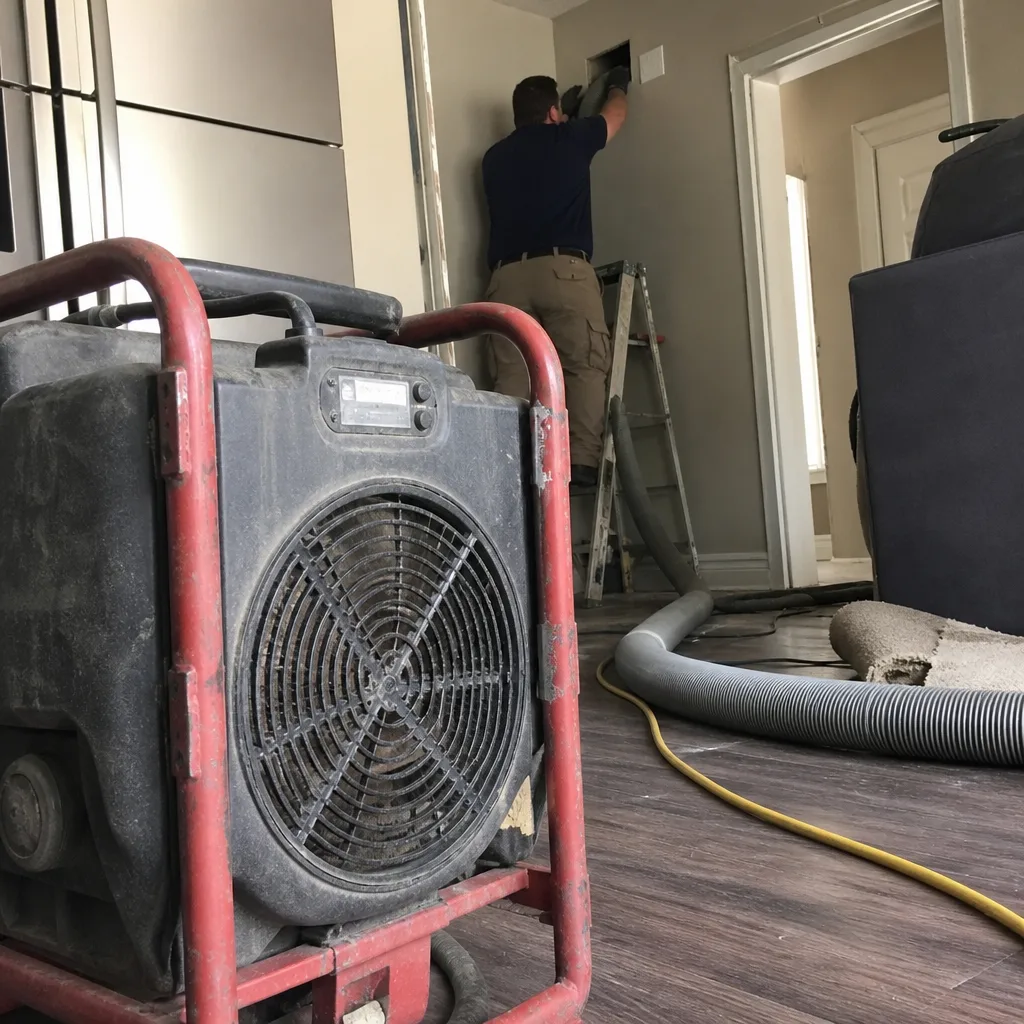 Before
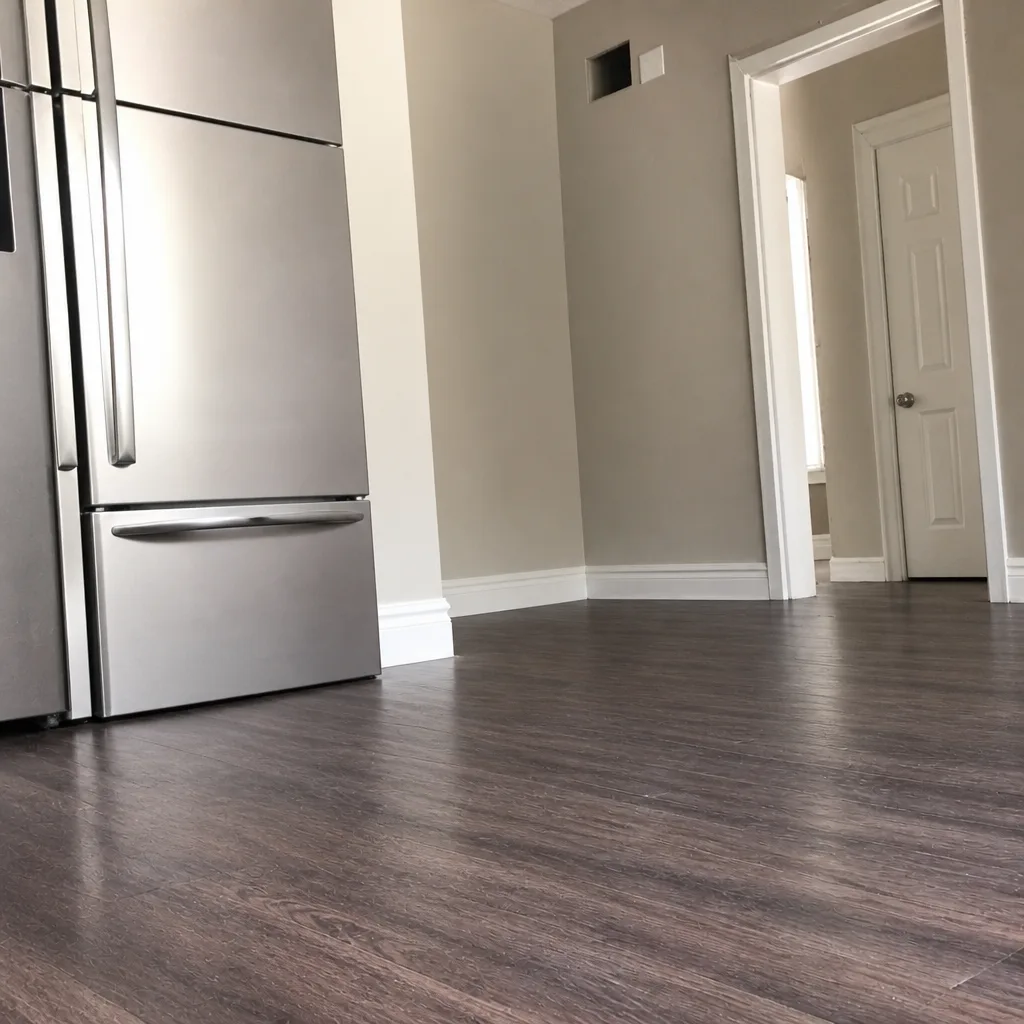 After
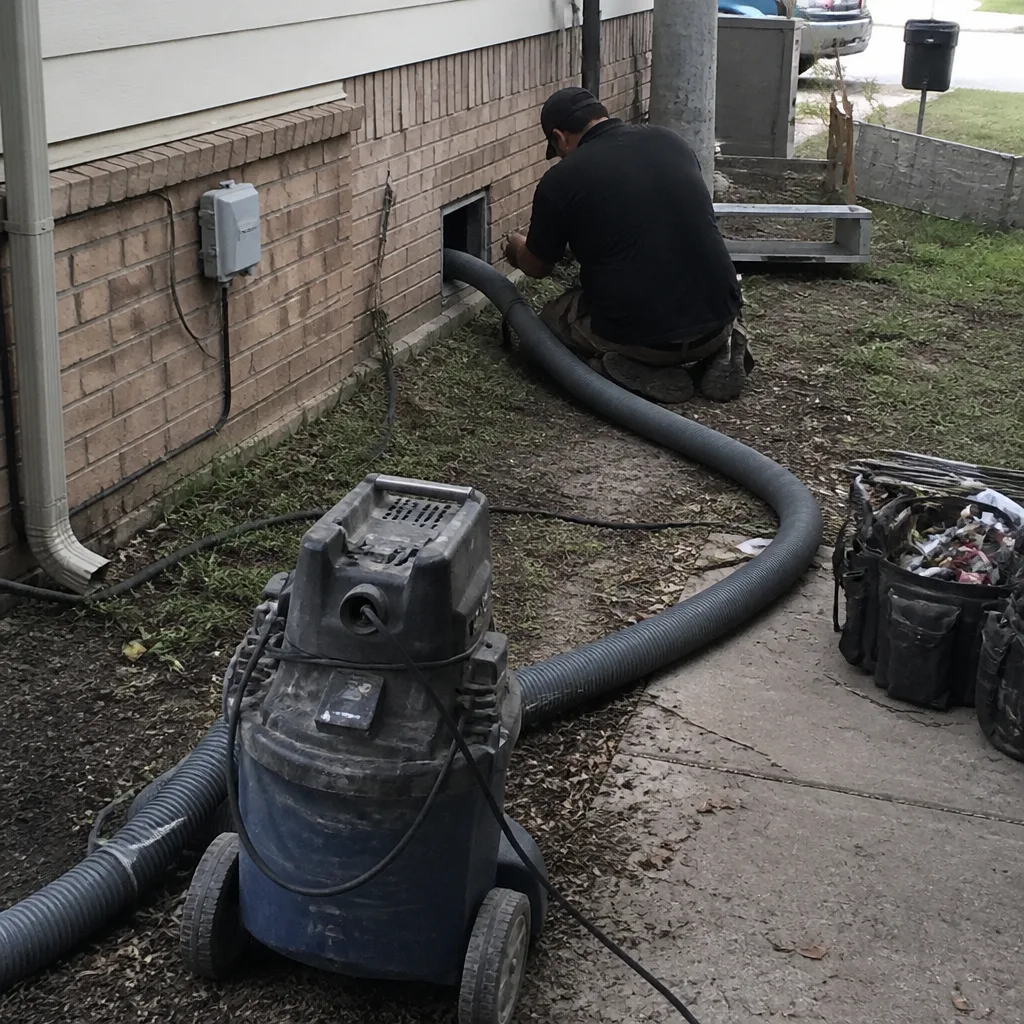 Before
 After
 Before
 After