
Last updated November 15, 2026
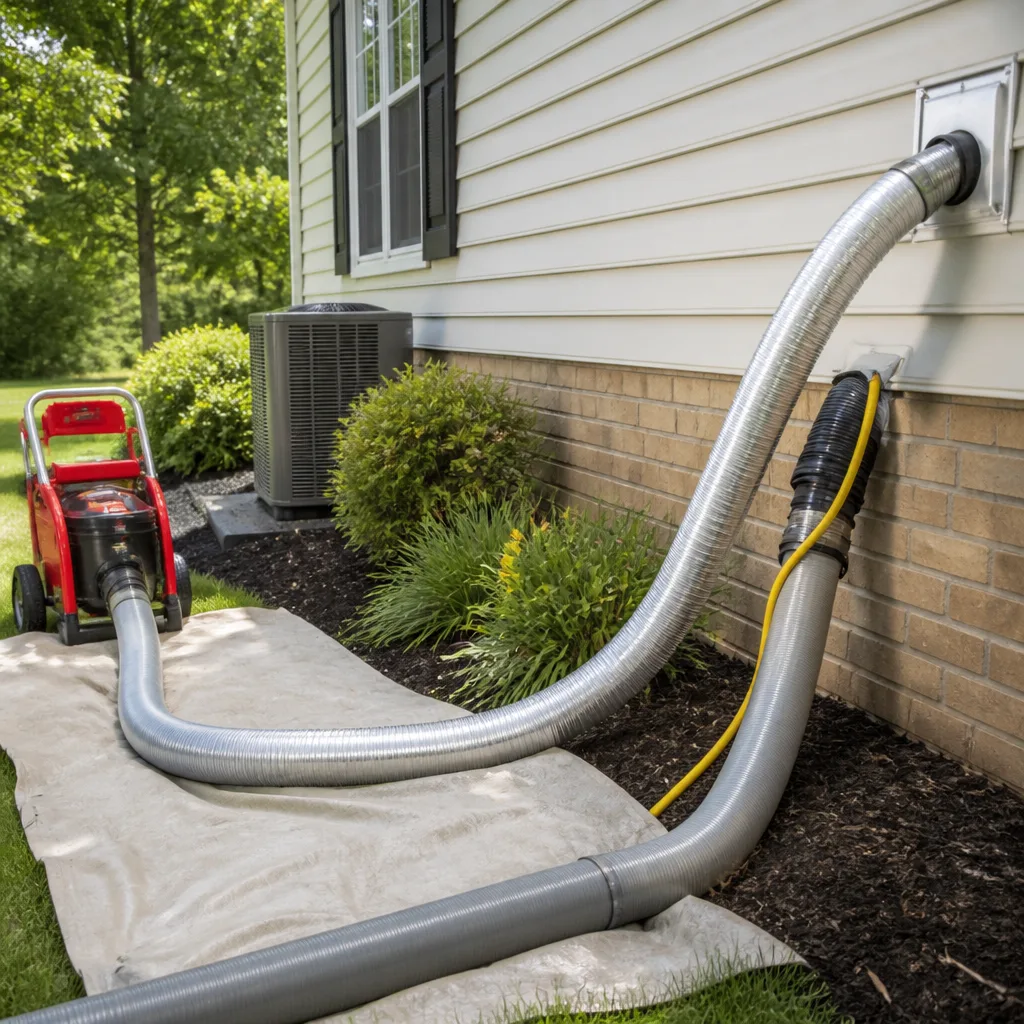 Whole-home duct cleaning
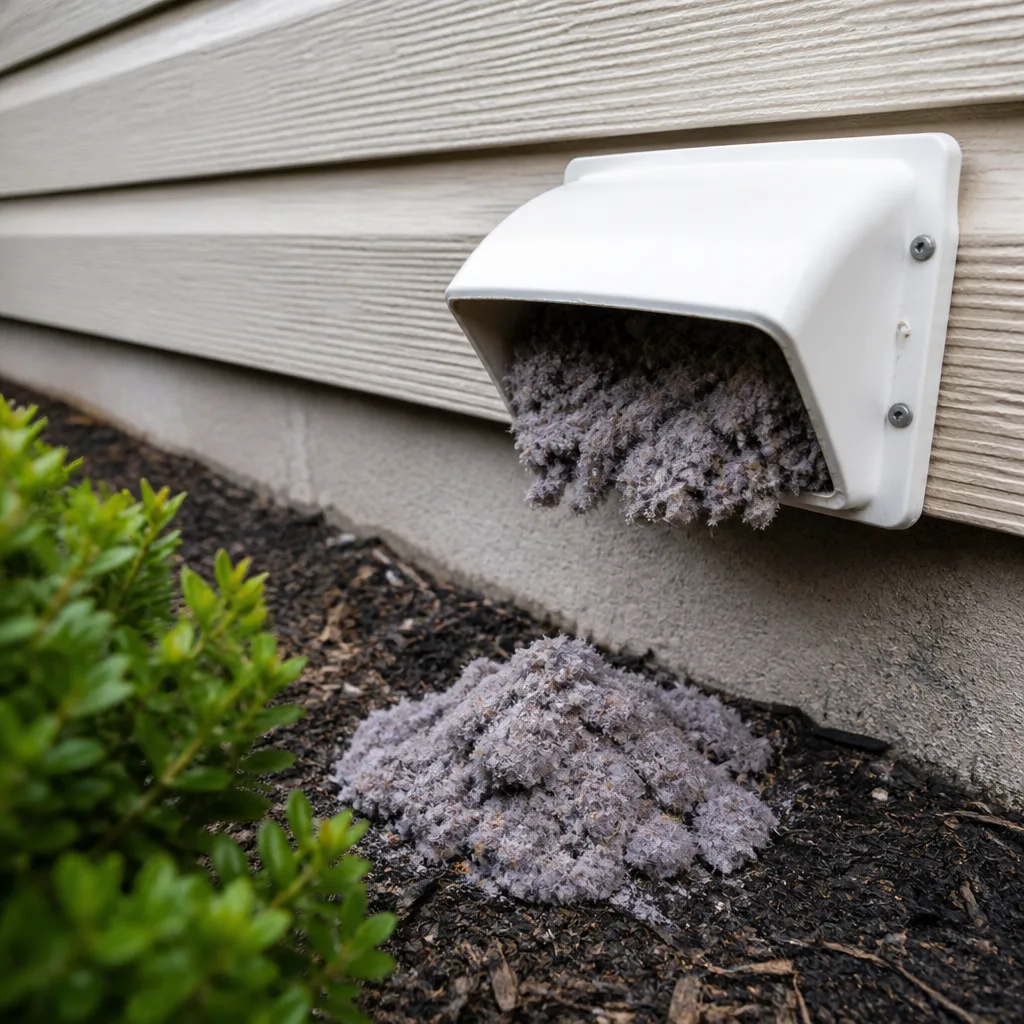 Dryer vent cleaning
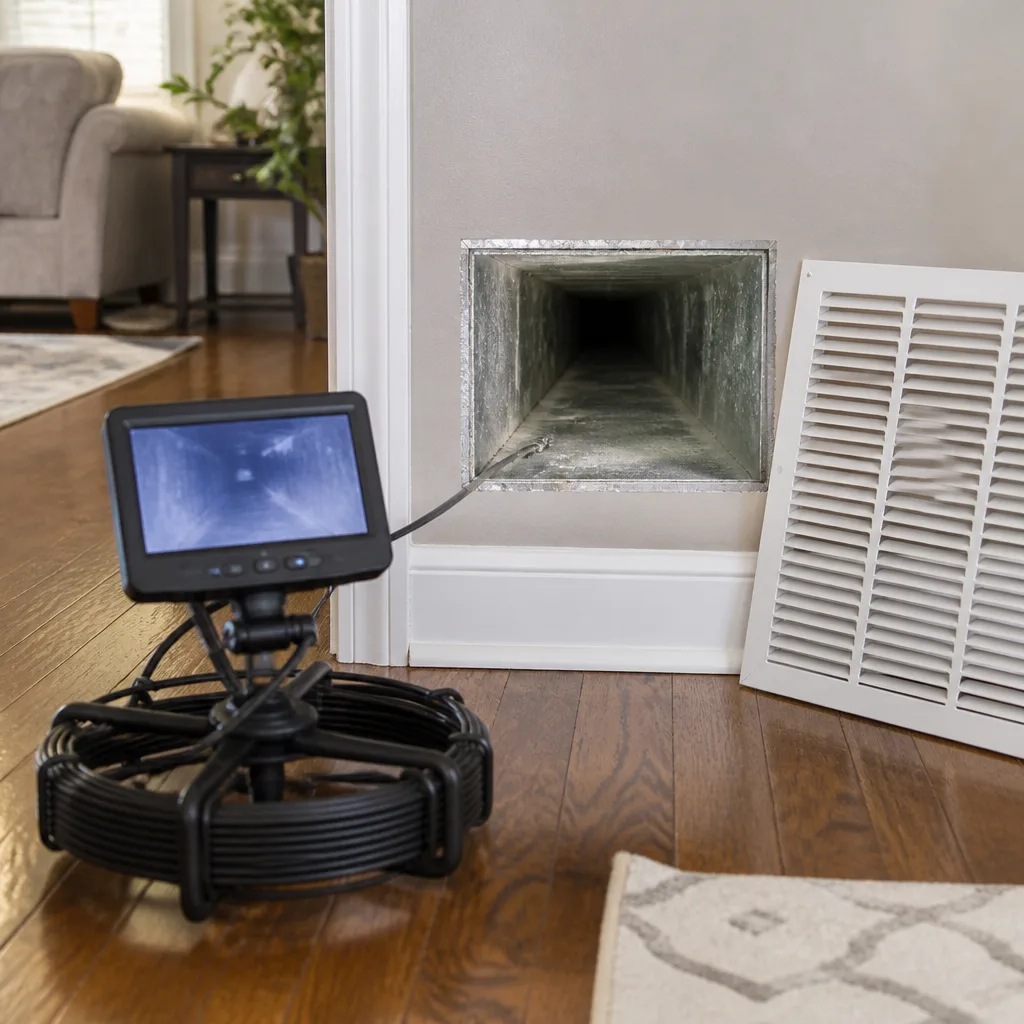 Camera inspection
 Sanitizing & deodorizing
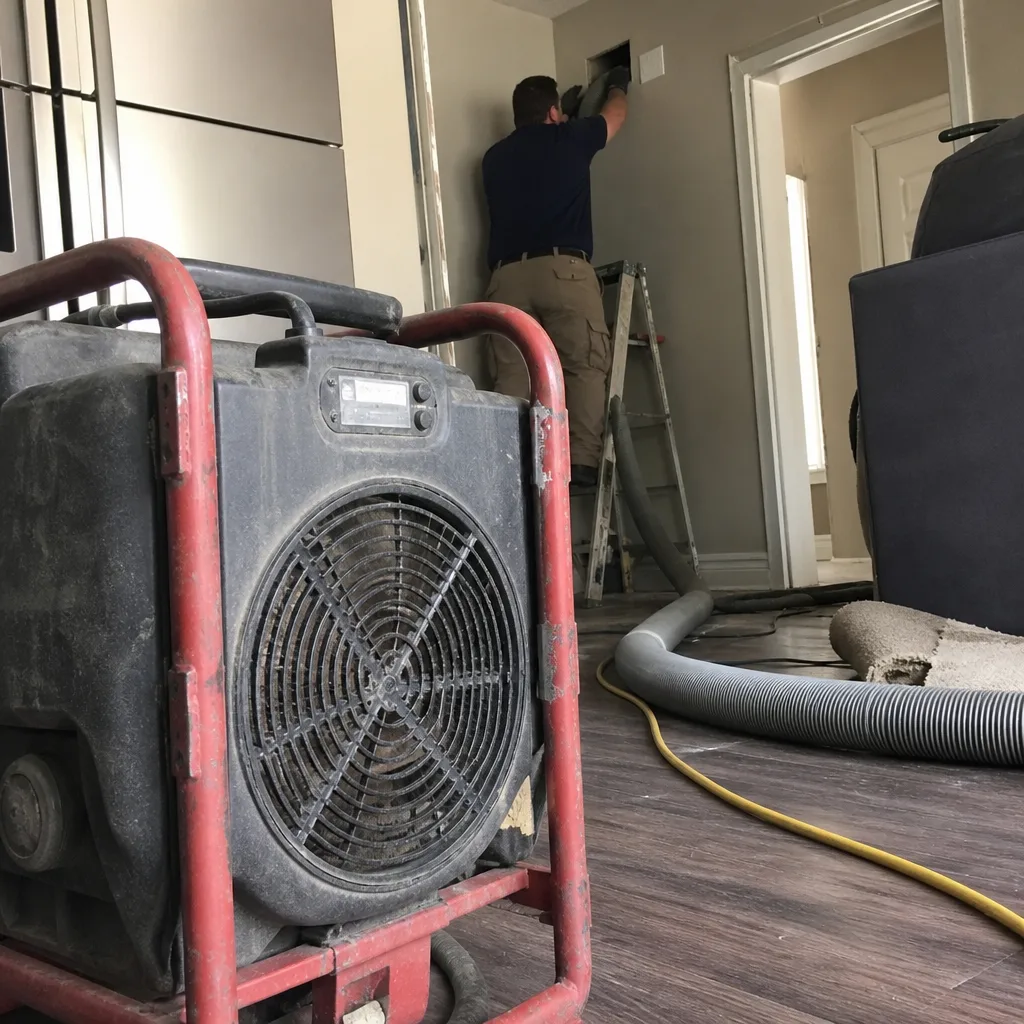
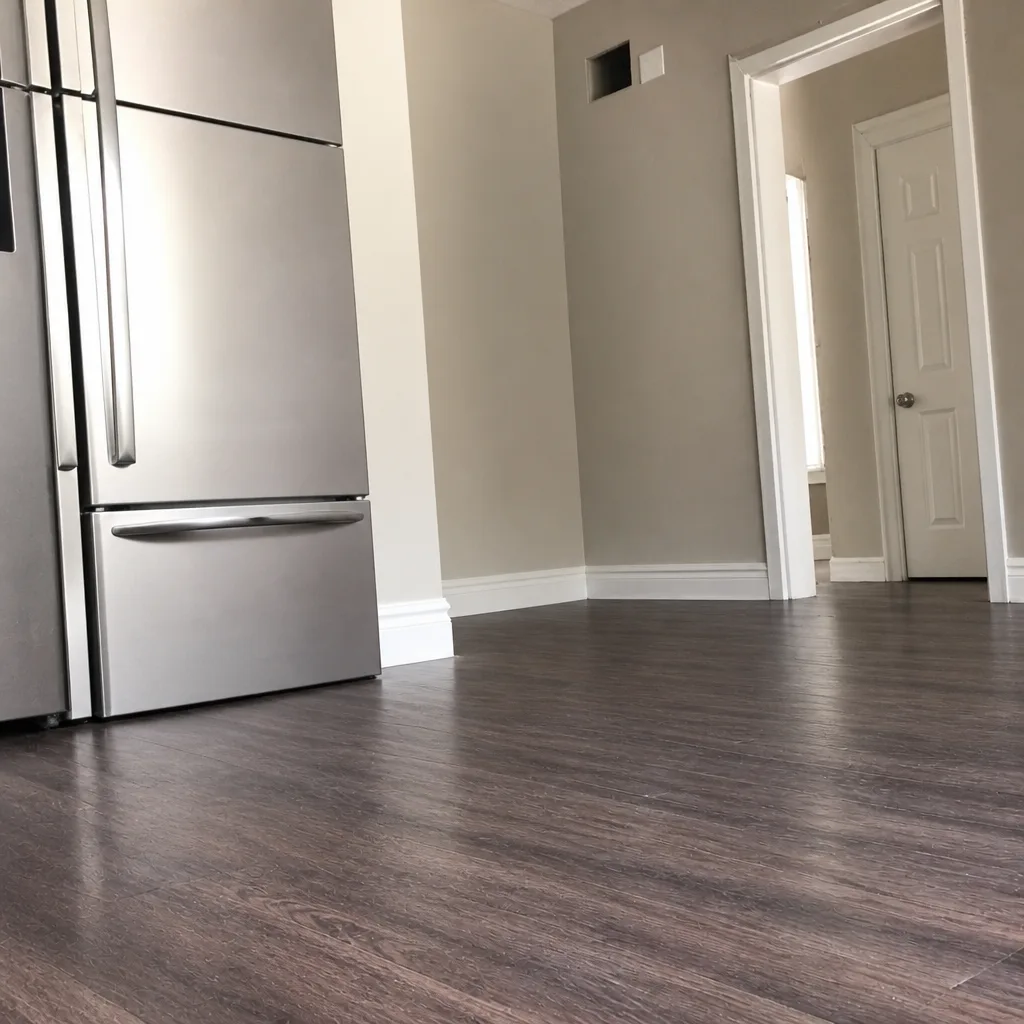
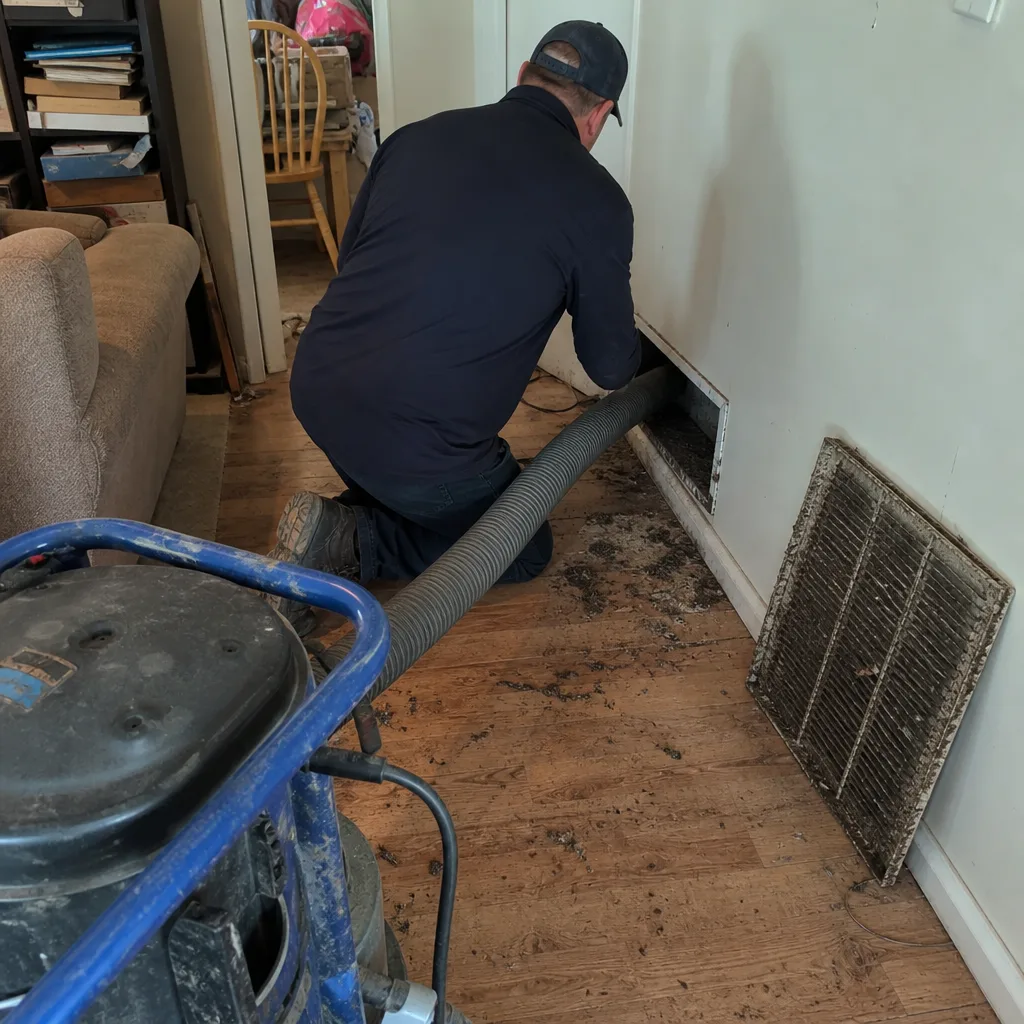
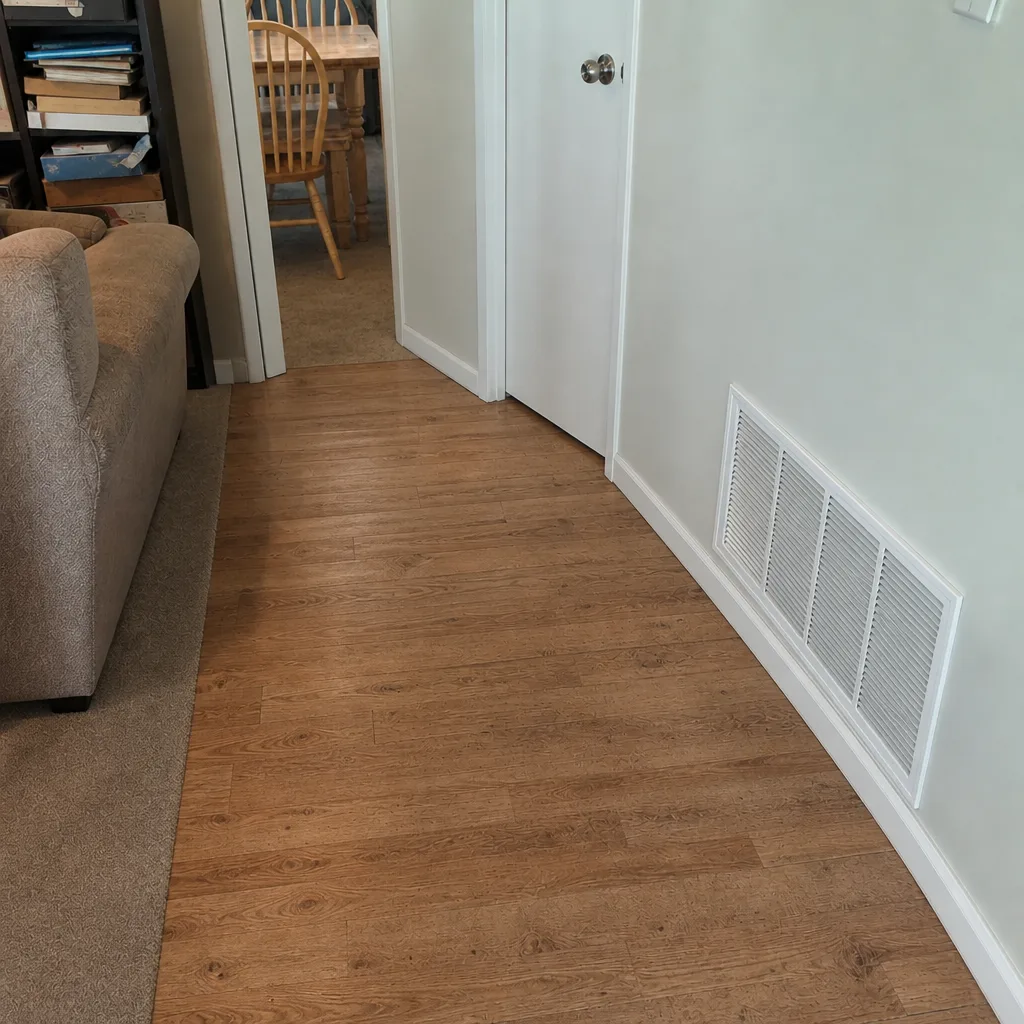
Whole-system duct and dryer vent check with before-and-after photos - you see exactly what came out of your vents
That "$99 whole-house special" is a bait ad - the real number appears once they are in your hallway, or the "clean" is a shop-vac at the register. We photograph the inside of your ducts before and after instead.
How to Hire an Air Duct Cleaning Contractor in Denton: A Step-by-Step Guide
The duct cleaning industry has one of the highest rates of consumer complaints in home services, and it isn’t because the service doesn’t work. It’s because the barrier to entry is low enough that a van, a shop-vac, and a website are all someone needs to start taking calls in Denton. That reality puts the burden of vetting on you, the homeowner, and most people don’t know what to ask until the crew is already in the driveway. This guide gives you the questions, the red flags, and the quote-reading skills that separate legitimate specialists from low-cost crews who leave more problems behind than they solve.
Quick Answer
To hire an air duct cleaning contractor in Denton, verify three things before you book: the equipment (professional rotary brush and HEPA negative-pressure systems, not a shop-vac), the scope in writing (what’s included and what gets upsold later), and the crew (employed technicians with liability coverage, not day-labor subs). Ask for before-and-after photos of your own ducts, get a written line-item quote, and treat a very low whole-house price as a warning rather than a bargain.
Styles & brands we work with
- Whole-home duct cleaning
- Dryer vent cleaning
- Camera inspection
- Sanitizing & deodorizing
Table of Contents
- Why Duct Cleaning Is a High-Complaint Industry in Denton
- The Equipment Questions to Ask Before You Book
- What NADCA Membership Verifies, and What It Doesn’t
- How to Read a Duct Cleaning Quote Line by Line
- Denton-Area Red Flags to Watch For
- How to Verify Licensing, Insurance, and Crew Status
- What a Proper Pre-Service Walkthrough Looks Like
- Common Mistakes to Avoid
- When to Call a Professional
- Frequently Asked Questions
Why Duct Cleaning Is a High-Complaint Industry in Denton
Every service trade has its share of bad actors, but duct cleaning attracts more than most for a simple reason: the work happens inside walls and ceilings where you can’t watch it. A homeowner in Denton can’t see whether a crew actually cleaned the trunk line or just blasted air through the visible registers. They can’t tell whether the vacuum pulled debris out or recirculated it into the next room. That information gap is exactly what low-effort operators rely on.
Denton makes this trickier than it might be elsewhere for a few reasons. The city has a wide mix of housing stock, from older homes near the downtown square to newer construction off the corridors heading toward the university. Older homes often have original metal ductwork that’s accumulated decades of dust and, in some cases, developed leaks at the joints. Newer homes typically use flex duct, which is more forgiving on installation but easier to damage with the wrong cleaning method. A contractor who treats every house the same is a contractor who doesn’t know what they’re looking at.
The other local factor is our climate. North Texas summers push HVAC systems hard, and the system runs almost continuously from late spring through early fall. That constant airflow means the ducts distribute whatever is in them far more aggressively than in a milder climate. It also means a homeowner here has a real, practical reason to want the ducts clean, not just a vague aesthetic one. When we look at a duct system in Denton, we’re looking at the same thing the homeowner cares about: what the air handler is circulating every time the system kicks on.
None of this is meant to scare you off hiring a contractor. It’s meant to explain why the vetting questions in this guide matter. The service works when it’s done properly. You just have to know how to spot proper before anyone shows up.
The Equipment Questions to Ask Before You Book
The single most useful thing you can do when hiring is ask about equipment by name and listen to whether the answer sounds specific. A legitimate specialist will talk about rotary brush systems, HEPA filtration, and negative pressure ratings without hesitation. A low-effort operation will get vague and start talking about “our process.”
Here’s what a proper setup involves and why each piece matters.
Rotary brush agitation
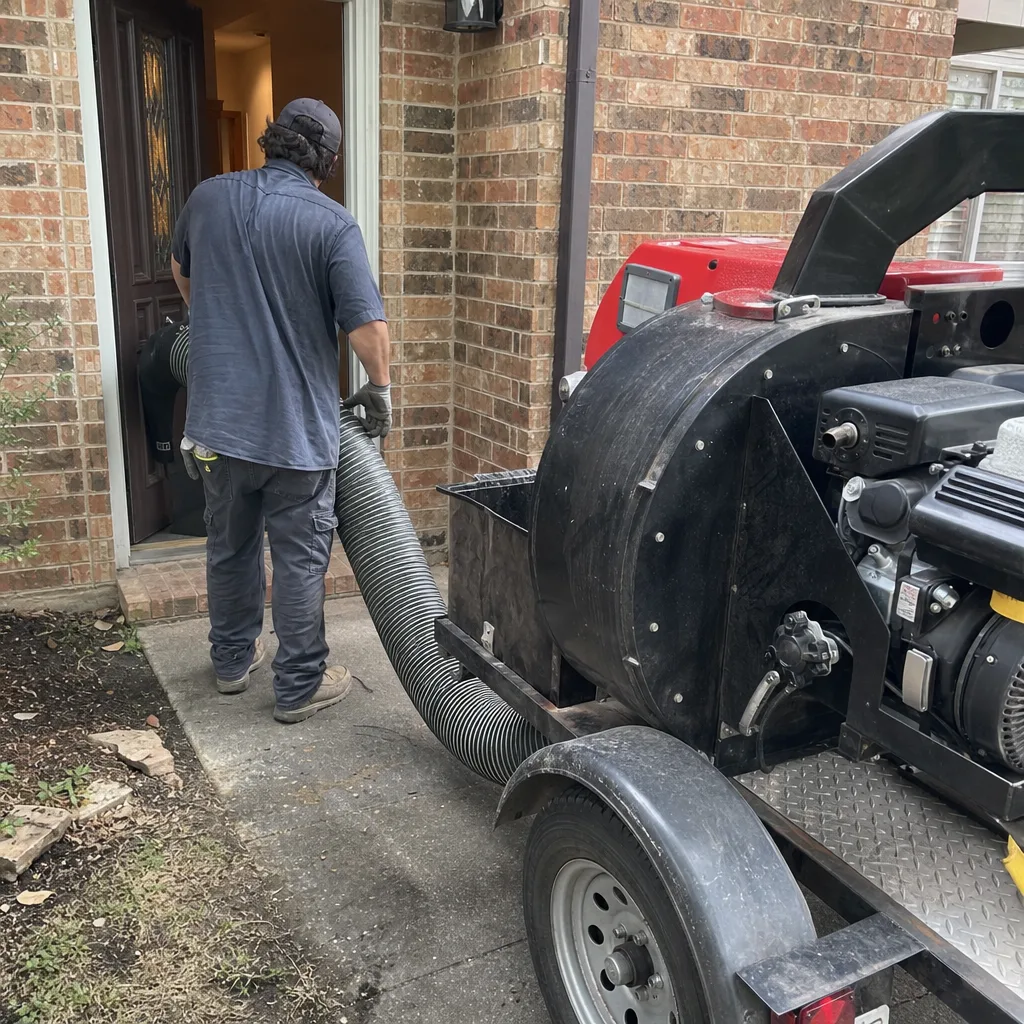
Professional duct cleaning starts with mechanical agitation, not just airflow. The Rotobrush rotary brush system is the tool most specialists reach for because it loosens dust and debris from the duct walls while extracting it at the same time. A crew that only blows air through the system is pushing dust into the rooms, not out of them. Ask directly: do you use a rotary brush, and do you clean the trunk lines or just the branches? The answer tells you how much of the system is actually being touched.
HEPA-filtration vacuum
The vacuum matters as much as the brush. A standard shop-vac pulls debris but recirculates fine particles through its exhaust. A HEPA-rated unit like the Nikro systems used by restoration and remediation contractors traps those particles so the air leaving the machine is cleaner than the air entering it. Ask what vacuum they use and whether it’s HEPA-rated. If the answer is “our truck vacuum” without any further detail, ask for the filtration rating.
Negative-pressure containment
This is the question almost nobody asks, and it’s the one that most cleanly separates serious operators from the rest. During cleaning, debris gets dislodged and goes airborne. If the home isn’t under negative pressure, that debris settles into the living space instead of being pulled out. Abatement Technologies equipment is used to establish and maintain that negative-air environment, protecting the indoor air during the job rather than just after it. Ask: do you set up negative-air equipment during the cleaning, or run a single vacuum hose? The first answer is the one you want.
The flex-versus-metal question
Ask how they treat flexible duct differently from rigid metal duct. It’s a small question that reveals a lot. Flex duct can be damaged by aggressive brush work; it needs a gentler approach and careful inspection for tears and sagging. Metal duct can take more agitation but often has leaking seams and joints that should be sealed, not just cleaned. A contractor who doesn’t distinguish between the two either hasn’t thought about it or is doing the same rush job on every house.
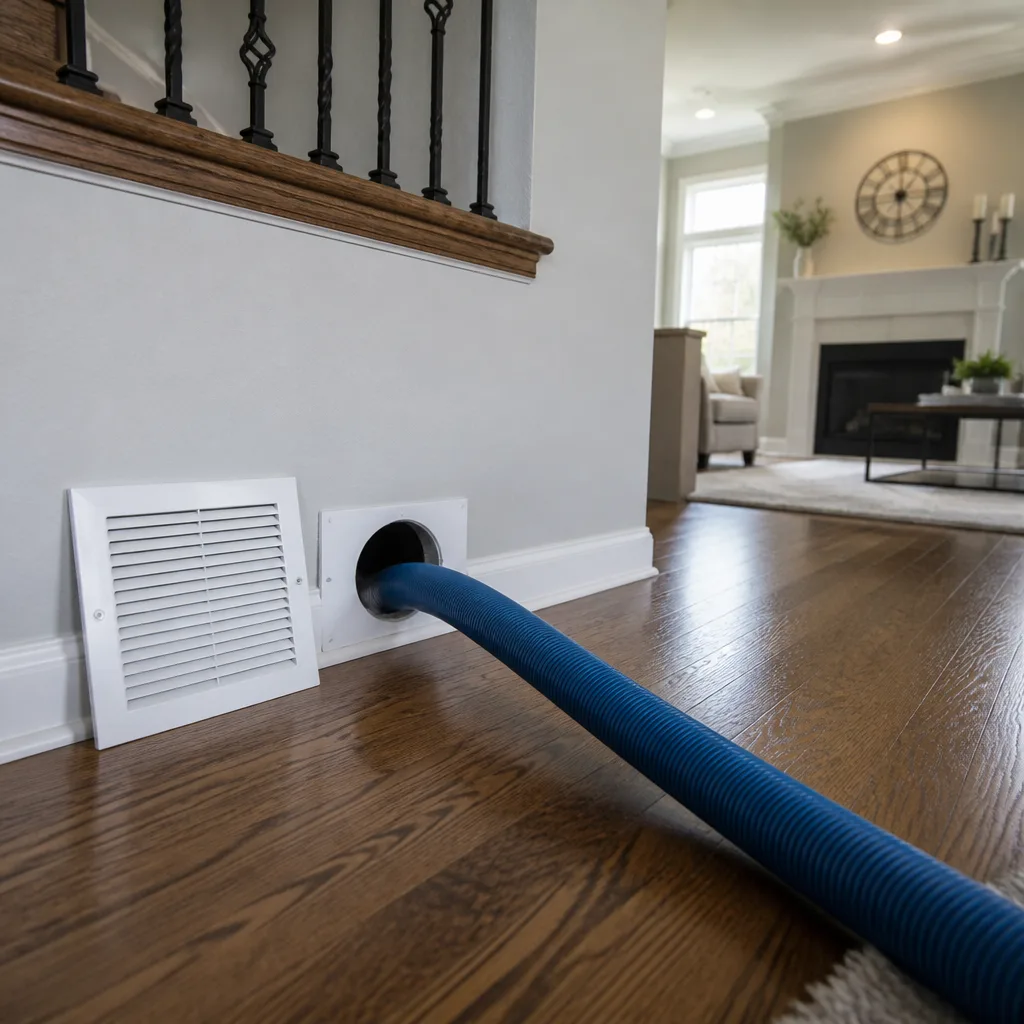
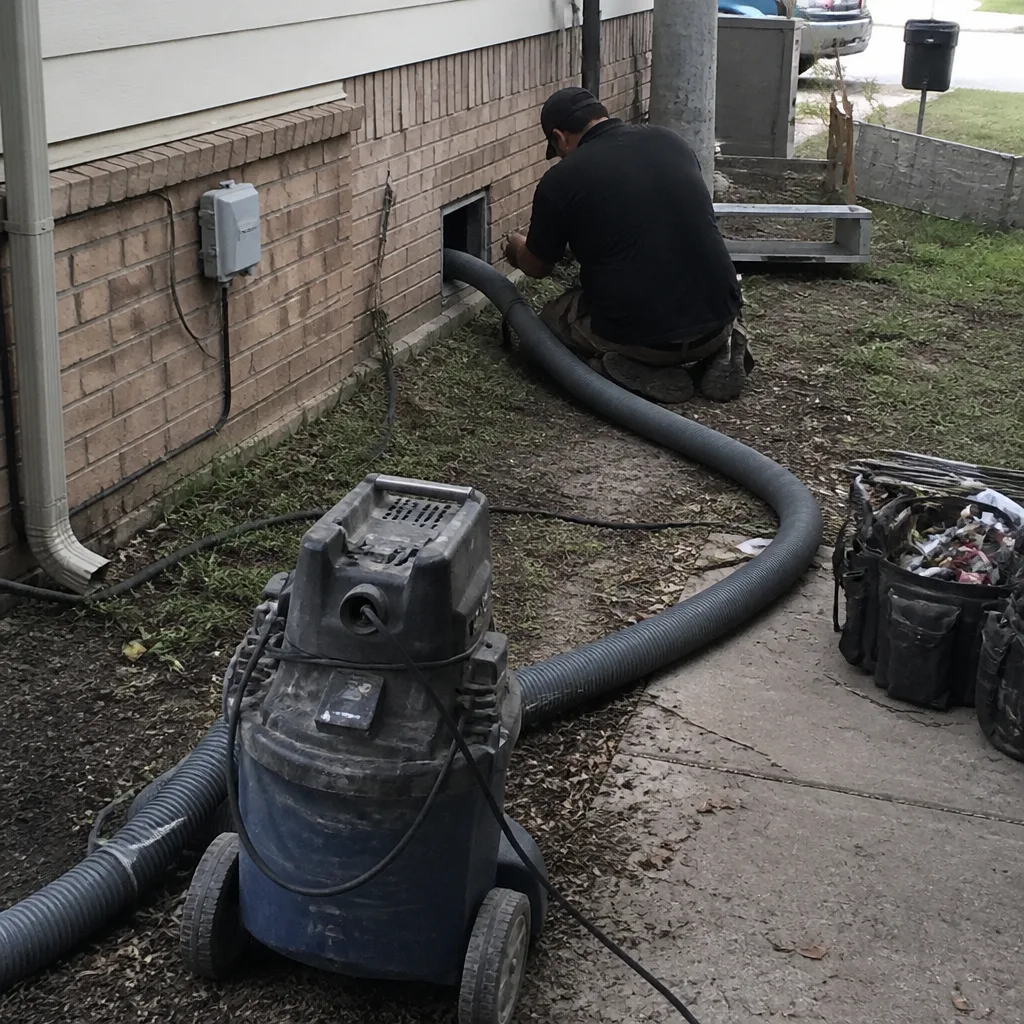
We use professional-grade equipment from air duct cleaning systems like the ones above because the work has to hold up on inspection, not just sound good on the phone. Every job starts at the source, with mechanical agitation and contained removal.
What NADCA Membership Verifies, and What It Doesn’t
NADCA, the National Air Duct Cleaners Association, is the trade body most cited when homeowners search for a reputable duct cleaning contractor. Membership is a useful signal, and you should absolutely ask whether a contractor is a member. But it’s a floor, not a ceiling, and understanding what it does and doesn’t guarantee will help you evaluate a quote more clearly.
What membership generally indicates:
- The contractor has committed to a documented set of industry standards for how duct cleaning should be performed.
- There’s an expectation of continuing education and awareness of current methods.
- The crew has access to the association’s technical guidance and best-practice references.
What it does not verify:
- That the crew on your job is employed by the company rather than subcontracted for the day.
- That the specific equipment arriving at your house meets the standard. Membership doesn’t audit each job.
- That the scope in the quote matches the scope in the standard. A member can still write a thin quote and upsell on-site.
- That the company carries current liability coverage. Insurance is a separate check.
In practice, treating NADCA membership as the starting line is the right approach. It filters out the worst of the fly-by-night operators, and then you keep asking questions from there. If a contractor in Denton is a member and can also answer the equipment questions above and produce written scope, you’re dealing with someone who takes the trade seriously. If they’re a member but get cagey about equipment or crew, dig further. And if they’ve never heard of the association, that tells you something too.
The association is a useful reference point, but the questions that actually protect you are the ones about what happens on your property on the day of the job. That’s where the real differentiation shows up.
How to Read a Duct Cleaning Quote Line by Line
A duct cleaning quote has two jobs: to tell you what’s included, and to tell you what isn’t. Most homeowner frustration comes from the second half, which is usually buried, missing, or quietly added on the day of service. Reading a quote line by line before you book is how you avoid the unpleasant surprise.
Here’s what to look for in each part of a written quote.
What should be explicitly included
- Number of systems and registers. A whole-house price should map to the actual number of HVAC systems and supply/return registers in your home, not a broad “whole-house” label.
- Trunk line cleaning. Many quotes cover only the branch runs and skip the main trunk. Confirm the trunk line is in scope.
- Register and grille removal. A proper job pulls the registers and cleans through the openings, then cleans the grilles themselves. Cleaning “through” the registers leaves the grille surfaces untouched.
- Before-and-after photo documentation. This is the single most valuable line in any quote. If it isn’t there, the quote is leaving you without proof.
- Debris disposal. What happens to the material removed from the system?
What often gets added on the day
- Dryer vent cleaning. This is a genuinely important, safety-critical service, and it’s often offered as a low-priced add-on at the door. It shouldn’t be an afterthought; it should be priced and quoted in advance if you want it.
- Coil cleaning. The evaporator coil sits near the air handler, and it isn’t part of standard duct cleaning. A quote that omits it isn’t dishonest, but you should know whether you want it.
- Sanitizer or deodorizer applications. These are sometimes presented as necessary. They’re optional, and a legitimate contractor won’t imply the job is incomplete without them.
- Repair work. If the crew finds a disconnected or damaged duct section, repair is a separate scope. Ask how that’s priced and whether the contractor can actually do it (more on this below).
The cleanest quotes we see are the ones where all of this is settled before the technician arrives. That’s the standard we hold ourselves to: one flat price per system, agreed before work starts, with no per-vent arithmetic and no surprise add-ons. If a quote doesn’t itemize clearly, ask for a revised version. A contractor who resists putting scope in writing is telling you something important.
Denton-Area Red Flags to Watch For
Most bad experiences follow a recognizable pattern. These are the warning signs that come up again and again, with local flavor to each.
The $99 whole-house special
A price that low doesn’t cover the labor and equipment it takes to clean a full system properly, let alone set up negative pressure. It exists to get a technician through your door, at which point the real price arrives as a series of “while we’re here” additions. Treat it as a lead-generation number, not an estimate. Ask what a whole-house job actually costs for your system size, and expect a realistic answer.
No pre-service walkthrough
A serious contractor walks the system before quoting. They look at the number of returns, whether there’s flex or metal, whether the air handler closet has room to work, and whether there’s visible damage. A quote given without looking at your house is a guess dressed up as a price. If no one offers to look at the system, ask for the walkthrough.
Refusal to provide before-and-after photos
Photos of your own ducts, not stock images, are the proof that the work happened. A contractor who can’t or won’t provide them is asking you to take the work on faith. That’s the information gap the worst operators rely on.
Cleaning through the registers instead of pulling them
Ask whether the crew removes the registers and grilles or cleans through them. Cleaning through leaves the grille surfaces and the immediate connections untouched, and it’s faster, which is why low-cost crews do it.
Subcontracted crews with no local accountability
Ask who will actually do the work. If the answer is “our team” but the crew arrives in a vehicle with a different company name and no documentation, you’ve been handed off. The company you booked should be the company accountable for the result.
Pressure to add services before the job is even assessed
A technician who arrives and immediately starts pitching dryer vent cleaning and sanitizer before inspecting the system is running a sales script, not an assessment. Some of these services are worth having. None of them should be sold before the technician has looked at the system.
How to Verify Licensing, Insurance, and Crew Status
The verification steps for a duct cleaning contractor in Denton are simple to do and easy to skip. Don’t skip them. Here’s the checklist.
- Ask for the company’s Texas license or registration status. Most trades operating in the state have a registration or licensing requirement through the Texas Department of Licensing and Regulation. Ask for the information and check it. A legitimate contractor will know their own status without hesitation.
- Ask for a certificate of liability insurance. This is a one-page document from the insurer that names the policyholder and shows coverage limits. It should be current. If a contractor balks at providing it, that’s the answer.
- Ask whether the crew is employed or subcontracted. This determines who’s accountable if something goes wrong. “We use a local crew we’ve worked with” is different from “our technicians,” and you deserve to know which it is before booking.
- Ask what happens if the crew damages something. A clear answer involves a documented process, not a shrug. Ask about their repair capability specifically.
- Check the business address and phone. A legitimate Denton operation has a way to reach it that doesn’t disappear tomorrow. A mobile number and a generic email are not disqualifying, but they’re reasons to ask more questions.
- Ask about the scope of services. A specialist that does duct cleaning, dryer vent cleaning, and duct repair is doing one thing thoroughly. A generalist HVAC company that offers duct cleaning as an add-on may be doing it less well. Neither is inherently bad, but know which you’re hiring.
- Confirm the quote process in writing. The final price should come from a written estimate, and the estimate should be free. Anything else is a red flag about how the invoices will be handled.
None of these steps take more than a phone call. Do them before you book, not after the crew is in the driveway.
What a Proper Pre-Service Walkthrough Looks Like
The walkthrough is where a contractor’s competence becomes visible. It’s also where you can quietly evaluate whether the person in front of you knows their trade. A proper walkthrough covers the same ground regardless of who does it.
- Locate the air handler and count the systems. How many HVAC systems, returns, and supply registers does the house have? This is the basis for any honest quote.
- Inspect the accessible ductwork. Look at the flexible runs in the attic or crawl space for tears, sagging, or disconnected joints. Look at the metal trunk for leaky seams.
- Open the air handler closet and check the connection. The point where the duct meets the air handler is where a lot of leakage and dust accumulation concentrates.
- Check the register and grille condition. Are they removable and are they going to be cleaned as part of the job?
- Look at the dryer vent. A dedicated dryer vent service is a distinct, safety-critical job. It’s worth understanding whether your vent is a concern before you book anything.
- Discuss the scope and the price in writing. The walkthrough should end with a written estimate that maps to what was actually observed. “We’ll figure it out on the day” isn’t a quote.
This is the part where an equipment-focused approach pays off. When the walkthrough is properly done, you know before booking whether the job needs a rotary brush on rigid metal, a gentler approach on flex, and whether there’s repair work in scope. That’s the difference between a cleaning and a full picture of your system’s health.
If you’ve recently bought a house in Denton, especially an older one near the square or in the established neighborhoods east of the university, the walkthrough is even more valuable. Inheritance and renovation situations often come with ductwork that hasn’t been touched in years, and a proper inspection is the only way to know what you’re starting with.
See the difference
 Before
 After
 Before
 After
 Before
 After
Common Mistakes to Avoid
- Booking on price alone. A very low whole-house price usually means a thin scope that gets expanded on the day. Price should be the last thing you compare, after scope and equipment.
- Skipping the walkthrough. A quote given over the phone without an inspection is a guess. Ask for the walkthrough before you book.
- Not asking for photos. Before-and-after photos of your own ducts are the only proof the work happened. Requiring them is not a difficult ask; it’s the standard.
- Ignoring the pre-existing leak. If your duct system has a disconnected or torn section, cleaning it doesn’t fix the problem. Ask specifically whether the contractor can also repair, or whether you’ll need a second company.
- Treating the dryer vent as an add-on. A clogged dryer vent is a well-documented fire risk. It deserves a dedicated service, not a quick afterthought tacked onto the invoice.
- Assuming membership equals accountability. NADCA membership is a good starting filter, but it doesn’t verify who shows up, what they use, or what’s in the quote. Keep asking questions.
- Letting them clean through the registers. Register removal and grille cleaning are part of a proper job. If the crew cleans through the openings, ask why.
When to Call a Professional
Duct cleaning isn’t a service you need on a fixed schedule; it’s one you call for when there’s a specific reason. The most common ones we see in Denton include a recent renovation or construction project that left drywall dust in the system, a new home purchase where the prior occupants’ habits are unknown, and visible dust blowing from the registers or settling on surfaces faster than seems normal. Persistent allergy or respiratory symptoms that worsen when the HVAC is running are another. Pet owners and parents of young children often have reasons that have nothing to do with how their ducts look and everything to do with what the system is circulating. If the system has a known leak or disconnected run, that’s repair territory, not just cleaning, and it’s worth addressing even if the ducts aren’t due for cleaning. The same is true for a dryer vent that hasn’t been cleared in a long time: it’s a safety issue before it’s a convenience one. If any of this applies to your house, a look at the system is the right next step.
Duct Cleaning Denton offers free estimates in Denton. Call (888) 890-4255. We answer 24/7. Fast dispatch from 7am to 7pm, Sunday through Friday.
Frequently Asked Questions
Choose by equipment, scope, and crew, in that order. Ask whether they use a rotary brush system and a HEPA-rated vacuum, whether they set up negative pressure during the job, whether they pull registers or clean through them, and whether the written quote itemizes the scope. Verify that the crew doing the work is employed by the company and covered by liability insurance. Price comes last. A company that can answer these questions will happily do so.
Ask about the equipment (rotary brush, HEPA vacuum, negative pressure), the scope (number of systems, registers, and whether trunk lines are included), the crew (employed or subcontracted), the insurance (current liability certificate), and the proof (before-and-after photos of your own ducts). Ask whether they can also do duct repair if they find a leak, or whether you’ll need a separate contractor. Call (888) 890-4255 for an exact quote; estimates are free.
An honest quote for air duct cleaning in Denton is based on the number of HVAC systems, the number of registers, the condition of the ductwork, and whether repair is needed. A whole-house job should be quoted as a whole-house price, agreed before work starts, not a per-vent rate that balloons on the day. If a quote is suspiciously cheap, ask what’s excluded. Call (888) 890-4255 for an exact quote; estimates are free.
Cheap quotes usually mean a thin scope. They may cover only branch runs and skip the trunk line, clean through the registers instead of removing them, use a single vacuum hose without negative pressure, and rely on a sales visit to add dryer vent cleaning, sanitizer, and other services on the day. The equipment itself is a cost: a rotary brush system and a HEPA-filtered vacuum are not shop-vac tools. A realistic price reflects that labor and equipment. Call (888) 890-4255 for an exact quote; estimates are free.
Before-and-after photos of your own ductwork, taken during the job, are the standard proof. Ask for them in writing as part of the quote. Beyond that, a proper job includes a walkthrough before cleaning and a summary after it, and you should be able to see the difference in the photos even if you can’t inspect the duct runs yourself. If a contractor can’t provide photos, that’s the answer. Call (888) 890-4255 for an exact quote; estimates are free.
Most homes don’t need it on a fixed schedule. The right time is when there’s a specific reason: a renovation that left dust in the system, a recent home purchase, a dryer vent that hasn’t been cleared, visible dust from the registers, or allergy symptoms that worsen when the HVAC runs. A home with pets or young children may benefit more often. The system’s condition matters more than a calendar. Call (888) 890-4255 for an exact quote; estimates are free.
The Bottom Line
Hiring a duct cleaning contractor in Denton comes down to knowing what separates a specialist from a low-cost crew, and then asking the questions that make the difference visible. Check the equipment (rotary brush, HEPA vacuum, negative pressure), read the quote line by line, confirm the scope in writing, and require before-and-after photos. Verify licensing, insurance, and crew status before booking, and treat a very low whole-house price as a warning. If your system also has a leak or a damaged section, make sure the contractor can repair it, not just clean around it. And if the dryer vent hasn’t been cleared, that’s a safety job worth handling on its own.
At Duct Cleaning Denton, we clean, we repair, and we document. If you’re ready to see what’s actually in your duct system, call (888) 890-4255 for a free estimate. We answer 24/7. Fast dispatch from 7am to 7pm, Sunday through Friday.
You can read more about our core services on our Duct Cleaning Denton page, and if you’re in nearby areas we also cover dryer vent cleaning as a dedicated focus of its own.
Written by the team at Duct Cleaning Denton.